

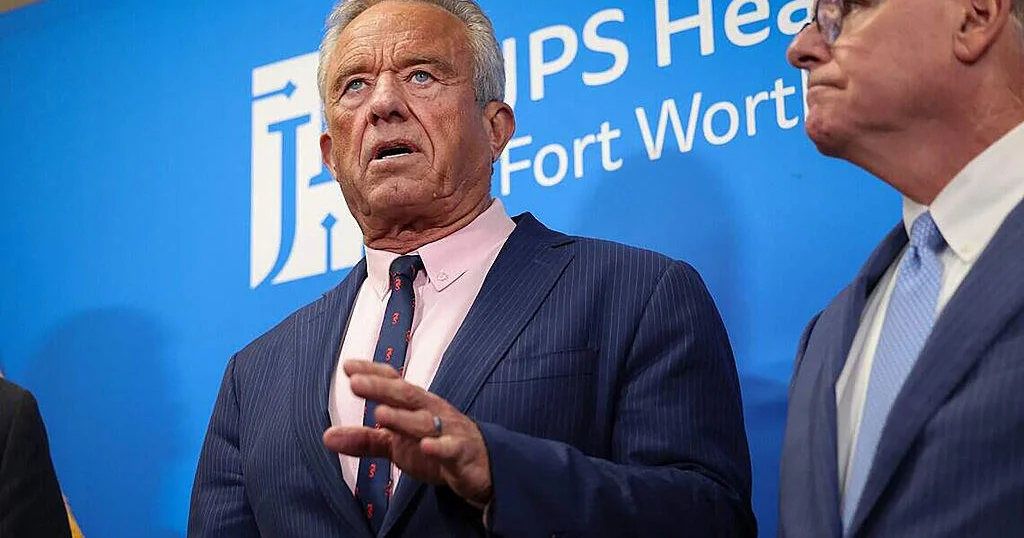

The recent announcement by Health and Human Services Secretary Robert F. Kennedy Jr. is set to significantly impact the accessibility of certain peptide drugs, which have been positioned in the wellness industry but lack FDA approval. In a draft policy released on Wednesday, Kennedy stated that compounding pharmacies would be permitted to prepare six specific peptides despite their unapproved status by the Food and Drug Administration (FDA). This policy aims to provide patients with controlled alternatives, while maintaining a focus on safety and accountability.
| Article Subheadings |
|---|
| 1) Overview of the New Policy on Peptides |
| 2) The Role of Compounding Pharmacies |
| 3) FDA Advisory Panel Recommendations |
| 4) Safety Measures and Patient Accountability |
| 5) The Future of Peptide Compounding |
Overview of the New Policy on Peptides
The draft policy issued by Secretary Robert F. Kennedy Jr. marks a pivotal point in the regulation of peptide drugs, which have gained popularity for their purported wellness benefits. This new approach allows compounding pharmacies to create formulations of six specific peptides: BPC-157, Epitalon, KPV, MOTS-c, Semax, and TB-500. While these compounds have not received official approval from the FDA, the policy is designed to give patients more options in their health care while aiming to protect public safety.
The policy was publicly detailed on Wednesday and is now open for commentary until November 13. Kennedy emphasized that the flexibility in compounding these peptides is intended to “advance patient choice and freedom” but must come with stringent safety protocols. Such measures are necessary due to the ongoing concerns regarding the compounds’ lack of clinical validation.
The Role of Compounding Pharmacies
Compounding pharmacies are facilities that prepare customized medications for patients based on specific prescriptions. They play a crucial role in tailoring treatments that meet the unique needs of individuals, particularly when commercially available drugs are unsuitable. The new policy enables these pharmacies to compound substances that are not part of an FDA-approved drug, thus potentially expanding the therapeutic options available to patients.
However, the process of compounding carries inherent risks, especially when the ingredients themselves lack sufficient safety and efficacy data. The policy aims to set a framework where these pharmacies can operate more transparently, requiring them to perform quality testing and maintain safety reporting. This ensures that patients receive a higher standard of care and not unregulated alternatives.
FDA Advisory Panel Recommendations
In July, an FDA advisory panel voted to recommend allowing these six unapproved peptides for use in compounding practices. This decision has sparked much debate, especially since it came against the advice of the FDA’s scientists, who expressed concerns regarding the insufficient evidence supporting the safety and effectiveness of the peptides. Despite this dissent, Secretary Kennedy cited the panel’s recommendation as a basis for his policy, suggesting it reflects a growing recognition of patient needs in the face of bureaucratic constraints.
Kennedy’s reliance on the advisory panel’s vote underscores a shifting landscape in which patient preferences may be prioritized over traditional regulatory hurdles. This push towards enabling access to such unapproved substances indicates an evolving perspective on healthcare, one that could have significant implications for how drugs are approved and made available.
Safety Measures and Patient Accountability
The administration’s policy places a strong emphasis on patient safety amid the potential risks associated with unapproved peptides. Under the new guidelines, compounding pharmacies must adhere to a strict set of requirements, including utilizing FDA-registered ingredient suppliers and conducting thorough quality testing on compounded products. Additionally, pharmacies are mandated to provide reports detailing any serious side effects encountered by patients.
These safety measures aim to bolster patient protection, ensuring that there is a level of accountability in the distribution of these compounds. In a recent investigation, it was revealed that a peptide drug purchased from an unregulated source contained no actual peptide at all, highlighting the necessity of oversight in this area. By encouraging compounding pharmacies to implement practices that guarantee product integrity, the policy hopes to mitigate these risks.
The Future of Peptide Compounding
Looking ahead, the future of peptide compounding remains uncertain as the FDA has yet to finalize any rule concerning these substances. While Kennedy’s draft proposal is poised to remain in effect for the time being, it is subject to the feedback received during the public comment period. The waiting time for FDA approval could lead to an increasing reliance on compounding pharmacies, as patients seek alternatives while awaiting broader regulatory decisions.
Furthermore, the actions taken by the Health and Human Services Department suggest a more lenient approach towards the compounding of drugs that lack FDA endorsement. As this policy garners more attention, it may prompt discussions regarding the overall approach to drug approval and regulation in the United States, potentially paving the way for more patients to access established peptides in a controlled manner.
| No. | Key Points |
|---|---|
| 1 | Health and Human Services Secretary initiates draft policy for compounding specific unapproved peptides. |
| 2 | The policy permits compounding pharmacies to prepare six peptides, offering alternatives to patients. |
| 3 | Concerns arise from FDA panel’s recommendation against the safety of these peptides. |
| 4 | New safety requirements for compounding pharmacies aim to ensure quality and patient safety. |
| 5 | Future regulations remain uncertain pending feedback during the public comment period. |
Summary
The draft policy introduced by Secretary Robert F. Kennedy Jr. represents a significant shift in how certain peptide drugs can be accessed by patients through compounding pharmacies. While this initiative aims to enhance patient choice, it also raises questions regarding the safety and regulatory oversight of unapproved pharmaceutical options. As public comments are gathered, the future structure surrounding peptide compounding remains to be seen, highlighting an evolving dialogue on patient rights, safety, and the healthcare system as a whole.
Frequently Asked Questions
Question: What are peptide drugs?
Peptide drugs are small proteins that can influence various biological functions in the body. They have therapeutic potential, but not all peptides are approved by the FDA for safety and effectiveness.
Question: How do compounding pharmacies work?
Compounding pharmacies customize medications by mixing ingredients to create drugs tailored to meet individual patient needs, especially when standard medications do not suffice.
Question: What are the safety measures for compounded peptides?
Safety measures include requiring FDA-registered ingredient suppliers, conducting quality testing, and maintaining safety reporting to ensure that patients receive safe and effective products.
