

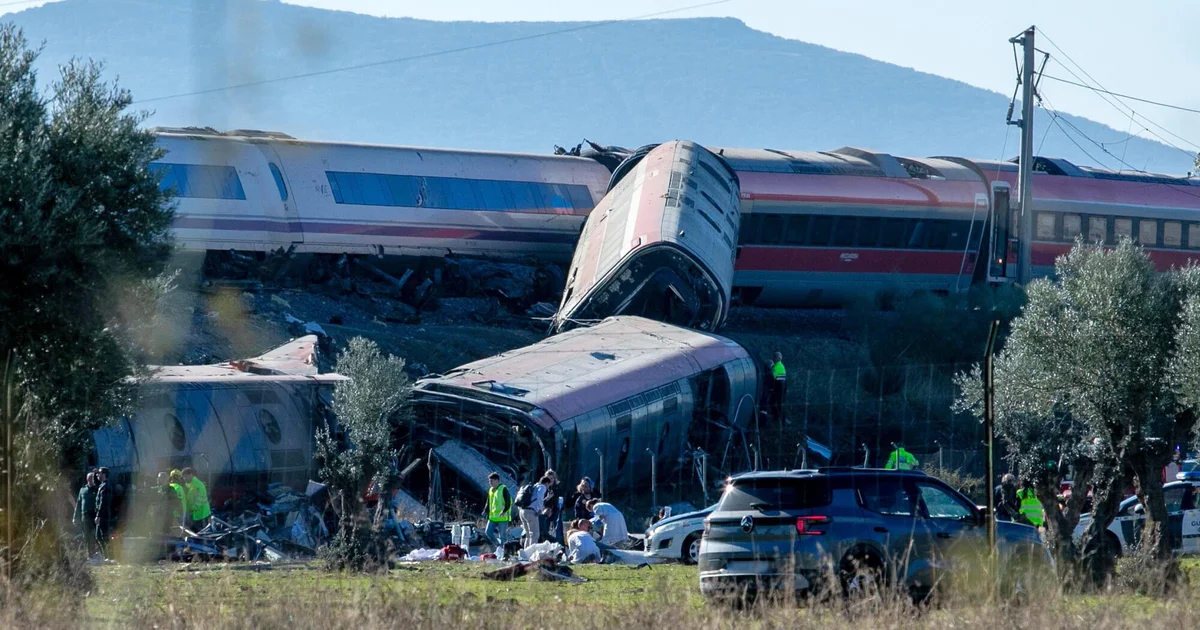

A tragic incident unfolded in central Spain on Wednesday morning as a high-speed train collided with the rear of another train that had stopped, resulting in a devastating crash that claimed the lives of at least 68 individuals, according to local authorities. The regional government of Castilla La Mancha confirmed the casualty figure while the emergency response teams work tirelessly to rescue survivors and recover bodies from the wreckage. The horrific event, which occurred in the province of Toledo, has triggered a nationwide outpouring of grief and raised serious concerns about rail safety in Spain, particularly as it follows another deadly rail incident earlier this year.
| Article Subheadings |
|---|
| 1) Details of the Collision |
| 2) Government Response |
| 3) Eyewitness Accounts |
| 4) Safety Concerns and Investigations |
| 5) Summary of Recent Train Accidents in Spain |
Details of the Collision
The catastrophic collision occurred on Wednesday morning in Toledo province, involving two high-speed trains traveling from Madrid to Seville. Reports indicate that the RENFE state-owned train was forced to stop temporarily due to circumstances that remain under investigation. However, it later resumed operation and unfortunately collided with an IRYO private rail train that was stationary at the time. As a result, two cars of the RENFE train derailed, leading to significant destruction and loss of life. The authorities have confirmed that the trains were operating within a stretch of track that had recently experienced a technical failure in its security system, a fact that would become central to ongoing inquiries.
Government Response
In the wake of this disaster, Spanish Prime Minister Pedro Sánchez expressed deep sorrow at the accident site, announcing a period of three days of national mourning. His remarks reflected a collective grief felt across the country as officials vowed to boost safety protocols on the high-speed rail system, which has been a point of national pride for many years.
“Today all of Spain is grieving,”
stated Sánchez. The Prime Minister’s comments come amid an ongoing political climate, as the nation prepares for upcoming elections on November 29. His administration is under pressure to ensure that similar accidents do not occur in the future, reinforcing calls for enhanced rail safety measures.
Eyewitness Accounts
Survivors of the incident have recounted harrowing experiences from the moment of impact. Passengers like Ignacio Relaño, who was on the RENFE train, described how the train unexpectedly accelerated before crashing into the stationary IRYO train. “We all felt the train abruptly slowing down and then the impact,” he told local media. Throughout the scene, there were reports of personal belongings strewn about, along with the sounds of distress from trapped individuals. Another survivor recounted dramatic scenes of chaos where she was thrown forward due to the sudden brake application. The experiences shared by travelers shed light on the urgency of rescue efforts, as many were left traumatized and in desperate need of medical assistance.
Safety Concerns and Investigations
The Spanish government has now launched a thorough investigation into the underlying causes of the crash. Transport Minister Óscar Puente pointed to a malfunction in the security system on a stretch of 63 kilometers, which failed at approximately 8:30 a.m., just before the crash occurred at 8:53 a.m. He stressed that it was “inexplicable” that the train received an order to operate without speed limitations at such a critical time. “The engineers are not to blame,”
Puente asserted, as authorities worked to piece together the timeline of events around the crash.
Summary of Recent Train Accidents in Spain
This tragic event comes on the heels of another significant train accident in January, wherein 45 lives were lost when one train collided head-on with an incoming train in southern Spain. This previously horrific incident shook public trust in the high-speed rail system, prompting discussions of systemic issues and reform. The deadly January accident was set to become the deadliest train collision since 80 fatalities were recorded in a 2013 crash. Authorities are now tasked with not only addressing the immediate fallout from the latest tragedy but also restoring public confidence in a transportation system that is foundational to Spain’s infrastructure.
| No. | Key Points |
|---|---|
| 1 | The collision involved two high-speed trains in Toledo province, resulting in at least 68 fatalities. |
| 2 | Spanish Prime Minister Pedro Sánchez declared three days of national mourning in response to the tragedy. |
| 3 | Survivors described chaotic scenes, with many passengers thrown about during the crash. |
| 4 | Investigations have begun into the malfunctioning security system that led to the collision. |
| 5 | The incident is the second deadly train accident in Spain this year, raising concerns about rail safety. |
Summary
The recent train collision in central Spain marks a significant tragedy for the nation, resulting in widespread loss and sorrow. As investigations reveal critical failures within the rail system, the Spanish government faces immense pressure to not only respond effectively to the aftermath but also to ensure that such accidents can be avoided in the future. The national mourning declared by the Prime Minister reflects a nation grappling with the implications of this disaster as it seeks answers and a path to improved safety protocols in its high-speed rail network.
Frequently Asked Questions
Question: How many people were on the trains involved in the collision?
The RENFE train had 397 passengers, while the IRYO train had 147 passengers at the time of the accident.
Question: What has been the government’s response to the crash?
Spanish Prime Minister Pedro Sánchez announced three days of national mourning and emphasized the need for enhanced safety measures in the high-speed rail system.
Question: What were the conditions leading to the collision?
The crash was reportedly caused by a malfunction in the security system, which led to an incorrect order for the RENFE train to resume operation despite a stop signal being active on the line.
