

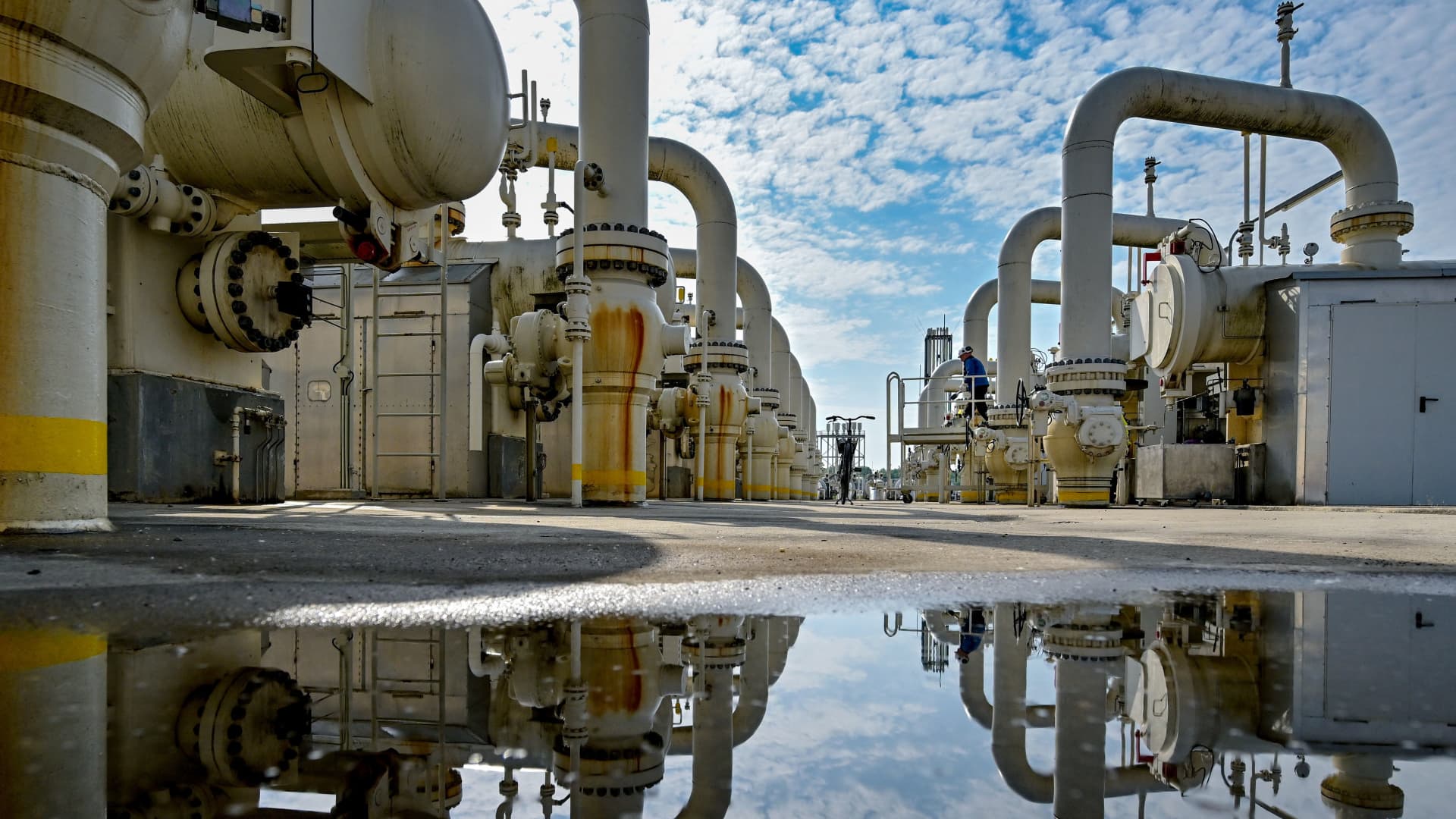

European natural gas prices are experiencing a significant upsurge, with futures expected to rise further as the continent faces near-record-low gas stocks. As of Friday, the Dutch Title Transfer Facility (TTF) futures for December delivery surged by 4.9% to reach 102.78 euros ($115) per megawatt-hour. The increase comes amid fears of a challenging winter, leading to price levels reminiscent of the energy crises triggered by geopolitical tensions, especially following Russia’s invasion of Ukraine.
| Article Subheadings |
|---|
| 1) Winter temperature fears loom over Europe’s gas supplies |
| 2) Europe bets on unseasonable warmth |
| 3) Historical precedents and their implications |
| 4) Market dynamics and future forecasts |
| 5) Strategies for energy resilience |
Winter temperature fears loom over Europe’s gas supplies
As the winter season approaches, Europe faces a precarious energy situation characterized by depleted natural gas reserves. Currently, natural gas storage levels are hovering around a historically low 75%, a decrease attributed to insufficient replenishment efforts this summer, exacerbated by disruptions to shipments through critical routes such as the Strait of Hormuz. The potential for colder weather has raised alarms among analysts and policymakers alike, leading to predictions of surging energy prices. Notably, energy prices have already skyrocketed by 170% this year, with further increases predicted if temperatures dip below seasonal averages. This scenario could be particularly dire given that natural gas accounts for roughly one-sixth of the European Union’s energy generation mix.
Europe bets on unseasonable warmth
At a recent commodities roundtable, analysts discussed Europe’s reliance on an atypically warm winter as a mitigation strategy against the impending energy crisis. Peter Taylor, the head of commodity desk strategy at Macquarie, articulated that this precarious stance stems from the influence of the El Niño phenomenon, which has historically led to unpredictable weather patterns. Despite some expectations for milder temperatures, Taylor cautioned that the continent is at risk of experiencing a harsh winter, stating, “if we do get that cold weather, we’re potentially seeing Europe compete with Asia for molecules,” referring to the energy market’s supply constraints. Such a situation could further drive up prices, creating a competitive landscape reminiscent of last year’s energy crisis.
Historical precedents and their implications
The current energy crisis echoes challenges faced by Europe in previous winters; the winter of 2022 serves as a stark reminder. During that period, energy prices surged to unprecedented levels, driven by geopolitical tensions stemming from Russia’s invasion of Ukraine. The Dutch TTF futures peaked at 339 euros per MWh in August before finally stabilizing by December 5, 2022. The implications of this historical precedent highlight Europe’s vulnerability in terms of both energy supply and economic stability. According to analysis from BlackRock, the GDP in Europe was reduced by approximately 0.5% during last year’s energy crises, a sharp contrast to only a 0.1% decline in the United States. This disparity emphasizes the economic stakes for European governments, which are grappling with rising energy costs while attempting to safeguard citizen welfare during an impending winter.
Market dynamics and future forecasts
The market dynamics in the European natural gas sector are influenced by various factors, including supply chain disruptions, seasonal demands, and geopolitical events. Current trends showcase a dramatic monthly increase of about 36% in TTF futures prices, and a staggering annual increase of 256%. Market analysts suggest that the upcoming months will be critical in determining how Europe manages its energy resources. Increased competition for liquefied natural gas (LNG) deliveries has the potential to exacerbate pressures, particularly as Asia’s demand for natural gas remains high, driving prices upward. The correlation between global supply constraints and local price spikes is evident, forcing European nations to revise energy strategies in anticipation of a colder winter.
Strategies for energy resilience
In response to the ongoing energy crisis, European policymakers and energy companies are exploring multiple strategies to enhance energy resilience. Initiatives to rapidly increase renewable energy generation and reduce reliance on natural gas are at the forefront of these discussions. Additionally, European nations are encouraged to diversify their energy supply chains, including securing partnerships with alternative gas suppliers. Investments in energy storage technologies are being prioritized to ensure that Europe is not left vulnerable during peak demand periods. The overarching goal is to create a robust, sustainable energy framework that can withstand market fluctuations and geopolitical crises. By prioritizing innovation and sustainability, European nations may mitigate the impending cold-weather challenges that threaten their energy security.
| No. | Key Points |
|---|---|
| 1 | European natural gas prices are rising, with futures up 4.9% recently. |
| 2 | Natural gas storage levels in Europe have fallen to 75%, the lowest since 2011. |
| 3 | A colder winter could worsen the energy crisis, causing prices to surge further. |
| 4 | Analysts warn that Europe may face increased competition for natural gas with Asia. |
| 5 | Policymakers are exploring new strategies to enhance energy resilience going forward. |
Summary
The current situation of rising natural gas prices in Europe presents serious implications for the region as it braces for colder temperatures this winter. With storage levels critically low and competing demands from Asia, European nations must prepare robust strategies to navigate the energy crisis effectively. The lessons learned from past winters serve as a stark reminder of the urgency to transform energy policies and prioritize sustainability and energy independence. As Europe faces this looming crisis, the focus remains on balancing immediate needs with long-term energy goals.
Frequently Asked Questions
Question: Why are European gas prices rising now?
European gas prices are rising sharply due to depleted natural gas storage levels, uncertainty surrounding the upcoming winter’s temperatures, and competition for natural gas supplies from Asia.
Question: How low are current gas storage levels in Europe?
Current gas storage levels in Europe are at approximately 75%, marking the lowest seasonal level since recordkeeping began in 2011.
Question: What impact could a cold winter have on European energy prices?
A cold winter could exacerbate the energy crisis in Europe, leading to significant increases in gas prices as demand surges and competition with other regions increases.
