

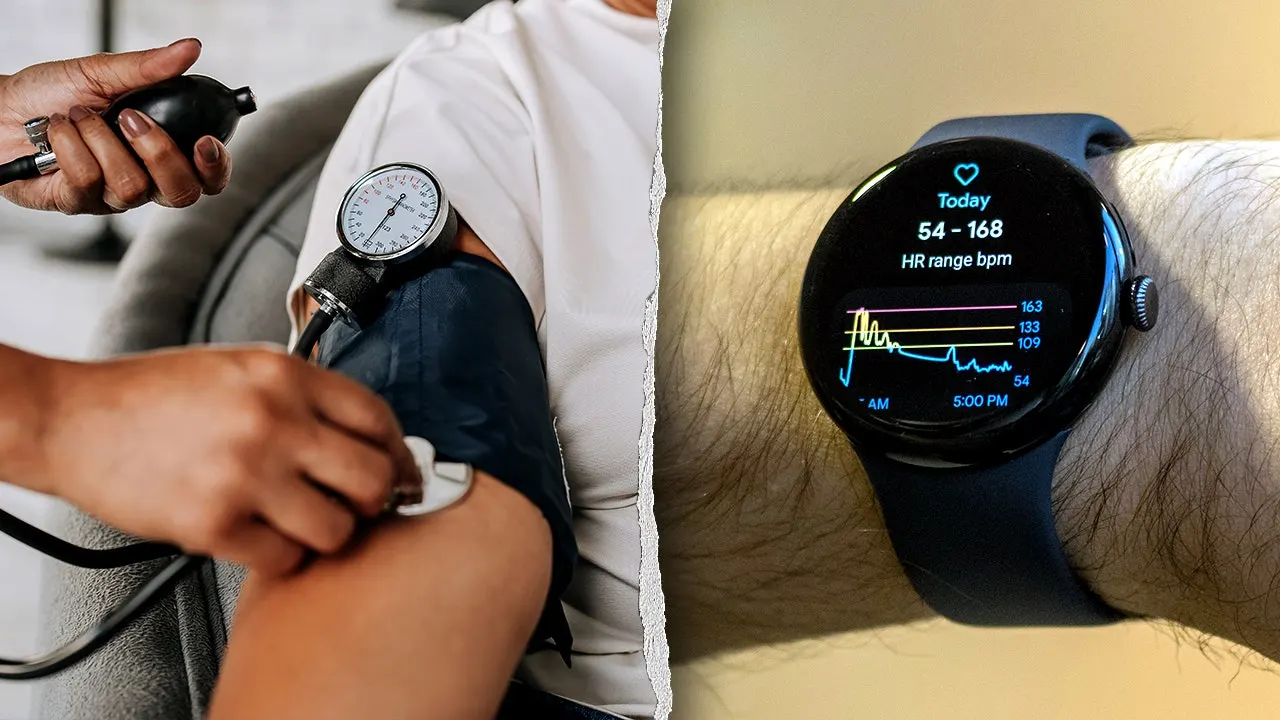

In a groundbreaking study, researchers at Google have developed an artificial intelligence system capable of detecting signs of high blood pressure using standard smartwatch sensors. As hypertension often goes unnoticed for years, this innovative technology has the potential to revolutionize preventive health care by enabling early detection without requiring traditional blood pressure cuffs. This article delves into the technology behind the AI system, the results of the study, and the implications for individuals looking to monitor their health more effectively.
| Article Subheadings |
|---|
| 1) The Mechanism Behind Smartwatch Blood Pressure Detection |
| 2) Study Design and Methodology Insights |
| 3) Evaluating Accuracy: AI vs. Traditional Methods |
| 4) Current Limitations and Future Outlook |
| 5) The Importance of Early Blood Pressure Detection |
The Mechanism Behind Smartwatch Blood Pressure Detection
Google’s AI-powered solution harnesses existing technology found in consumer smartwatches to track potential signs of hypertension. The system employs two main types of sensor data: one that detects changes in blood volume beneath the skin using light, and another that measures movement. While the heartbeat’s vibrations are imperceptible to users, the AI can sense these tiny fluctuations to infer blood pressure trends.
This innovative approach establishes a significant advantage, as it allows for continuous monitoring without any manual calibration required, contrasting starkly with traditional methods. The smartwatch unobtrusively gathers data over days or weeks, integrating physical metrics—like height—into its estimations. Thus, users can maintain their daily routines while the smartwatch assesses their health status autonomously.
In summary, this method leverages simple technology to deliver increasingly sophisticated health monitoring capabilities by analyzing subtle changes that otherwise might go unnoticed, potentially paving the way for proactive healthcare solutions.
Study Design and Methodology Insights
To validate the efficacy of their innovative blood pressure detection system, researchers from Google partnered with teams from Beth Israel Deaconess Medical Center and Harvard Medical School. They utilized an extensive dataset comprising nearly 500,000 hours of smartwatch sensor data from 2,109 participants. This comprehensive training data set enabled the researchers to build a reliable AI model.
The clinical study focused on evaluating the AI’s performance, involving 196 participants from diverse locations across the U.S. Importantly, none of the individuals included in the study had previously diagnosed cardiovascular conditions or were on blood pressure medication. Participants wore consumer smartwatches consistently for a full week, allowing the AI to analyze and interpret their sensor data in comparison to conventional 24-hour ambulatory blood pressure monitoring—a standard method to confirm hypertension.
The goal was to demonstrate that a technology reminiscent of consumer wearables can rise to the challenge of an established medical assessment without necessitating professional settings. This progressive research illustrates a significant shift toward integrating technology in preventive health approaches.
Evaluating Accuracy: AI vs. Traditional Methods
The initial results of the study were promising, showcasing a 65.8% sensitivity rate wherein the AI accurately identified participants with hypertension. Additionally, the specificity result stood at an impressive 90%, meaning that nine out of ten individuals who were healthy were correctly classified by the AI as not having hypertension. Furthermore, the positive predictive value was recorded at 80.6%, indicating that four out of five participants flagged by the AI indeed had high blood pressure.
When compared to traditional office screenings, which flagged only 55.3% of participants known to have hypertension, the smartwatch AI demonstrated competitive clout. However, there remains a crucial finding to consider: the AI missed approximately one-third of identified hypertension cases during its initial screening stage, raising questions about reliability and underscoring the need for further investigation.
These results impart a mix of optimism tempered with caution, signaling that while AI-based detection holds considerable promise, further refining and verification are needed before it can reliably replace customary diagnostic methods in a clinical setting.
Current Limitations and Future Outlook
Currently, the system’s limitations warrant attention. Importantly, the AI system does not provide actual blood pressure readings; it does not produce standard systolic and diastolic numbers associated with traditional measurements. Instead, it identifies trends over time, ranging from assessments like “high” to “not high.” This subjective classification poses challenges when patients seek clear, actionable data.
While users of eligible Google devices, such as the Pixel Watch series, can benefit from health monitoring features, the AI’s findings emphasize that it should not be used for diagnostic purposes. It remains crucial that individuals seek validated medical evaluations when concerns arise.
Google’s study instills hope for future enhancements. Researchers aim to include larger, more diverse participant groups in subsequent studies to bolster the AI’s diagnostic reliability and accuracy. Building on this foundation, there are significant pathways forward for integrating such technologies into widespread health monitoring practices to ultimately enhance patient care.
The Importance of Early Blood Pressure Detection
High blood pressure, often termed a “silent killer,” affects over a billion adults globally, with many not even aware of their condition. This lack of awareness is alarming, especially given that untreated hypertension can lead to severe health consequences such as heart attacks and strokes. Younger individuals, who may feel healthy and eschew regular check-ups, are particularly susceptible to missed diagnoses.
The potential to identify concerning patterns through a smartwatch before symptoms manifest significantly enhances preventive health measures. Individuals receiving an early warning could seek medical advice, allowing for timely interventions that can notably reduce the risk of heart-related complications. Researchers must continue to explore the practical implications of such technologies to determine their true impact on long-term health outcomes.
| No. | Key Points |
|---|---|
| 1 | Google’s AI system detects hypertension using smartwatch sensors, enabling early disease identification. |
| 2 | The research involved over 2,000 participants to train the AI and assess its performance in a clinical environment. |
| 3 | Despite promising accuracy, the AI missed about one-third of hypertension cases, indicating a need for further development. |
| 4 | The AI does not provide specific blood pressure readings but instead offers trend evaluations over time. |
| 5 | Early detection through technology can lead to timely interventions, mitigating the risk of serious health complications. |
Summary
The emergence of Google’s AI-powered hypertension detection system represents a significant advancement in the integration of technology into health monitoring practices. Its potential to detect high blood pressure inconspicuously provides individuals with an accessible method to stay informed about their health. However, the limitations identified necessitate further research to ensure reliability before it can serve as a standalone diagnostic tool in medicine. This innovation not only highlights the capacity of wearables to enhance preventive care but also foreshadows a shift toward more inclusive health management practices.
Frequently Asked Questions
Question: How does the AI system identify hypertension using a smartwatch?
The AI analyzes data from sensors in the smartwatch that detect changes in blood volume and measure movement, allowing it to estimate the likelihood of sustained high blood pressure.
Question: What are the limitations of the current blood pressure detection in smartwatches?
The AI system does not provide actual blood pressure readings; it only offers trend assessments like “high” or “not high,” and should not be relied upon for medical diagnoses.
Question: Why is early detection of high blood pressure important?
Early detection can prompt individuals to seek medical attention before severe health issues arise, significantly reducing risks associated with untreated hypertension, such as heart attacks and strokes.
