

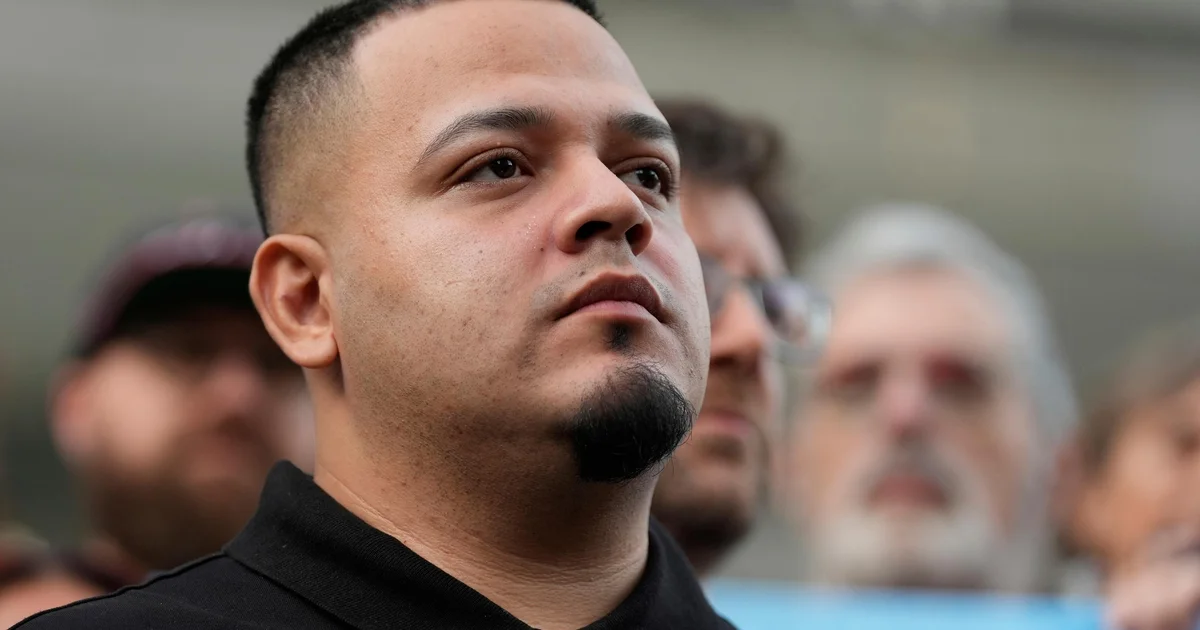

Kilmar Abrego Garcia, an El Salvador native, has left the United States for Spain following a controversial deportation saga marked by legal battles and the scrutiny of immigration policies under the previous administration. His departure, which took place on Tuesday, was confirmed by both his team and the Department of Homeland Security (DHS). Abrego Garcia’s case has garnered national attention, as it highlights the complexities of immigration processes and the ramifications of deportation policies.
| Article Subheadings |
|---|
| 1) Background on Kilmar Abrego Garcia’s Deportation |
| 2) The Role of Legal Advocacy in His Case |
| 3) The Response from the Trump Administration |
| 4) Overview of Legal Proceedings and Developments |
| 5) Implications of His Departure for Immigration Policy |
Background on Kilmar Abrego Garcia’s Deportation
Kilmar Abrego Garcia, who arrived in the United States illegally 15 years ago, faced a series of legal challenges after being detained by immigration officials in March 2025. At the time, he lived in Maryland with his wife, Jennifer Vasquez, and their children. His arrest was a result of broader enforcement actions taken by immigration authorities that aimed to crack down on undocumented immigrants. Following his detention, he was deported to El Salvador, where he was held in CECOT, a notorious prison known for its harsh conditions and association with violence against inmates from marginalized communities. This incident underscored the controversial practices related to his deportation and the dangers posed to individuals like Abrego Garcia in their home countries.
The Role of Legal Advocacy in His Case
Abrego Garcia’s situation gained attention due to the advocacy efforts of various organizations, particularly We Are CASA, which worked tirelessly to assist him and his family. His legal team, led by attorney Simon Sandoval-Moshenberg, argued that he should not be deported to El Salvador because he had previously been granted a withholding of removal in 2019, protecting him from potential persecution by local gangs. His legal struggles were complicated by an order from a federal judge in Maryland, who ruled that he should not be sent back to El Salvador due to the threats he faced there. Abrego Garcia’s case became emblematic of the struggles faced by many immigrants navigating the U.S. legal system and the precarious nature of their safety.
The Response from the Trump Administration
The Trump administration took a firm stance regarding Abrego Garcia’s deportation, emphasizing their belief that he had ties to gang activity, a claim that was fervently denied by his legal representatives. Secretary of Homeland Security Markwayne Mullin celebrated Abrego Garcia’s departure, asserting that he could no longer “terrorize innocent Americans.” The administration characterized Abrego Garcia’s exit as a form of “self-deportation,” stating that he left of his own volition. Furthermore, the DHS clarified that he financed his own flight to Spain and had no incentives to leave the U.S., aiming to mitigate criticism regarding the treatment of deportees.
Overview of Legal Proceedings and Developments
The legal proceedings surrounding Abrego Garcia were intricate and prolonged. After his forced deportation to El Salvador, he spent several months in custody before being brought back to the U.S. to face criminal charges. However, federal judges dismissed these charges, claiming they were motivated by a desire for revenge rather than valid legal reasons. This dismissal was a critical point in the ongoing saga and raised questions about the motivations behind the Justice Department’s actions. As the appeals process continued, the Trump administration aggressively pursued efforts to deport Abrego Garcia to various countries, including several in Africa. The fact that Abrego Garcia’s case was acknowledged by high-ranking officials as an “error” further highlighted the inconsistencies within the system.
Implications of His Departure for Immigration Policy
Abrego Garcia’s departure raises critical questions about the current state of U.S. immigration policy, especially in regard to the treatment of individuals who are forcibly returned to dangerous conditions. His case exemplifies the potential pitfalls of immigration enforcement strategies that prioritize removal over the safety and legal rights of individuals. As Abrego Garcia leaves the U.S., it reflects ongoing debates about the fairness of immigration practices and the balance between national security concerns and humanitarian obligations. Furthermore, it brings to light the harsh realities faced by undocumented individuals, emphasizing the need for reforms to ensure that deportation processes account for the threats many face upon return.
| No. | Key Points |
|---|---|
| 1 | Kilmar Abrego Garcia departed the U.S. for Spain following a controversial legal process. |
| 2 | Abrego Garcia’s case highlighted the challenges faced by immigrants dealing with deportation issues. |
| 3 | The Trump administration claimed success in removing him, framing it as a self-deportation. |
| 4 | Legal advocates worked extensively to protect Abrego Garcia from dangerous conditions in El Salvador. |
| 5 | His departure reflects ongoing debates about U.S. immigration policy and its implications for individual rights. |
Summary
Kilmar Abrego Garcia’s departure from the United States has brought to the forefront critical discussions surrounding immigration policies and the rights of undocumented individuals. His case illustrates not only the complexity of legal battles in immigration enforcement but also the potential impact on families and communities. As Abrego Garcia begins a new chapter in Spain, his experience remains a testament to the challenges faced by many immigrants and the urgent need for systematic reforms to protect those at risk of persecution and ensure fair treatment within the legal framework.
Frequently Asked Questions
Question: Why was Kilmar Abrego Garcia initially deported from the United States?
Kilmar Abrego Garcia was deported due to his undocumented status, having arrived in the U.S. illegally 15 years prior and facing legal charges that the Trump administration pursued vigorously.
Question: What role did legal advocates play in his case?
Legal advocates, particularly from We Are CASA, worked to assist Abrego Garcia and challenge his deportation due to the risks he faced in El Salvador, arguing that he had previously been granted protection against removal to his home country.
Question: What were the implications of his departure for U.S. immigration policy?
Abrego Garcia’s departure underscores ongoing debates about the effectiveness and morality of current deportation practices, emphasizing the need for reforms that prioritize safety and due process for immigrants facing removal.
