

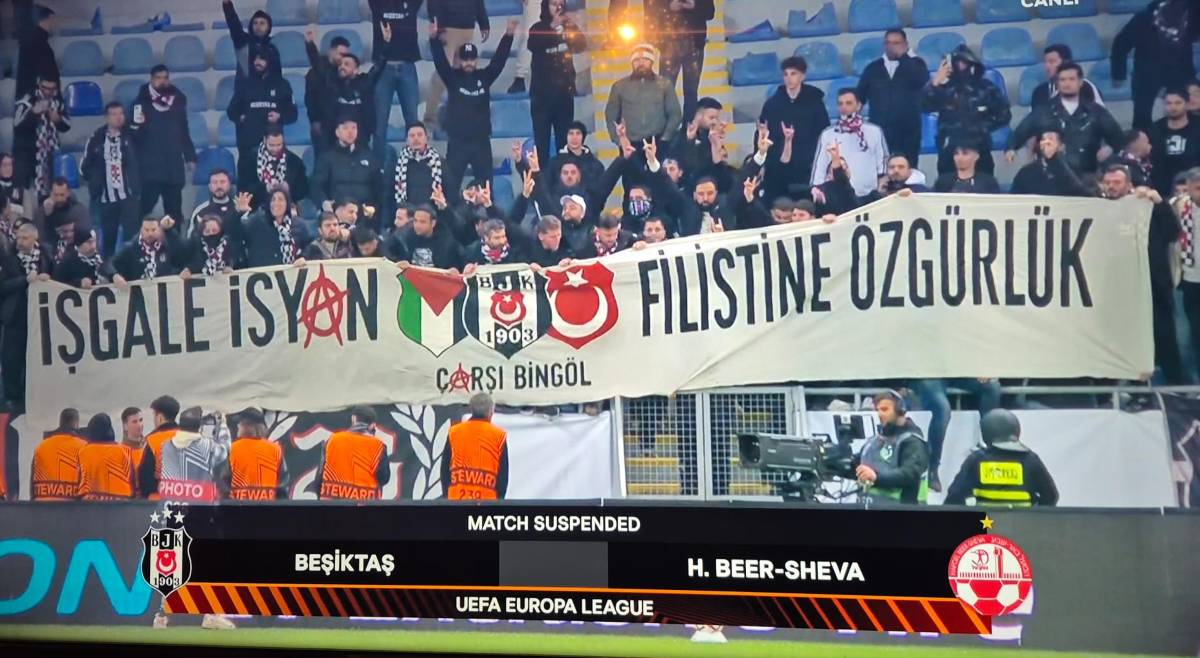

In a significant moment of unrest during a UEFA Europa League match, a clash occurred between Turkish football fans and Georgian police, resulting in the temporary suspension of the game. The incident unfolded on November 26, 2026, at the Dinamo Stadium in Batumi, Georgia, as supporters of Turkey’s Beşiktaş were forcibly restrained. The confrontation erupted shortly after the match commenced, leading to police employing pepper spray against fans who were reportedly expressing political support for Palestine.
| Article Subheadings |
|---|
| 1) Details of the Incident and Police Response |
| 2) Suspension of the Match and Banner Display |
| 3) Background on Venue Decision by UEFA |
| 4) Reactions from Other Turkish Clubs |
| 5) Broader Context of Football and Political Tensions |
Details of the Incident and Police Response
The confrontational moment arose during the UEFA Europa League match between Beşiktaş and Israel’s Hapoel Be’er Sheva, which was relocated to Batumi due to prior security concerns regarding the ongoing Gaza conflict. As soon as the match commenced at 8:45 PM local time (GMT+3), tensions rose in the stands. Reports indicate that, around the 26th minute, Georgian police intervened aggressively against several Beşiktaş supporters, who were seen waving flags and expressing solidarity with Palestine, prompting a violent response.
Witnesses and videos circulating on social media revealed the extent of the police action, which involved pepper-spraying fans. One fan was reportedly injured and had to be transported away from the scene on a stretcher, highlighting the serious nature of the conflict. The situation escalated quickly, leading the referee to pause the match in an effort to restore order with both teams retreating to their dressing rooms.
Suspension of the Match and Banner Display
During the suspension of play, Beşiktaş fans utilized the opportunity to prominently display a banner that conveyed a message of political solidarity, reading, “Revolt against occupation, freedom for Palestine.” This action exemplified the fans’ motivations for their protest and amplified the political undercurrents connecting sports and international affairs, particularly regarding the Israel-Palestine conflict, to which many see sport as a platform for expression.
Stadium announcements during the interlude aimed at calming the crowd, urging attendees to behave peacefully. The match resumed again at approximately 9:45 PM after officials deemed the venue secure. The resumption was facilitated by an appealing performance from the teams, but the shadow of police intervention continued to linger over the proceedings.
Background on Venue Decision by UEFA
This match marked an instance of UEFA’s ongoing policy adjustments in response to the evolving geopolitical climate. UEFA had transferred the fixture to Georgia amid concerns regarding fan safety in Istanbul due to increased tensions. The governing body of European football issued an official statement explaining that following Turkey’s input regarding safety protocols, the match could not take place in its designated venue in Istanbul.
This strategic decision reflects broader patterns observed in both football and political arenas, with matches involving Turkish and Israeli teams being routinely placed in neutral locations due to existing conflicts. Such a trend has arisen particularly since the escalation of the Gaza war in 2023, indicative of the fraught relationship between adjacent nations and the complexities that envelop international sporting events.
Reactions from Other Turkish Clubs
In the wake of the incident, several prominent Turkish football clubs, including Fenerbahçe, Trabzonspor, and Galatasaray, voiced their support for Beşiktaş, criticizing the actions of the Georgian police and condemning UEFA’s decision regarding the match location. Fenerbahçe’s statement asserted their opposition to the disproportionate force utilized against the supporters and echoed calls for a reassessment of UEFA’s policies that led to the relocation of the match.
Trabzonspor echoed these sentiments, expressing disapproval of what they labeled as discriminatory regulations that prevent Turkish teams from competing on their home turf against Israeli teams. The reaction underscores a sense of unity among Turkish football clubs, emphasizing their collective stance on the perceived injustices facing their supporters and the teams.
Broader Context of Football and Political Tensions
The events surrounding the Beşiktaş versus Hapoel match are emblematic of the increasing convergence of sports and political activism. Football has long been a battleground for social and political expression, with fans often using matches to voice their stances on contentious issues. Given the ongoing humanitarian crisis in Gaza and the sensitivities surrounding the Israeli-Palestinian conflict, the reactions from Beşiktaş supporters can be seen as part of a broader wave of activism that ties sport to political discourse.
In recent years, Turkish football, in particular, has witnessed rising political engagement among fans, reflecting social sentiments and mobilization efforts concerning global issues. The incidents at this match are likely to inspire further dialogue not only about the role of football fandom in expressing political beliefs but also about how governing bodies manage fan safety amid volatile contexts.
| No. | Key Points |
|---|---|
| 1 | A UEFA Europa League match involving Beşiktaş and Hapoel Be’er Sheva was temporarily suspended due to police violence against fans. |
| 2 | Georgian police used pepper spray against Beşiktaş supporters, leading to serious injuries and the match’s halting. |
| 3 | Turkish clubs united in support of Beşiktaş, condemning both police actions and UEFA’s decision to relocate the match due to safety concerns. |
| 4 | The incident marked a notable intersection between sports and political activism, with fans expressing solidarity for Palestine during the match. |
| 5 | The broader implications highlight the complex relationship between football and social issues, raising questions about fan safety and activism. |
Summary
The clash during the Beşiktaş versus Hapoel Be’er Sheva match in Georgia is a stark illustration of the intersection between sports and political dynamics, particularly involving issues of national identity and activism. The aggressive response of law enforcement against fans further emphasizes the challenges that international sporting events face in politically charged environments. As echoed by the reactions from various Turkish football clubs, there is a burgeoning movement advocating for athlete and supporter rights, which may influence future decisions made by governing bodies in terms of match locations and security protocols.
Frequently Asked Questions
Question: Why was the match relocated to Georgia?
The match was relocated to Georgia due to safety concerns expressed by Turkish authorities regarding the potential risks associated with hosting the game in Istanbul amidst heightened political tensions in the region.
Question: What role do fans play in political expression during sports events?
Fans often use sporting events as platforms for expressing political views, particularly on controversial issues, making football a vehicle for sociopolitical activism and awareness.
Question: How have other Turkish clubs responded to the treatment of Beşiktaş fans?
Other Turkish clubs, such as Fenerbahçe and Trabzonspor, have publicly condemned the actions of the Georgian police and criticized UEFA’s decisions regarding match venues, showing solidarity with Beşiktaş supporters.
