

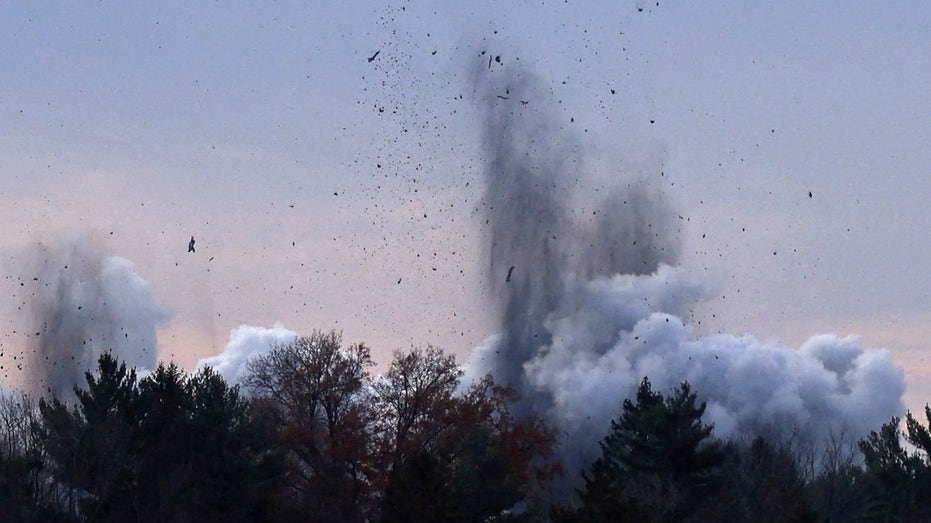

The Environmental Protection Agency said Thursday that air monitors detected no airborne lead across the region one day after a controlled detonation at the Iowa Army Ammunition Plant. The Army destroyed nearly five tons of degraded lead azide in Middletown, Iowa, on November 25 after the material was deemed unsafe and unstable. More than 1,000 air, water, soil and dust samples were collected after the blast, following nearly 1,600 baseline samples taken beforehand. Environmental monitoring is continuing at homes, schools, farms, public areas, churches, daycares and drinking water sites.
| 1) | Controlled detonation completed in Iowa |
| 2) | EPA finds no airborne lead |
| 3) | More than 1,000 post-detonation samples collected |
| 4) | Monitoring covers communities, farms and waterways |
| 5) | Officials say environmental checks will continue |
Controlled detonation completed in Iowa
The U.S. Army conducted the controlled detonation on November 25 at the Iowa Army Ammunition Plant in Middletown. The operation destroyed approximately five tons of degraded lead azide, a chemical used in bomb-making and other explosive applications. Officials had identified the stockpile as unsafe and unstable, making controlled destruction necessary. The operation drew attention because of concerns that the blast could produce a potentially toxic dust plume moving toward parts of Missouri.
The material was destroyed at the military installation under a planned operation intended to remove the hazard. The EPA and other agencies prepared environmental monitoring before the event so that conditions afterward could be compared with established local readings.
EPA finds no airborne lead
The EPA said Thursday that its air monitors continued to report zero detection of airborne lead throughout the region after the detonation. The finding addresses the main immediate concern surrounding the operation: whether the blast released lead-containing dust into the surrounding air.
Air monitoring remains active rather than concluding with the initial result. The EPA said air-sampling cassettes used to test for lead would be replaced so sampling could continue during the day. The agency has not described the zero-detection finding as the end of its broader environmental review.
“Following the controlled detonation, EPA sampled homes, public parks with playgrounds, and every drinking water intake in the pre-detonation plume model.”
More than 1,000 post-detonation samples collected
EPA personnel and contractors collected more than 1,000 samples after the controlled detonation. The samples covered air, water, soil and dust, providing multiple ways to check whether the operation changed environmental conditions in or near the projected plume area.
Before the detonation, nearly 1,600 samples were collected to establish a baseline. That preparation allows investigators to compare post-event measurements with conditions recorded before the stockpile was destroyed. Soil and dust sampling was expected to conclude Thursday, while air monitoring continued.
Monitoring covers communities, farms and waterways
The post-detonation work extends beyond the plant. EPA teams said they sampled homes, public parks and playgrounds, as well as every drinking water intake included in the pre-detonation plume model. The agency planned additional sampling at schools, playgrounds, daycares, churches and other locations in the region.
In partnership with the U.S. Department of Agriculture, the EPA also collected samples from nearby farms both before and after the operation. Extensive sampling of water in the Mississippi River watershed was completed during both phases. These efforts are intended to assess potential effects on residential areas, agricultural land and water supplies.
Officials say environmental checks will continue
The EPA said it would maintain a presence in the area for as long as needed to ensure environmental monitoring continues after the detonation. The agency described the controlled operation as successful while emphasizing that follow-up testing remains necessary to verify conditions across the affected region.
Lee Zeldin, the EPA administrator, said Wednesday that the controlled detonation “exceeded expectations in a big way.” Donald Trump also praised the Army and others involved in the operation. The statements came as agencies continued collecting data rather than relying solely on the initial air-monitoring results.
“The Trump EPA will continue its presence on the ground for as long as needed to ensure the proper environmental monitoring is taking place following the successful controlled detonation.”
| No. | Key Point |
|---|---|
| 1 | The Army destroyed nearly five tons of degraded lead azide in Middletown, Iowa. |
| 2 | EPA air monitors reported zero detection of airborne lead across the region. |
| 3 | More than 1,000 post-detonation samples were collected. |
| 4 | Sampling included homes, public spaces, farms, schools, drinking water sites and the Mississippi River watershed. |
| 5 | Air, soil and dust monitoring was continuing after the initial results. |
Summary
Initial EPA monitoring found no airborne lead after the Army destroyed an unstable lead azide stockpile in Iowa. The agencies involved established extensive pre-detonation data and collected more than 1,000 follow-up samples across the region. Continued testing of air, soil, dust, water and public locations will provide a broader assessment of the operation’s environmental impact.
Frequently Asked Questions
What was detonated in Iowa?
The Army destroyed approximately five tons of degraded lead azide at the Iowa Army Ammunition Plant in Middletown on November 25, 2026.
What did the EPA detect after the blast?
The EPA said its air monitors reported zero detection of airborne lead throughout the region.
How extensive was the environmental sampling?
More than 1,000 samples were collected after the detonation, following nearly 1,600 air, water, soil and dust samples gathered beforehand to establish a baseline.
Will monitoring continue?
Yes. Air cassette replacement and additional sampling at schools, playgrounds, daycares, churches and other sites were planned, while the EPA said it would remain in the area as long as needed.
