

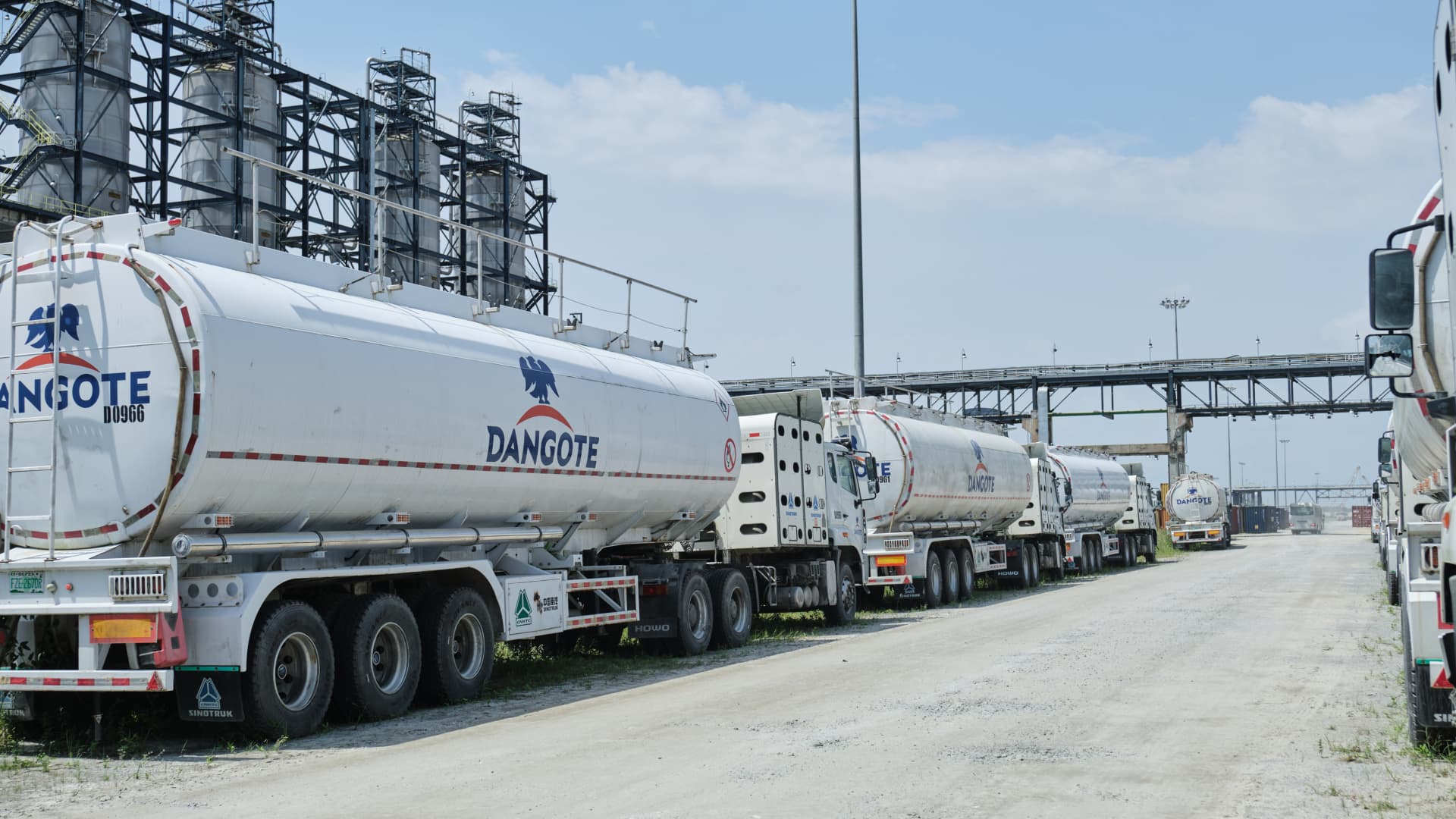

A significant milestone in Africa’s economic landscape is approaching as the Dangote Petroleum Refinery and Petrochemicals FZE prepares for its initial public offering (IPO) on December 1, 2026. Founded by Nigerian billionaire Aliko Dangote, this refinery is anticipated to become the continent’s largest publicly traded company, marking a pivotal moment for both local and global investors. With applications pouring in from 120 countries, including all 54 African nations, the IPO is being heralded as a chance for the public to own a piece of a venture that promises to stimulate economic growth and job creation across the region.
| Article Subheadings |
|---|
| 1) The Background of Dangote Refinery |
| 2) The IPO Details |
| 3) Global Interest in IPO |
| 4) Impact on Nigeria’s Economy |
| 5) Future Prospects and Challenges |
The Background of Dangote Refinery
The Dangote Petroleum Refinery is a massive facility designed to revolutionize not only Nigeria’s energy sector but the broader African market as well. Established at a reported cost of approximately $20 billion, the refinery began operations in 2024 and has become one of the largest of its kind globally. With a crude oil distillation capacity estimated to be between 650,000 to 700,000 barrels per day, the refinery stands out as a “crown jewel” in Nigeria’s energy industry.
Since its inception, the refinery has played a crucial role in addressing Nigeria’s fuel supply challenges. Prior to its establishment, Nigeria faced chronic fuel shortages, compounded by heavy reliance on imported refined petroleum products. The Dangote Refinery was envisioned to alleviate this burden and enhance local fuel production capacities.
Moreover, the facility has rapidly emerged as a significant provider of jet fuel, particularly in recent months. As economic and geopolitical factors shifted supply chains, buyers began turning towards West Africa to mitigate disruptions caused by conflicts, notably in the Middle East. Analysts have noted that the refinery’s presence in the market is not merely beneficial but essential for stabilizing fuel availability across the region.
The IPO Details
The upcoming IPO of Dangote Refinery is generating considerable buzz, both domestically and internationally. The shares will be offered at a price of 525 naira, equivalent to approximately $0.39, with a minimum subscription requirement of just ten shares. This pricing strategy aims to democratize access and encourage participation from ordinary Nigerians and investors across Africa.
Aliko Dangote, during the IPO’s launch, emphasized that the offering is more than just a capital-raising venture; it is positioned as an opportunity for individuals to share in the refinery’s growth. “The IPO is not simply a financial enterprise but a means of allowing workers and everyday Nigerians to invest in their own future,” he stated, highlighting his commitment to fostering economic inclusion.
Reports indicate that the IPO has seen overwhelming interest, leading to oversubscription from thousands of potential investors. This level of engagement underscores the confidence in the refinery’s operational success and future potential, suggesting that it may soon become one of the largest stock market listings in Africa’s history, with an implied valuation that could soar to around $47 billion, if market conditions permit.
Global Interest in IPO
The Dangote Refinery’s IPO has captured attention far beyond Nigeria’s borders, drawing interest from investors across 120 countries. This response indicates not only confidence in the refinery’s operational framework but also enthusiasm for investing in African markets, which have historically faced skepticism from global investors.
The participation of investors from various African nations highlights the IPO’s accessibility and potential for fostering a sense of collective ownership among stakeholders. As the richest person in Africa, Aliko Dangote’s vision for the refinery has resonated with many who see it as a foundation for future growth in Nigeria’s industrial landscape.
Furthermore, analysts suggest that this IPO may serve as a catalyst for other African industrialists. David Omojomolo, an emerging market economist, stated, “The Dangote Refinery has kindled global interest because it represents an industrial policy success story, and it has the potential to inspire investment in regional industrialization.” Such sentiments reflect broader hopes that this landmark event could lead to stronger resilience in Africa’s industrial sector.
Impact on Nigeria’s Economy
The IPO is poised to have a significant impact on Nigeria’s economy, as the revenue generated will not only fuel further expansion of the refinery but also provide critical funding for local job creation. Analysts have pointed out that the refinery’s operational success aligns with improving Nigeria’s self-sufficiency in energy production and reduces dependence on costly fuel imports.
Moreover, the heightened interest in this IPO signifies a surge in investor confidence within Africa’s emerging markets. With ongoing challenges such as inflation and currency fluctuations, the success of the refinery could enhance Nigeria’s financial landscape and attract more investments across various sectors.
Experts argue that a thriving refinery supports not just the immediate economy through job creation but also has ripple effects throughout the supply chain. As Dangote Refinery continues to ramp up operations, it is positioned to keep West Africa less reliant on imports, particularly for gasoline, thereby stabilizing fuel prices and promoting economic growth.
Future Prospects and Challenges
While the spotlight on the Dangote Petroleum Refinery is undeniably positive, several challenges must be addressed to ensure the projected growth materializes. Analysts have raised concerns over construction costs and potential commissioning delays, which could affect the refinery’s investment case. With ambitions to double the refining capacity to 1.4 million barrels per day by 2029, stakeholders remain cautious about the feasibility of these targets.
As competition in the global fuel market intensifies, maintaining profitability amidst fluctuating margins will be essential. “Currently, it feels like purchasing the hype surrounding these developments,” remarked a maritime and energy analyst from Blue Water Strategy, highlighting the speculative elements at play.
Moving forward, effective management practices and strategic investments will be crucial. The refinery’s ability to navigate these challenges while fulfilling its promises will significantly influence perceptions of African investments and could establish a long-term blueprint for future industrial initiatives across the continent.
| No. | Key Points |
|---|---|
| 1 | The Dangote Petroleum Refinery will launch its IPO on December 1, 2026. |
| 2 | Over 120 countries have shown interest in investing in the IPO. |
| 3 | The IPO is priced at 525 naira ($0.39), designed to encourage broad public investment. |
| 4 | The refinery significantly impacts Nigeria’s energy self-sufficiency and economic stability. |
| 5 | Challenges remain regarding construction costs and market competition. |
Summary
The upcoming IPO of Dangote Petroleum Refinery marks a pivotal moment not just for Nigeria but for the entire African continent. With extensive global interest and a new funding strategy aimed at enhancing local economic participation, this event stands to redefine perceptions of African industrial potential. While challenges exist, the refinery’s successful operation can stimulate economic growth, reduce dependence on imports, and lay the groundwork for future investments in the region.
Frequently Asked Questions
Question: What makes the Dangote Refinery significant?
The Dangote Refinery is significant because it is designed to revolutionize Nigeria’s fuel market, reduce import dependence, and promote energy self-sufficiency throughout West Africa.
Question: How is the IPO structured to benefit ordinary Nigerians?
The IPO has a minimum subscription of just ten shares priced at 525 naira, making it accessible for ordinary Nigerians and allowing them to invest in the refinery’s future growth.
Question: What are the primary challenges facing the Dangote Refinery?
Key challenges include potential construction delays, market competition, and ensuring that profitability is maintained amidst fluctuating refining margins.
