

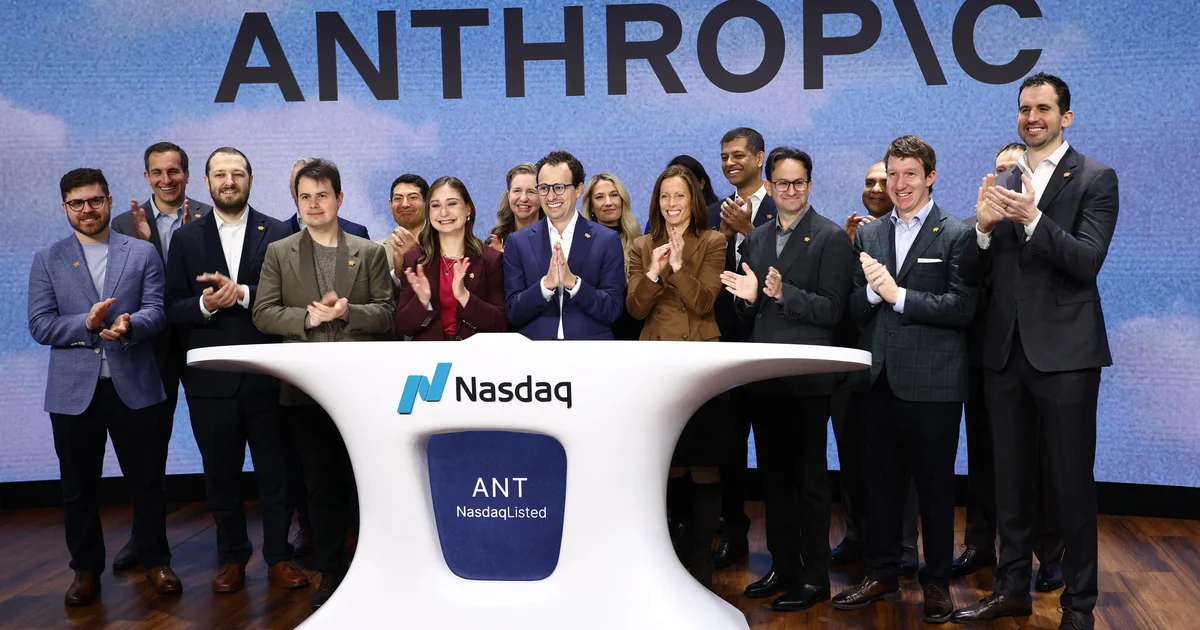

In a historic moment for the technology sector, Anthropic, an artificial intelligence (AI) developer, made an impressive debut on the Nasdaq stock exchange with the largest initial public offering (IPO) in history. The company, which trades under the ticker “ANT,” opened its shares at $111.50—34% above the offering price of $83—quickly reaching a value of over $2 trillion at its peak. Although shares closed at $97.17 on the same day, reflecting a 17% increase, this milestone has garnered significant attention amid fluctuating stock market conditions.
| Article Subheadings |
|---|
| 1) Overview of the IPO Success |
| 2) Reactions from the Leadership |
| 3) Financial Implications for Investors |
| 4) Key Challenges and Future Prospects |
| 5) Market Reception and Broader Impact on AI Stocks |
Overview of the IPO Success
Anthropic’s IPO marks a significant achievement in the finance and tech landscape. The company successfully raised $81.3 billion, surpassing the previous record held by SpaceX, which raised $75 billion during its public offering. With this IPO, Anthropic’s valuation reached approximately $1.5 trillion, positioning it above established giants like Warren Buffett’s Berkshire Hathaway, JPMorgan Chase, and Walmart.
The shares opened robustly at $111.50, reflecting substantial investor interest and optimism regarding the firm’s future potential. Despite a partial decline during the day’s trading, where the stock reached a low of $97.17, the initial surge demonstrates a strong market embrace of Anthropic’s vision for AI. Analysts have varied opinions on the sustainability of such valuations, but the initial performance certainly indicates a resounding confidence from the investor community.
Notably, the IPO price of $83 was raised amid high demand, showcasing the strong interest among investors eager to tap into the AI market. According to data, approximately 7.4% of Anthropic’s shares were made available for public trading, lending further support to the stock’s solid debut.
Reactions from the Leadership
During the company’s market debut, CEO Dario Amodei and co-founder Daniela Amodei expressed their pride and excitement about the journey ahead. Celebrating the launch at the Nasdaq MarketSite in New York City, Dario Amodei conveyed a broader mission: “The goal is to make the whole industry better, regardless of whether Anthropic is winning or losing at any given time.” His remarks reflect a commitment to steering the AI industry towards positive outcomes.
The leadership framed this IPO as a transformative opportunity for the company and the AI ecosystem at large.
“The advent of machine intelligence is one of the seminal moments in human history, and we have a rare opportunity to shape it for the better,”
added Dario Amodei, underscoring the potential impact of AI technology on society. The leadership’s focus on collaboration and collective progress highlights the values of innovation and responsibility that Anthropic aims to uphold.
Financial Implications for Investors
The financial ramifications of Anthropic’s IPO extend beyond immediate stock performance. Many early investors and the company’s seven co-founders have experienced considerable increases in their net worth, with estimates suggesting they could each be worth around $20 billion following the IPO. Furthermore, this public offering is set to create wealth for numerous employees who now have access to substantial stock holdings.
Despite the rocky road that often follows exorbitant IPOs, the high demand for shares demonstrates a robust investor appetite for AI-related stocks. Financial analysts view Anthropic’s IPO as a potential catalyst for broader market confidence in technology investments, particularly in AI, which has been a sector of increasing scrutiny due to rising debt and valuation concerns.
Investment firm Renaissance Capital indicated that Anthropic’s share price could reach $100 by the end of the first trading day, which would further bolster its market standing. However, caution remains paramount, as history has shown that stocks often experience volatility in subsequent months post-IPO.
Key Challenges and Future Prospects
As Anthropic progresses after its IPO, several challenges lie ahead. The company is still operating at a loss, necessitating significant investments to sustain its position as a front-runner in AI technologies. Dario Amodei articulated a vision that could potentially change the landscape of scientific inquiry and healthcare, stating,
“I believe sufficient and powerful AI, working in concert with humans, could compress a century of medical and scientific progress into a decade.”
Such ambitious aspirations require substantial capital and an agile approach to innovation.
Anthropic has noted plans to raise an additional $26 billion from strategic partners, which include technology heavyweights like Google, Microsoft, and Nvidia. As they ramp up operations, the cash influx from the IPO will likely be pivotal for scaling technology and attracting talent.
Nonetheless, Matthew Kennedy, a senior market strategist, posited that the substantial debt—approximately $6.2 billion as of September—could challenge the company’s ability to allocate resources effectively to keep up with competitive advancements in the sector. The pressure to demonstrate viable returns on investment against a backdrop of rapid technological development is mounting.
Market Reception and Broader Impact on AI Stocks
The response to Anthropic’s IPO has coincided with a more extensive reevaluation of AI stocks. While the robust demand for shares suggests lasting investor faith in AI’s potential, analysts have commented that the market remains sensitive to factors such as increasing operational costs and a perceived regulatory aftermath post-elections.
Sam Grelck, an analyst at Truist Advisory Services, indicated that “I wouldn’t view Anthropic’s IPO as a verdict on AI,” signaling that the company’s performance is just one of many indicators of current investor sentiment. The sentiment is heightened in the face of recent industry turbulence, including changes at major firms like Nvidia.
As the market grapples with the complexities of financing data centers and the long-term prospects of AI investments, Anthropic’s performance could serve as a litmus test for investor enthusiasm in the sector. If the company manages to sustain its momentum, it may alleviate some investor anxieties and help recalibrate expectations regarding the future of AI stocks.
| No. | Key Points |
|---|---|
| 1 | Anthropic completed the largest IPO in history, raising $81.3 billion. |
| 2 | The IPO values Anthropic at approximately $1.5 trillion. |
| 3 | The CEO emphasized the importance of collaboration for the advancement of the AI sector. |
| 4 | Many Anthropic employees are poised to become millionaires thanks to the IPO. |
| 5 | Market reception suggests a continued appetite for AI stocks despite inherent risks. |
Summary
The spectacular IPO of Anthropic encapsulates a transformative phase in the AI industry, reflecting exceptional investor confidence and the company’s ambitious trajectory. While the immediate financial implications are significant for stakeholders, the long-term sustainability of Anthropic’s value hinges on its ability to navigate operational challenges and meet evolving market demands. This historic event not only redefines benchmarks in the tech sector but also highlights the importance of strategic investment in AI technologies going forward.
Frequently Asked Questions
Question: What is the significance of Anthropic’s IPO?
Anthropic’s IPO is significant as it marks the largest in history, raising $81.3 billion and valuing the company at about $1.5 trillion, indicating robust investor interest in AI.
Question: How does Anthropic plan to utilize the funds raised from the IPO?
The funds from the IPO will be used to support Anthropic’s ongoing AI development, aiming to improve various aspects of human life through technology while keeping up with industry competition.
Question: What challenges might Anthropic face following its IPO?
Anthropic faces challenges such as managing significant debt, maintaining competitive advancements in AI, and addressing investor expectations in an evolving market landscape.
