

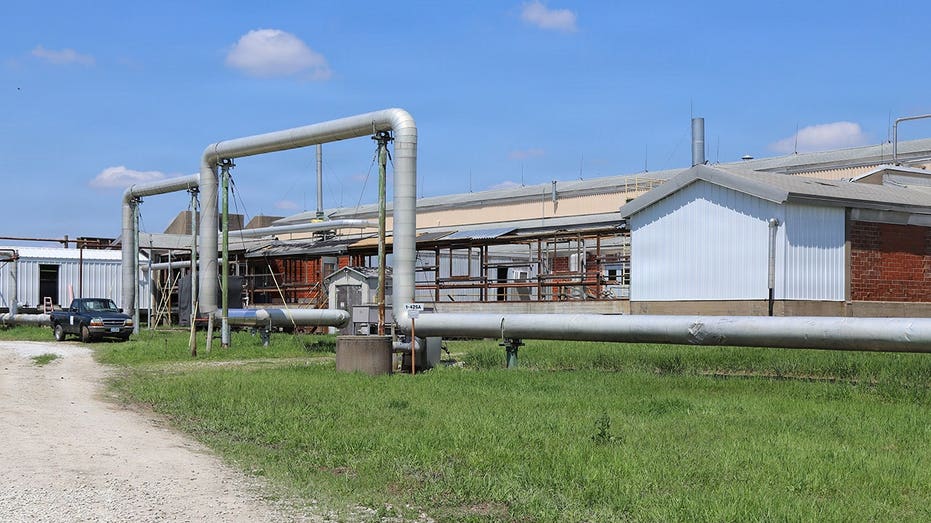

The U.S. Army postponed a controlled detonation of five tons of unstable lead azide at the Iowa Army Ammunition Plant in Middletown until Monday, Nov. 23, 2026. The delay was ordered as temperatures are expected to fall, potentially increasing the chemical’s instability. The decision followed a request from Iowa Gov. Kim Reynolds and lawsuits from environmental groups seeking to stop the operation. About 400 residents had been advised to leave the area ahead of the planned blast.
| 1) | Army moves the detonation to Monday |
| 2) | Residents face a temporary evacuation |
| 3) | Degraded lead azide presents an explosion risk |
| 4) | Smoke modeling shows a potential regional plume |
| 5) | Officials continue preparations and coordination |
Army moves the detonation to Monday
Acting Secretary of the Army Adam Telle directed Army Materiel Command to postpone the operation from Friday, Nov. 20, to Monday, Nov. 23. The detonation is planned at the Iowa Army Ammunition Plant in Middletown, where 68 drums of degraded lead azide have been stored in bunkers for more than 20 years.
The Army said the new date represents the latest available window before a forecasted temperature drop. Officials are concerned that colder conditions could further destabilize the material. The postponement followed a request from Iowa Gov. Kim Reynolds, who cited public safety concerns, while environmental organizations pursued legal action to halt the blast.
“Public safety is the Army’s top priority, and I have directed Army Materiel Command to postpone tomorrow’s controlled detonation at the Iowa Army Ammunition Plant in Middletown, Iowa until Monday, November 23,” Telle said.
Residents face a temporary evacuation
Roughly 400 people in Middletown had been advised to leave their homes on Friday morning before the planned operation. The evacuation guidance was issued because of the potential for localized window damage and a dust plume that could contain lead particles.
The delay temporarily changes the timing of those precautions, but the Army said it would continue issuing updated safety and evacuation guidance before Monday’s operation. The affected community is located near the ammunition plant, where officials are preparing for a controlled blast rather than attempting to move the unstable chemical.
Degraded lead azide presents an explosion risk
Lead azide is used to initiate munitions. Army personnel discovered in March that water had evaporated from the stabilizing baths surrounding the barrels. That loss of water allowed the chemical to recrystallize, creating a condition that officials said made it too dangerous to handle or relocate safely.
The Environmental Protection Agency approved an emergency permit for the detonation earlier in November. The agency said the recrystallized material could explode spontaneously because it is highly sensitive to friction and shock. The controlled blast is therefore intended to address the danger posed by long-term storage and physical movement of the drums.
“The recrystallization of lead azide has created a risk of spontaneous explosion due to the material’s sensitivity to friction and shock, creating a highly unstable and dangerous situation,” the Environmental Protection Agency said.
Smoke modeling shows a potential regional plume
An Army smoke model released Tuesday projected that the plume could travel as far as 25 miles north to Wapello, Iowa. It also showed potential spread across parts of eastern Iowa and northwestern Illinois, with particles possibly settling on farmland and playgrounds.
The model specifically warned that children younger than six are especially vulnerable to lead exposure. The projected reach of the plume has increased concern among residents and environmental groups, who have challenged the operation while the Army and regulators prepare safety measures.
Officials continue preparations and coordination
The Army said it will continue coordinating with the Environmental Protection Agency, Iowa officials, and local authorities before the rescheduled detonation. That coordination includes communicating updated evacuation instructions and other safety information to residents near the plant.
The operation remains scheduled for Monday, Nov. 23, subject to the Army’s stated safety planning. Officials are balancing the immediate risk posed by unstable lead azide against the potential effects of the controlled blast, including temporary evacuation, window damage, and lead-bearing dust.
| Number | Key Point |
| 1 | The detonation was moved from Friday to Monday, Nov. 23, 2026. |
| 2 | The operation involves 68 drums containing five tons of degraded lead azide. |
| 3 | About 400 Middletown residents had been advised to evacuate temporarily. |
| 4 | Army modeling projected a possible plume extending into Iowa and Illinois. |
| 5 | The Army is coordinating with federal, state, and local officials on safety guidance. |
Summary
The Army delayed the controlled detonation because an approaching temperature drop could worsen the instability of the lead azide. The rescheduled operation remains a significant public safety event for Middletown, with evacuation planning and plume monitoring continuing ahead of Monday’s planned blast.
Frequently Asked Questions
Why was the detonation delayed?
The Army delayed the operation until Monday because colder weather could further destabilize the lead azide. The decision also followed a request from Iowa Gov. Kim Reynolds and legal challenges from environmental groups.
What material will be detonated?
The operation involves 68 drums containing about five tons of degraded lead azide, a chemical used to initiate munitions.
What precautions were planned for residents?
About 400 Middletown residents had been advised to leave temporarily because of possible localized window damage and a dust plume that could contain lead particles.
How far could the plume travel?
An Army smoke model projected that the plume could extend 25 miles north to Wapello, Iowa, and spread across parts of eastern Iowa and northwestern Illinois.
