

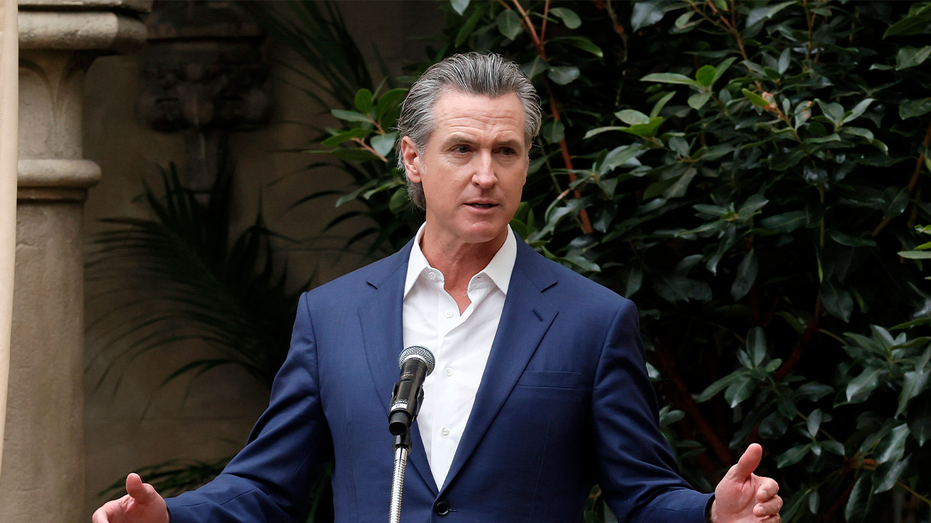

Gavin Newsom is reportedly considering commuting the sentences of California’s 563 death row inmates to life without parole in his final weeks in office. The potential blanket action has drawn criticism from victims’ rights advocates, prosecutors and law enforcement officials. Marc Klaas, whose daughter Polly was murdered in 1993, said the proposal would disregard families who have spent decades pursuing convictions and appeals.
Newsom’s office has reiterated his opposition to the death penalty, while California voters have repeatedly supported retaining capital punishment. The reported discussions followed the botched execution of Christa Pike in Tennessee. Pike survived two doses of the execution drug pentobarbital on Sept. 30 and returned to prison. California has not executed an inmate since 2006, and Newsom imposed a moratorium shortly after taking office in 2019.
| 1) | Reported commutation plan and California’s death row |
| 2) | Marc Klaas’s criticism of the proposal |
| 3) | Newsom’s position on executions |
| 4) | Opposition from prosecutors and law enforcement |
| 5) | Voter decisions and the broader debate |
Reported commutation plan and California’s death row
The potential action would affect all 563 people on California’s death row by changing their sentences to life imprisonment without the possibility of parole. The proposal has not been presented as a completed executive decision. It would apply statewide and replace capital sentences imposed by judges after individual cases, including the sentence imposed on Richard Allen Davis for the 1993 kidnapping and murder of 12-year-old Polly Klaas.
The controversy centers on whether one statewide commutation can appropriately address cases involving different crimes, victims and legal histories. Critics say a blanket measure would remove the individualized consideration given to each conviction and sentence. Supporters of ending executions would view the proposal through Newsom’s stated moral opposition to intentionally killing another person.
Marc Klaas’s criticism of the proposal
Marc Klaas, Polly Klaas’s father, said victims’ families followed the justice process by attending trials, awaiting verdicts and enduring years of unsuccessful appeals. He argued that a blanket commutation would deny those families the punishment recommended by juries and imposed by judges. His criticism comes from personal experience because Davis remains on death row.
“Baby killers, cop killers, spree killers and serial killers have all found an ally in Gavin Newsom,” Marc Klaas said.
Klaas also recalled confronting Newsom about the death penalty. He said the governor told him he did not want to execute an innocent person or become the official responsible for executing large numbers of inmates. Klaas contended that neither scenario reflected how California’s capital punishment system was operating.
Newsom’s position on executions
Gavin Newsom, a Democrat, ordered a moratorium on executions about two months after taking office and dismantled the execution chamber at San Quentin State Prison. California has not carried out an execution since 2006. His administration has described his position as consistent and grounded in opposition to the intentional killing of another person.
“He believes the intentional killing of another person is wrong,” a spokesperson for Gavin Newsom said.
Newsom has also discussed what he called his “rocking chair test,” referring to the moral judgment he expects to make about his decisions later in life. The reported consideration of commutations gained attention after the Tennessee execution incident involving Christa Pike, but no final California decision has been stated.
Opposition from prosecutors and law enforcement
Sheriffs, prosecutors and other law enforcement officials have objected to a blanket sentence change. Don Barnes, the Orange County sheriff, called it a second major affront to California voters’ decision to retain the death penalty. The criticism reflects concern that the governor could override the outcomes of hundreds of separate capital cases through one broad action.
Dan Dow, the San Luis Obispo County district attorney, wrote to Newsom that a blanket commutation would disrespect murder victims and surviving relatives. He argued that justice must account for the facts of each crime, defendant and victim, rather than treating every capital case identically.
“Justice is always individualized,” Dan Dow wrote.
Voter decisions and the broader debate
California voters addressed the death penalty in two statewide initiatives in 2016. They rejected Proposition 62, which would have repealed capital punishment, while narrowly approving Proposition 66, which sought to speed up the appeals process. Those results are central to opponents’ argument that a mass commutation would conflict with public votes as well as court-imposed sentences.
Klaas has urged Newsom to focus instead on homelessness, utility costs and gasoline prices. The dispute combines a moral debate about state executions with questions about executive authority, voter intent and the rights of victims’ families. Any decision would affect California’s death penalty system and intensify a long-running national argument over capital punishment.
| No. | Key Point |
|---|---|
| 1 | Newsom is reportedly considering commuting all 563 California death sentences to life without parole. |
| 2 | Marc Klaas says the proposal would betray victims’ families. |
| 3 | Newsom has opposed executions since imposing a moratorium in 2019. |
| 4 | Prosecutors and law enforcement officials say capital cases require individualized justice. |
Summary
The reported commutation plan has created a conflict between Newsom’s opposition to the death penalty and the demands of victims’ families, prosecutors and law enforcement officials. Critics point to California’s voter-approved capital punishment framework and argue that one executive action should not replace decisions made in individual cases. The controversy remains unresolved unless and until the governor announces a formal decision.
Frequently Asked Questions
What is Gavin Newsom reportedly considering?
He is reportedly considering commuting the sentences of California’s 563 death row inmates to life in prison without the possibility of parole.
Why is Marc Klaas opposing the proposal?
Klaas says a blanket commutation would deny victims’ families the justice imposed through individual trials and sentences, including in his daughter Polly’s murder case.
What is Newsom’s position on the death penalty?
Newsom has opposed executions, imposed a moratorium shortly after taking office and said he believes intentionally killing another person is wrong.
How have California voters addressed capital punishment?
In 2016, voters rejected a measure to repeal the death penalty and narrowly approved a separate measure intended to expedite death penalty appeals.
