

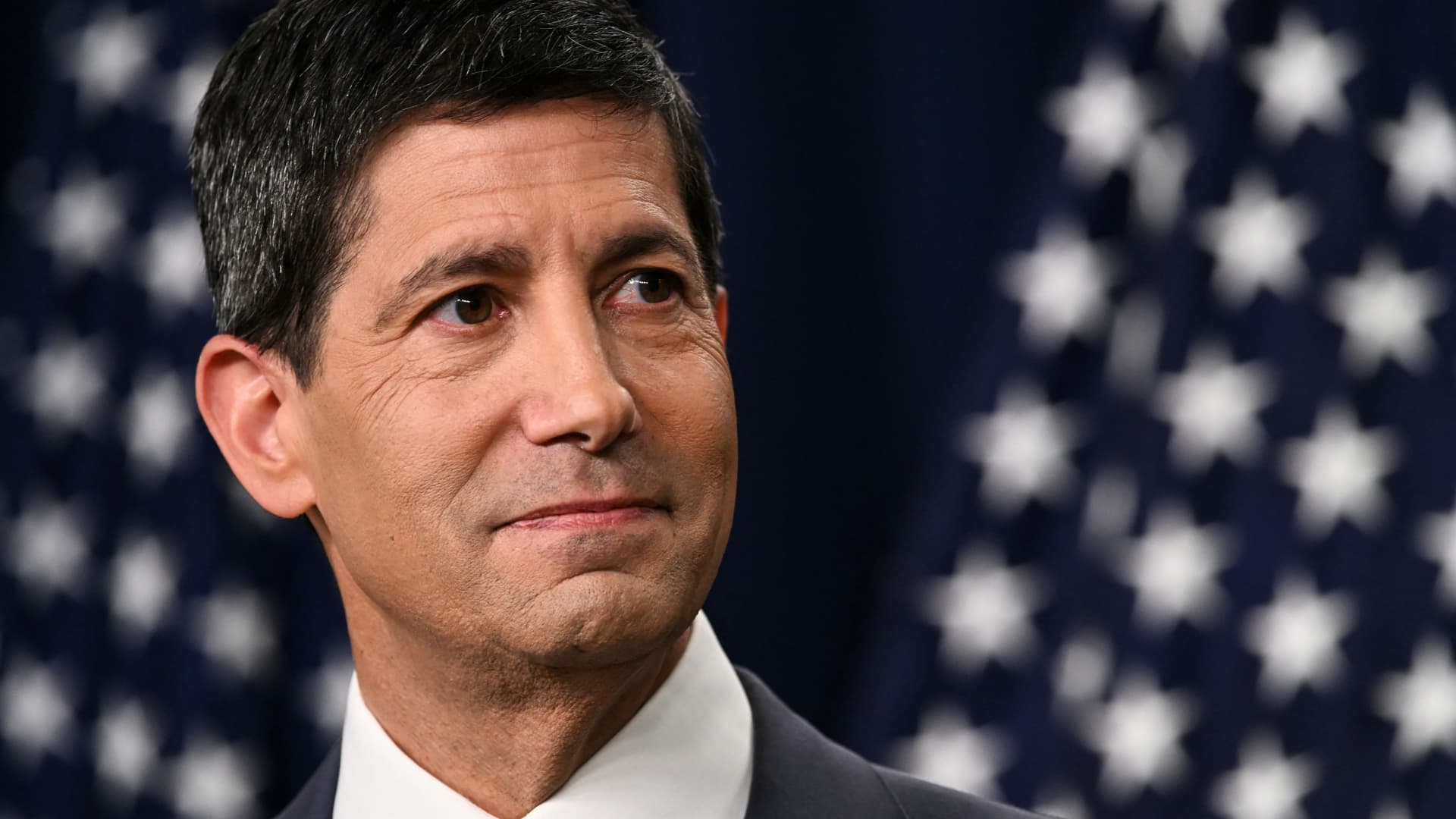

Federal Reserve Chairman Kevin Warsh is taking bold steps to reshape the central bank’s relationship with the financial markets since assuming office in May. His approach includes reducing the number of meetings held by the Federal Open Market Committee (FOMC) and rethinking traditional communication strategies, which could bring both volatility and new opportunities for investors. Experts are analyzing the implications of these changes, particularly how they may affect market stability and investor strategies in the future.
| Article Subheadings |
|---|
| 1) Strategies for Change in Communication |
| 2) The Debate Over Meeting Frequency |
| 3) Market Reactions and Investor Sentiment |
| 4) Ramifications for Long-Term Stability |
| 5) Future Challenges Ahead |
Strategies for Change in Communication
Federal Reserve Chairman Kevin Warsh has made significant changes in the central bank’s communication style since his appointment. Emphasizing less transparency compared to his predecessors, Warsh has curtailed forward guidance, which traditionally indicates future rate movements to the market. This has included shortening the duration and content of post-meeting statements and providing often abstract responses during press conferences.
Warsh’s approach represents a drastic shift from the open-dialogue culture established over the past decades. Experts within the Fed, and outside observers, are mixed in their evaluations. While some argue that this could lead to increased market uncertainty, others view it as a necessary adjustment to a marketplace that has grown overly reliant on clear Fed signals.
The implications of this strategy stretch far beyond mere rhetoric; they aim to refocus market dynamics on tangible economic indicators rather than Fed messaging. By emphasizing data in decision-making, Warsh is advocating for what he calls a more sustainable and relevant market reaction, stating,
“Market participants are learning to play the ball, not the referee.”
The Debate Over Meeting Frequency
In a move that has sparked considerable debate among economists and market analysts, Warsh has introduced the idea of possibly reducing the frequency of FOMC meetings. Traditionally, the Fed meets eight times a year to discuss monetary policy. By revisiting this long-held schedule, there are concerns about how such changes could impact market predictability and investor behavior.
This proposal has been described by a Fed source as “mostly hypothetical,” indicating that it is still under consideration. Notably, Minneapolis Fed President Neel Kashkari expressed his openness to reassessing the meeting timetable, emphasizing that there is no “magic number” regarding how often the board should meet. Similarly, Anna Paulson, President of the Philadelphia Fed, echoed this sentiment, advocating for robust discussions about the subject.
However, delaying meetings could exacerbate uncertainty by limiting the Fed’s ability to react promptly to changing economic conditions. According to Bill English, a former head of monetary affairs, the cost of having fewer meetings lies in potentially failing to act on timely economic indicators. He warned against too few meetings leading to significant and disruptive market implications.
Market Reactions and Investor Sentiment
Despite these profound changes in communication and potential adjustments in meeting frequency, market observers have noted a muted response thus far. Some analysts believe that either the markets are focusing on external geopolitical issues, or that investors are still absorbing the ramifications of Warsh’s strategies. The Dow Jones Industrial Average has experienced a significant uptick since Warsh started his tenure, adding about 3,500 points, or roughly 7%. This strong performance suggests that investors may be cautiously optimistic about the new direction.
Bond yields have also adjusted slightly, indicating some movement but not a major shift. The 2-year Treasury yields increased by about 8 basis points since Warsh’s appointment, signaling mixed reactions regarding short-term debt. Overall, many experts suggest that Warsh’s quiet confidence might be allowing the market to feel more at ease under his leadership.
However, concerns remain. According to Dario Perkins, head of global macroeconomics at TS Lombard, Warsh’s paradigm could usher in a period characterized by greater volatility, prompting investors to recalibrate their strategies for trading in an environment where meeting outcomes are less predictable. Perkins indicated that this new game plan may ultimately yield more trading opportunities.
Ramifications for Long-Term Stability
The potential for longer-term impacts from Warsh’s approach raises significant questions. Some analysts have cautioned that meeting fewer times a year and abandoning forward guidance may create a vacuum of information. This lack of clarity could pressure banks and financial institutions to make rapid adjustments without necessary data. According to expert opinions, such a reactive strategy may lead to unpredictable fluctuations in the market.
For example, indications suggest that long-term bond yields might rise faster than short-term rates, a situation analysts refer to as a “bear steepener.” This situation can cast shadows on fixed-income investors, who could find themselves navigating an increasingly complex yield curve. Komal Sri-Kumar, president of Sri-Kumar Global Strategies, explained that rising inflation expectations can hinder government’s ability to finance its $31.1 trillion debt effectively.
Moreover, the traditional reliance on the Fed’s dot plot—showing individual members’ expectations for rate hikes—could diminish under Warsh’s strategies. This shift might complicate how market participants align their expectations for the economy moving forward.
Future Challenges Ahead
Moving forward, Warsh faces several challenges as he attempts to reshape how the Fed interacts with the markets. With an important speech scheduled during the Fed’s annual gathering in Jackson Hole, Wyoming, he bears the responsibility of laying out a clearer vision amidst widespread speculation on his strategies. His prior comments suggest that he aims for a “detox” for markets, but achieving a balanced approach will be no small task.
As investors grow accustomed to this new environment, they will need to weigh their investment strategies accordingly. The balance between transparency and effectiveness will require continued adjustments, both from the Fed and financial market participants. Moving into the future, analysts will be closely monitoring Warsh’s decisions as he undertakes what could be a transformative period for the Federal Reserve and its interaction with market dynamics.
| No. | Key Points |
|---|---|
| 1 | Federal Reserve Chairman Kevin Warsh is changing Fed communication strategies to reduce market volatility. |
| 2 | The possibility of reducing FOMC meetings from eight to fewer has been discussed as a potential shift in policy. |
| 3 | Market reactions have been relatively muted despite an increase in the Dow since Warsh took over. |
| 4 | Experts warn that fewer meetings could lead to unpredictable market behavior and increased pressure on financial institutions. |
| 5 | Future challenges for Warsh include maintaining a balance between transparency and effectiveness while addressing investor concerns. |
Summary
In summary, the recent changes introduced by Federal Reserve Chairman Kevin Warsh underscore a pivotal shift in the way monetary policy is communicated and conducted. By contemplating fewer meetings and revising traditional guidance strategies, Warsh is aiming to recalibrate the relationship between the Fed and the financial markets. While there are potential advantages to this approach, including reduced market overreliance on Fed messaging, significant challenges lie ahead in mitigating volatility and fostering a healthy investment climate. As these developments unfold, both investors and market strategists will need to remain vigilant and adaptable to the evolving monetary landscape.
Frequently Asked Questions
Question: What are the implications of fewer Federal Reserve meetings?
Fewer Federal Reserve meetings could lead to increased volatility in markets, as investors may find it more difficult to anticipate the Fed’s actions and reactions to economic changes. This shift might require investors to take a more data-driven approach rather than relying on Fed communication.
Question: How has the market reacted to Warsh’s changes?
The market has shown somewhat muted reactions since Warsh’s appointment, with the Dow Jones Industrial Average rising significantly. However, there are indications that investors may need time to adjust to the less transparent environment under Warsh’s leadership.
Question: What is forward guidance, and why is it important?
Forward guidance refers to the Fed’s approach of openly communicating its future monetary policy plans to help markets anticipate changes. This is important because it shapes investor expectations and can affect market stability. Warsh’s reduction in forward guidance could lead to uncertainty and require different trading strategies from investors.
