

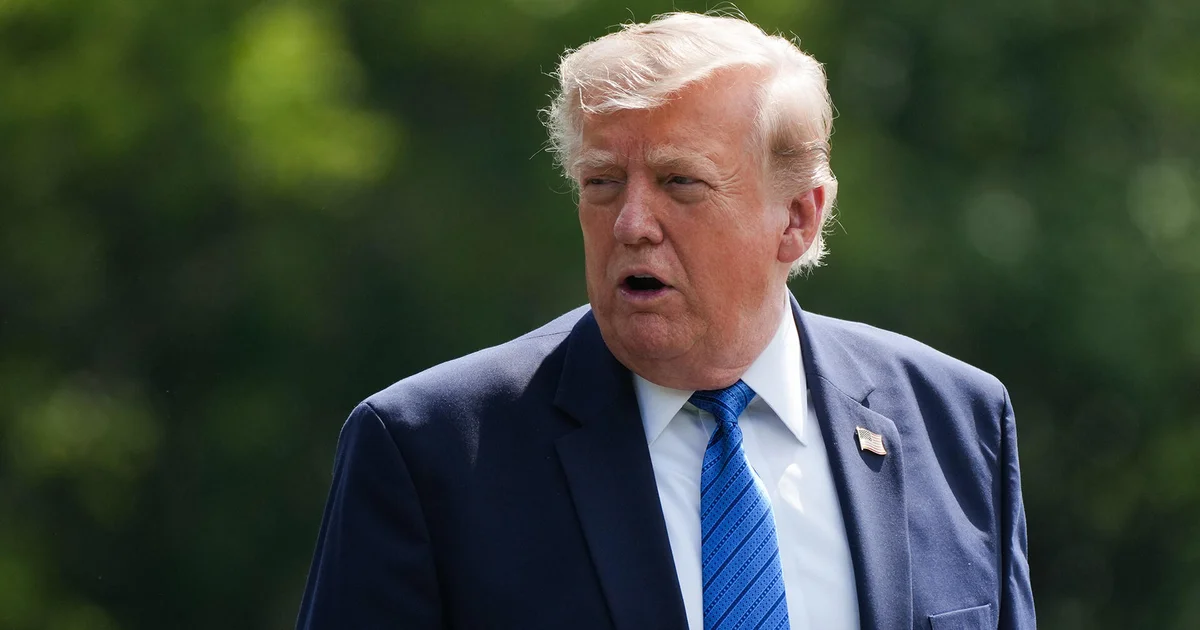

Recent discussions have surfaced regarding the state of U.S. munitions in light of ongoing military engagements in the region. President Trump has publicly countered reports that point to significant shortages of munitions, specifically following an extended conflict with Iran. In his statements, he reassured that America possesses ample resources, while contrasting departmental assessments reveal a grim reality about stockpiles of critical weaponry.
| Article Subheadings |
|---|
| 1) President Trump’s Response to Munitions Shortages |
| 2) Insights from U.S. Military Officials |
| 3) The Impact of Operations on Stockpiles |
| 4) Evaluation of Defensive Systems |
| 5) Future Outlook on U.S. Military Readiness |
President Trump’s Response to Munitions Shortages
On Thursday, President Trump addressed recent reports concerning U.S. munitions shortages, categorically denying their accuracy. He utilized his Truth Social platform to state, “The U.S. has massive amounts of ‘munitions,’ especially of certain types.” In his post, he highlighted ongoing production efforts and the establishment of new manufacturing facilities, describing them as unprecedented in U.S. history. Trump further asserted that the sources leaking this purported information are being actively sought after, implying a severe stance towards those spreading what he termed “treasonous statements.”
Insights from U.S. Military Officials
Reports, notably from CBS News, indicate that the operational demands have significantly strained U.S. munitions stockpiles, particularly during the ongoing military operations against Iran. Two sources cited in the report confirmed that the U.S. has nearly exhausted its global surplus of long-range precision missiles. Furthermore, it appears that the Army Tactical Missile Systems (ATACMS) and Precision Strike Missiles have been used extensively throughout the conflict, raising alarms about future operational capabilities.
The Impact of Operations on Stockpiles
As military engagements have surged, U.S. officials have reported dwindling inventories of crucial missile types. Initial assessments reveal that the United States has significantly discharged its stock of precision munitions at a rate that surpasses the ability of defense manufacturers to replenish. The expansive military operations, notably designated as Operation Epic Fury, have left a substantial dent in the available missile stockpile, raising concerns regarding sustainability.
Evaluation of Defensive Systems
Particular concern has been raised regarding the Patriot and Terminal High Altitude Area Defense (THAAD) systems, with U.S. officials indicating that the rates at which these interceptors are being utilized are faster than current manufacturing capabilities. Reports from the Center for Strategic and International Studies (CSIS) highlight a drastic reduction in the number of available interceptors. The study estimated that before military actions commenced in the region, the U.S. possessed 2,330 Patriot units, which dwindled to between 759 and 827 by late July. Similarly, THAAD units decreased from 452 to between 234 and 278.
Future Outlook on U.S. Military Readiness
Analyses suggest that a return to pre-war inventory levels for the Patriot and THAAD systems could take years, potentially extending until mid-2029. Such prolonged shortages could severely impact U.S. military readiness and force posture in future operations. Chief Pentagon spokesperson Sean Parnell reassured the public about the military’s capabilities, declaring that the U.S. military remains unparalleled globally. On the other hand, Defense Secretary Pete Hegseth has downplayed the significance of stockpile concerns, dismissing them as “manufactured stories.”
| No. | Key Points |
|---|---|
| 1 | President Trump claims the U.S. has abundant munitions despite reports of shortages. |
| 2 | Military operations have significantly depleted critical munitions, especially long-range missiles. |
| 3 | U.S. officials express concerns about the sustainability of military operations. |
| 4 | Stockpiles of Patriot and THAAD interceptors have sharply decreased in recent months. |
| 5 | Estimates suggest a long road ahead for replenishing munitions and restoring military readiness. |
Summary
In summary, while President Trump’s assertions regarding ample U.S. munitions stockpiles contrast sharply with reports from military officials about significant depletions, the situation calls for careful scrutiny. The intersection of operational demands, strategic preparedness, and public perception will play a critical role in shaping U.S. military policy in the coming years, highlighting the importance of monitoring stockpile health and future military readiness.
Frequently Asked Questions
Question: Why does President Trump deny the reports of munitions shortages?
President Trump denies the reports to maintain confidence in U.S. military capabilities and to assure the public that current munitions production efforts are robust and ongoing.
Question: What are the implications of dwindling munitions stockpiles?
Dwindling munitions stockpiles could hinder the U.S. military’s operational readiness and effectiveness in future missions, potentially impacting national security and strategic interests.
Question: How long might it take to restore munitions inventories to pre-war levels?
Some estimates suggest it could take until mid-2029 for U.S. munitions inventories to return to pre-war levels, especially concerning critical systems like Patriot and THAAD interceptors.
