

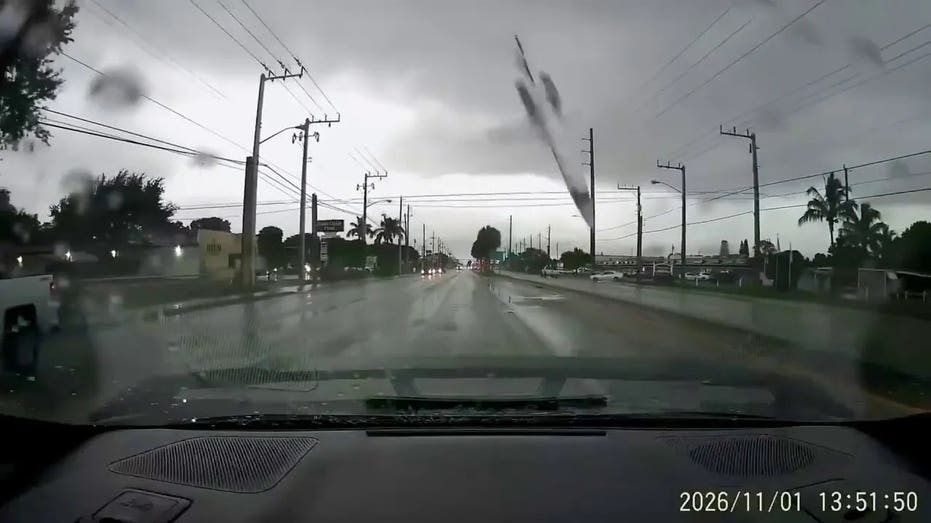

Federal investigators have recovered pieces of a Learjet 60’s left tail elevator as far as 3.8 miles from the Florida crash site. The findings indicate that the flight-control component may have separated before the aircraft struck the ground. A former National Transportation Safety Board investigator said the pilots’ effort to level the jet could have placed excessive stress on its structure. All nine people aboard the aircraft died in the Nov. 1 crash in Palm Beach County.
The aircraft departed Austin-Bergstrom International Airport at about 10:37 a.m. for North Eleuthera Airport in the Bahamas. It crashed shortly before 1 p.m. in a South Florida neighborhood, where the impact triggered a large fire. Investigators are also examining icing and turbulence reported by the crew at approximately 35,000 feet.
| 1) | Elevator debris points to a possible in-flight separation |
| 2) | Pilot control inputs are being examined |
| 3) | Weather remains a major focus of the investigation |
| 4) | Nine people died in the Palm Beach County crash |
| 5) | Investigators are still seeking critical evidence |
Elevator debris points to a possible in-flight separation
Investigators recovered the Learjet’s left tail elevator in three separate pieces. The elevator is a flight-control surface that helps control the aircraft’s pitch, or movement of the nose up and down. Pieces were found between 1.3 and 3.8 miles from the main crash site in Palm Beach County, Florida.
National Transportation Safety Board member Thomas B. Chapman described the component as important evidence. The distance between the debris and the impact area suggests that at least part of the elevator may have separated while the aircraft was still airborne, although investigators have not determined whether the component failed first or was torn away by aerodynamic forces.
Pilot control inputs are being examined
Former NTSB investigator Greg Feith said the debris pattern is consistent with a possible in-flight breakup. He pointed to flight data showing that the aircraft appeared to level off near 8,000 feet for a brief period after losing altitude.
“That may have been one of the pilots trying to control the airplane, level the airplane, and in doing so over-stretched the structure of the aircraft, causing those parts to fail and come off,” Feith said.
Feith said the elevator pieces were relatively close to the primary impact area, which could indicate that they separated at low altitude. This remains one possible explanation rather than an established cause. Investigators will compare the recovered components with flight records, structural evidence and the aircraft’s control systems.
Weather remains a major focus of the investigation
Federal investigators have identified weather conditions as a major focus. The crew reported icing and moderate turbulence at about 35,000 feet shortly before the aircraft experienced a rapid loss of altitude.
The investigation will examine whether ice accumulation, turbulence or the interaction of those conditions affected the Learjet’s performance and controllability. Officials will also assess whether weather contributed to unusual control inputs or increased structural loads. No final determination has been made about the role of weather in the crash.
Nine people died in the Palm Beach County crash
The Learjet crashed on Nov. 1 in Palm Beach County, killing everyone aboard. The victims included Austin technology entrepreneur Adam Robinson, 45; his wife, Helen Sharp, 40; and their children, Emma, 4, and Charlie, 2.
The family’s nanny, Anita Maria Cetina, also died, along with Rachael Reed and Charmi Fehr. The flight crew members were captain Jeff Gregory, 55, and copilot Nathalia Gadelha Filgueiras, 20. The aircraft had been traveling from Texas to the Bahamas when it went down in a residential area roughly nine miles from Mar-a-Lago.
Investigators are still seeking critical evidence
Investigators expected to gain access to the crash crater after public utility crews completed work around the site. Examination of the crater and surrounding debris field may help establish the aircraft’s impact angle, breakup sequence and final flight path.
The jet was equipped with a cockpit voice recorder, but officials had not found it and could not yet confirm whether it was aboard the aircraft when it crashed. Recovery of the recorder, if possible, could provide information about the crew’s actions, cockpit communications and the timing of the loss of control. Investigators are also reviewing the elevator fragments and other wreckage for evidence of pre-impact failure.
| 1 | Left tail elevator pieces were found up to 3.8 miles from the crash site. |
| 2 | A former investigator said pilot efforts to level the aircraft may have increased structural stress. |
| 3 | Icing and moderate turbulence were reported before the rapid descent. |
| 4 | All nine occupants, including two pilots and two young children, died. |
| 5 | The investigation is awaiting further wreckage examination and possible recorder recovery. |
Summary
The distribution of the elevator debris has raised the possibility that the Learjet experienced an in-flight breakup before impact. Investigators are assessing whether a flight-control failure, pilot control inputs, weather conditions or a combination of factors caused the separation. The crash’s official cause will depend on analysis of the wreckage, flight information, weather data and any cockpit recorder evidence that can be recovered.
Frequently Asked Questions
What part of the aircraft was recovered away from the crash site?
Investigators recovered pieces of the Learjet 60’s left tail elevator, a flight-control surface that helps manage pitch. The fragments were found between 1.3 and 3.8 miles from the main impact area.
What theory has been proposed about the breakup?
Former NTSB investigator Greg Feith said the pilots’ attempt to level the aircraft may have placed excessive stress on its structure. Officials have not confirmed this theory.
What other factors are investigators examining?
Investigators are examining reported icing and moderate turbulence, the aircraft’s structural condition, the sequence of debris separation and the possible recovery of the cockpit voice recorder.
