

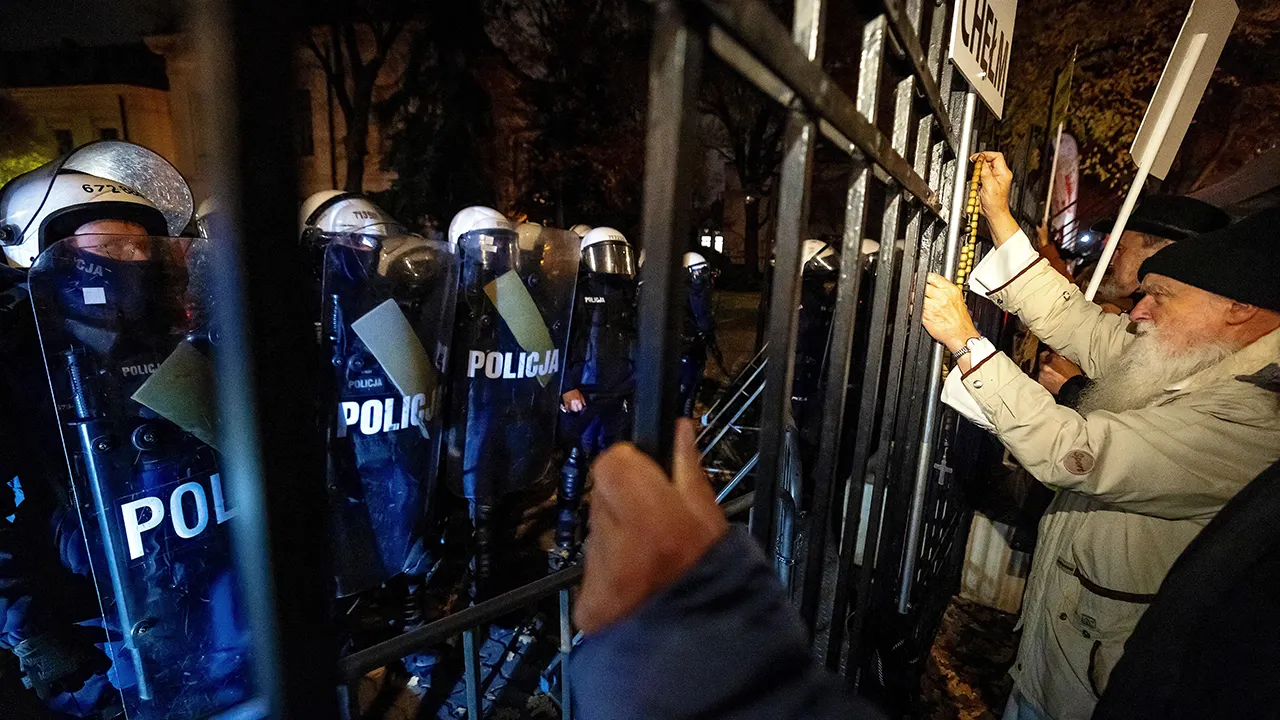

Poland is currently grappling with a deepening political crisis as President Karol Nawrocki cut short his trip to Senegal and returned home in response to escalating tensions surrounding the suspension of the Constitutional Tribunal’s president amid nationwide protests. The mobilization of protesters outside the court, coupled with the president’s interruption of his diplomatic engagement, has underscored the contentious relationship between the current government led by Prime Minister Donald Tusk and the opposition party, Law and Justice (PiS), which previously dominated Polish politics. This article delves into the events leading up to this critical moment in Poland’s judicial landscape, examining the implications for the rule of law and democratic governance.
| Article Subheadings |
|---|
| 1) Prelude to Crisis: Police Intervention at the Constitutional Tribunal |
| 2) The Response of Political Leaders and Parties |
| 3) Public Reaction: Protests Erupt Outside the Court |
| 4) The Implications for Poland’s Judiciary and Political Landscape |
| 5) International Reactions and Concerns |
Prelude to Crisis: Police Intervention at the Constitutional Tribunal
On the evening of October 30, 2026, as President Karol Nawrocki was en route to Senegal, he made a sudden decision to return to Poland. This was in response to rapid developments involving the Constitutional Tribunal, the nation’s highest court. Reports indicated that police had entered the Tribunal building to secure it during a period of escalating tensions, following the suspension of the Tribunal’s president, Bogdan Święczkowski.
The suspension was described as a significant political maneuver by the current pro-European government, which is frequently accused by its opposition of undermining judicial independence. Known for his alignment with the national-conservative PiS party, Nawrocki’s earlier actions, including his refusal to swear in judges appointed by the current parliamentary majority, had already set the stage for confrontation with Tusk’s administration.
Police claimed they intervened due to safety concerns, as large crowds of protesters began to gather outside the court, fueled by outrage against what they perceived as politically motivated actions against the judiciary. The scene illuminated the deepening fractures in Polish society, showcasing how political decisions could provoke significant public unrest.
The Response of Political Leaders and Parties
Upon returning to Poland, President Nawrocki articulated the necessity of his presence during this crisis, underscoring the serious nature of the judicial situation. His Twitter post stated, “At such a moment, the President must be in Poland.” This sentiment reflects the gravity with which the presidency viewed the unfolding events—it was critical to demonstrate leadership during a time of turmoil.
On the other hand, Prime Minister Donald Tusk has been vocal about the need to restore the rule of law in Poland, emphasizing that his government’s mission is to reverse years of perceived PiS-led lawlessness. Tusk commented on the current judicial turmoil: “After years of PiS-led lawlessness, this is a difficult process, sometimes painful, and it requires decisive action. There is no other way.”
As both leaders utilized social media to express their viewpoints, former Prime Minister Mateusz Morawiecki, a PiS ally, condemned the government’s actions. He described Tusk’s maneuvers as part of an effort to forcefully overtake the Constitutional Tribunal, further dissolving the already tenuous trust between the ruling government and its opposition.
Public Reaction: Protests Erupt Outside the Court
Protests erupted outside Poland’s Constitutional Tribunal, with participants expressing their displeasure at the government’s actions. While some demonstrators resorted to holding placards with messages like “Tusk— a symbol of anti-Polish sentiment” and “Stop destroying the state,” others took a more solemn approach, engaging in prayer.
Law enforcement’s presence escalated when objects were reportedly thrown at police officers by some protesters. The situation quickly transformed from a peaceful gathering to one where safety concerns prompted police action to secure the premises and control the crowd. The polarization within public opinion surrounding the judiciary was evident, as both sides of the political divide mobilized their bases.
The protests underscore the clash between Tusk’s approach to re-establishing judicial independence and the PiS’s inclination towards controlling judicial processes. This standoff between supporters of the two factions has resulted in heightened tensions, not just among political leaders but also within the general populace.
The Implications for Poland’s Judiciary and Political Landscape
The current turmoil surrounding the Constitutional Tribunal highlights broader concerns for the independence of the judiciary in Poland. The crisis has raised questions about the implications for judicial integrity, as the governance of the judiciary is embroiled in political strife. Critics have long accused the PiS government of attempting to undermine judicial independence through systematic reforms.
Under Tusk’s administration, the promise to restore judicial independence aligns with broader European Union values, and any regression in this concern could jeopardize Poland’s standing within the EU. Further, the ongoing political instability may impact public trust in the judicial system, which is vital for a functioning democracy.
With the upcoming parliamentary elections, the actions taken by both the Tusk government and the PiS party will likely be scrutinized closely by voters. The reshaping of Poland’s political landscape, with competing narratives about law and order, creates an environment ripe for civic engagement but also for further polarization.
International Reactions and Concerns
International observers have begun to weigh in on the escalating situation in Poland. Tom Rose, the U.S. Ambassador to Poland, expressed concern over the seriousness of events occurring at the Constitutional Tribunal. He highlighted the potential for these events to spiral into greater conflict if both sides of the political divide do not approach the situation with caution.
Rose’s statement emphasized a desire for stability, indicating that while the United States stands with Poland, it is essential to respect the country’s autonomy in resolving internal disputes. However, this does not diminish the crucial need for regard for democratic principles and the rule of law, which are cornerstones of American foreign policy.
The remarks from foreign allies reflect an international apprehension regarding potential instability in Poland, where the government’s actions and the public’s responses can have significant repercussions, not only domestically but on a broader geopolitical scale.
| No. | Key Points |
|---|---|
| 1 | President Karol Nawrocki returned from Senegal in response to police intervention at the Constitutional Tribunal. |
| 2 | Protesters gathered outside the Tribunal to demonstrate against the government’s suspension of the Tribunal’s president. |
| 3 | Prime Minister Donald Tusk emphasized the need to restore judicial independence in Poland. |
| 4 | The protests have shown a deep divide in public opinion over judicial matters. |
| 5 | International reactions highlight concerns over the stability and future of Poland’s democratic governance. |
Summary
The ongoing crisis in Poland concerning the Constitutional Tribunal underlines a pivotal moment in the nation’s political landscape. The immediate actions taken by government leaders and public protests interplay intricately, revealing deep-seated conflicts related to judicial control and political authority. As both sides prepare to articulate their narratives in advance of the upcoming parliamentary elections, the ramifications of this situation extend beyond Poland, attracting international scrutiny and concern regarding the future of democracy in the region.
Frequently Asked Questions
Question: What triggered the recent protests in Poland?
Recent protests in Poland were triggered by the suspension of the president of the Constitutional Tribunal, a move perceived as politically motivated by the current government.
Question: How have political leaders reacted to the Tribunal crisis?
Political leaders, including President Nawrocki and Prime Minister Tusk, have expressed contrasting views, with Nawrocki emphasizing the necessity of his leadership and Tusk advocating for the restoration of judicial independence.
Question: Why are international observers concerned about the situation in Poland?
International observers are concerned that ongoing conflicts over judicial independence could lead to instability in Poland, impacting both domestic governance and the country’s relationship with the European Union and NATO allies.
