

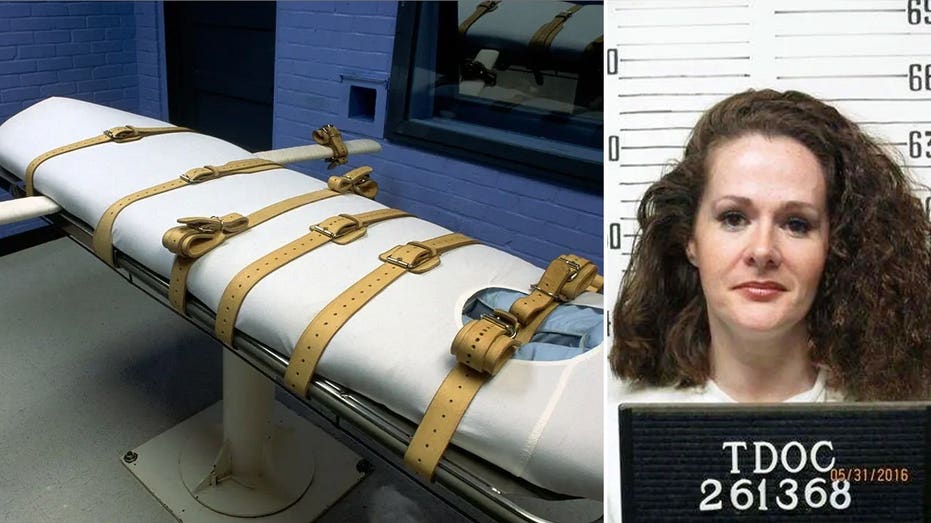

Christa Pike, a Tennessee death row inmate who survived a failed lethal injection attempt, has asked a federal court to block her return to a former prison housing unit. Her emergency motion says she remains physically weak and unable to defend herself after the September 30 execution attempt. Pike also alleges sanitation and safety risks in the unit. She is currently held in medical isolation at the Debra K. Johnson Rehabilitation Center in Nashville.
The request comes as state officials review the procedure, during which two doses of pentobarbital failed to kill Pike. Governor Bill Lee placed a temporary halt on executions while Tennessee investigates.
| 1) | Emergency motion seeks to prevent Pike’s transfer |
| 2) | Physical weakness is central to the safety argument |
| 3) | Filing alleges violence and unsanitary conditions |
| 4) | Pike’s criminal convictions remain part of the case |
| 5) | Failed execution prompts wider legal and state review |
Emergency motion seeks to prevent Pike’s transfer
Pike’s emergency motion asks a federal court to stop Tennessee prison officials from moving her from the infirmary to the housing unit where she previously lived. The request concerns her confinement at the Debra K. Johnson Rehabilitation Center in Nashville, where she is recovering from the September 30 execution attempt. Her attorneys argue that a transfer would create a foreseeable risk of serious harm and ask that her current placement continue while her condition and the failed execution are reviewed.
Physical weakness is central to the safety argument
Pike says she is severely weakened after the attempted lethal injection and cannot protect herself if attacked. The motion describes the former unit as a close-custody environment housing people with significant assault and disciplinary histories. Pike wrote that she could not defend herself or escape if another inmate attacked her and feared serious injury if returned while she remains weak.
“In my current physical condition, I could not defend myself or get away if another inmate attacked me.”
Filing alleges violence and unsanitary conditions
The filing says Pike witnessed multiple assaults involving inmates and guards during about two years in the former housing block. It also refers to psychological breakdowns among people housed there. Pike alleges a high risk of infection and injury because of unsanitary conditions, including a shower she describes as infested with cockroaches. The Tennessee Department of Correction has been asked to respond.
Pike’s criminal convictions remain part of the case
Pike was sentenced to death for the 1995 murder of 19-year-old Colleen Slemmer, who was in the same Job Corps training program in Knoxville. In 2001, Pike also received a conviction for attempting to murder another inmate. Her emergency motion does not challenge those convictions. It seeks protection from a specific transfer while she remains affected by the failed execution and its physical consequences.
Failed execution prompts wider legal and state review
Pike was scheduled to become the first woman executed in Tennessee in more than 200 years. Two doses of pentobarbital failed to kill her on September 30, and she survived the attempt. She was later discharged from a hospital and returned to prison in medical isolation.
The failed procedure has raised questions about Pike’s health, future legal options and Tennessee’s execution practices. A capital punishment scholar said possible mental impairment resulting from the attempt could become relevant to whether the death penalty may be carried out. Governor Bill Lee ordered a temporary pause on executions pending an investigation. The court’s immediate decision will determine whether Pike stays in the infirmary or returns to her former unit.
| Number | Key Point |
|---|---|
| 1 | Pike wants a federal court to block her return to a former housing unit. |
| 2 | She says physical weakness leaves her unable to defend herself. |
| 3 | The filing alleges assaults, psychological crises and unsanitary conditions. |
| 4 | Pike remains sentenced to death for the murder of Colleen Slemmer. |
| 5 | Tennessee has paused executions while the failed procedure is investigated. |
Summary
Pike presents the requested housing change as a safety measure during recovery from the failed execution attempt. The court must weigh her medical vulnerability and allegations about the former unit against prison officials’ custody decisions. The request is separate from unresolved questions about Tennessee’s ability to pursue the death penalty in the future.
Frequently Asked Questions
Why is Christa Pike asking to remain in the infirmary?
She says she is physically weak after the failed September 30 lethal injection and cannot defend herself or escape if attacked.
What conditions does Pike allege in the former unit?
Her filing alleges assaults, disciplinary problems, psychological crises and unsanitary conditions, including a cockroach-infested shower.
What happened during Pike’s execution attempt?
Two doses of pentobarbital failed to kill her on September 30. She survived, was hospitalized and later returned to prison.
What has Tennessee done since the failed procedure?
Governor Bill Lee issued a temporary halt on executions while the state investigates.
