

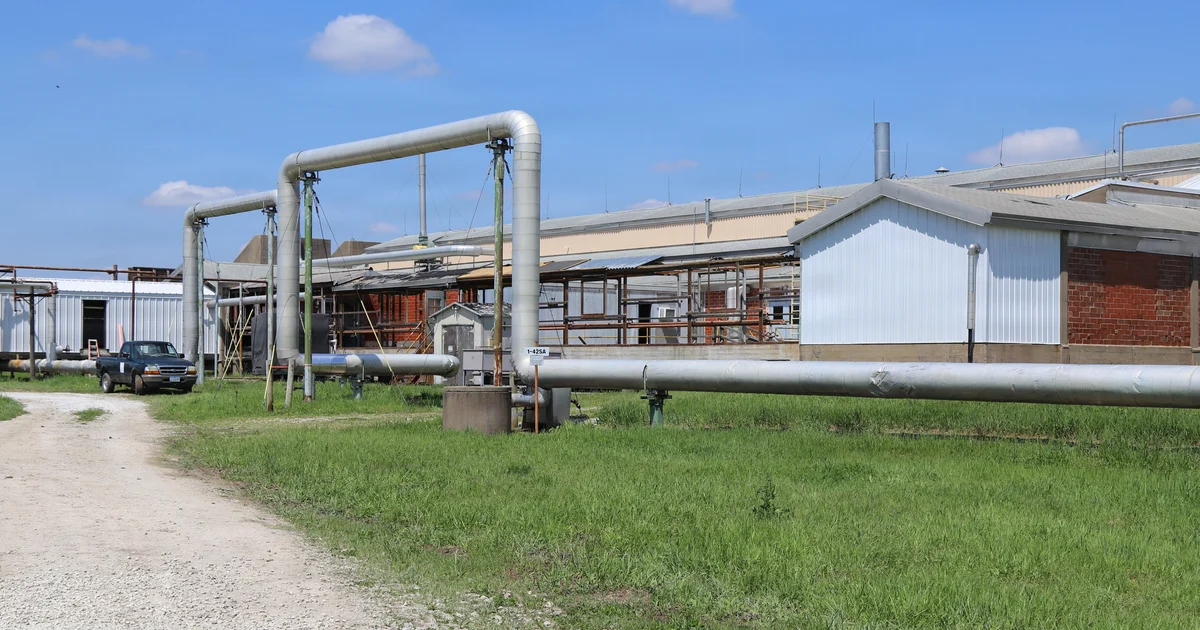

A federal appeals court has upheld the Army’s plans to detonate five tons of explosives containing lead azide at a munitions facility in Iowa, despite concerns raised by environmental groups. The court’s decision allows the scheduled detonation to proceed, with the Army asserting that the explosives have become unstable and pose a significant risk if not handled promptly. As the situation unfolds, discussions continue regarding the environmental implications of the decision, with scrutiny from both local officials and residents.
| Article Subheadings |
|---|
| 1) Court Ruling Background |
| 2) Army’s Justification for Action |
| 3) Opposition from Environmental Groups |
| 4) Local and Federal Responses |
| 5) Ongoing Safety Concerns |
Court Ruling Background
On Monday, a three-judge panel from the 8th Circuit Court of Appeals issued a ruling that permitted the Army to move forward with the planned detonation of lead azide, which has been stored at a munitions plant in Middletown, Iowa. This ruling followed an earlier temporary block to consider further arguments from environmental advocacy groups who contended that the detonation posed significant risks to public safety and environmental sustainability. The court ultimately deemed that these groups had not convincingly demonstrated their likelihood of success, thereby lifting the injunction.
The decision came after various stakeholders, including local officials and federal representatives, presented conflicting views on the risks associated with the explosives. Although the outgoing Governor of Iowa, Kim Reynolds, expressed support for the Army’s decision, incoming governor-elect Rob Sand had previously raised questions concerning the EPA’s permit process. The court emphasized the need to acknowledge the “real risks” involved but ultimately decided that the immediate threat posed by the unstable explosives warranted decisive action.
Army’s Justification for Action
The Army has argued vehemently that detonating the lead azide is necessary to mitigate the risk of a spontaneous explosion. Adam Telle, acting secretary of the Army, mentioned that the agency, along with various governmental organizations including the Army Corps of Engineers and the Environmental Protection Agency, unanimously agreed on proceeding with the controlled detonation. He cited that extensive safety measures have been prepared to ensure the operation proceeds smoothly.
Officials have pointed out that the lead azide has been stored safely underground for decades, but recent assessments revealed that it had deteriorated, increasing the chances of an unexpected explosion. The Army plans to conduct the detonation during a window of favorable weather conditions to minimize potential risks. According to Telle, Friday’s scheduled detonation would involve safety precautions to manage noise, vibrations, and dust plumes produced by the explosion.
Opposition from Environmental Groups
Environmentalist organizations, including the Sierra Club and the Iowa Environmental Council, have expressed serious concerns regarding the contamination risks associated with the planned detonation. They argue that such an explosion could release a significant plume of lead dust into the surrounding areas, impacting not just Middletown but potentially affecting communities up to 100 miles away. They have criticized the Army’s operational timeline as rushed, which they claim limits public input and fails to adequately assess environmental impacts.
The environmental groups have urged a re-evaluation of the EPA’s permit and have called for alternative options to the controlled detonation, citing inadequate risk assessments by the Army. They fear that the decision to proceed with the detonation could lead to extensive lead contamination in both Iowa and the adjacent state of Illinois.
Local and Federal Responses
The response from local officials has been mixed. While current Governor Kim Reynolds has endorsed the Army’s decision, Governor-elect Rob Sand has taken to social media to emphasize the need for a more informed approach based on expert evaluations of the risks. He suggested that existing federal information is critical in delineating the best course of action. Sand’s position reflects the concerns of many residents, who aim for transparency and accountability in the Army’s operations.
In line with public concern, Sand called upon the federal government to openly communicate the reasoning behind the impending decision and the potential ramifications for local communities. His stance underscores the importance of responsible governance, particularly regarding issues that could pose health and safety risks to citizens.
Ongoing Safety Concerns
With the detonation scheduled for Wednesday morning, the Army has issued advisories to neighboring residents, indicating that temporary evacuations will occur to ensure safety during the explosive process. Although the community has been assured about the effectiveness of safety measures, public anxiety remains palpable, especially among those living in the vicinity of the munitions plant.
The Army argues that the decision to conduct this detonation is motivated by urgent safety concerns related to the explosives’ deterioration. However, the agency also acknowledges the environmental risks expressed by numerous organizations. The situation raises critical questions about how to balance immediate public safety needs against potential long-term environmental consequences—a dilemma that will require careful consideration from both policymakers and community leaders.
| No. | Key Points |
|---|---|
| 1 | Federal court allows Army to detonate unstable lead azide in Iowa. |
| 2 | Army emphasizes public safety needs amid deteriorating explosives. |
| 3 | Environmental groups raise alarms over potential pollution risks. |
| 4 | Local officials divided on the Army’s decision. |
| 5 | Community concerns about safety and environmental impact persist. |
Summary
The recent ruling by the federal appeals court has authorized the Army to proceed with the detonation of lead azide, a decision that illustrates the complex intersection of public safety and environmental responsibility. As the Army prepares for this controlled explosion, ongoing debates surrounding the actions taken by federal and local officials reflect broader concerns about transparency and community safety. This situation underscores the challenges faced by government entities in navigating the potential risks and rewards of such actions, emphasizing the need for ongoing dialogue with affected communities.
Frequently Asked Questions
Question: What is lead azide?
Lead azide is a sensitive explosive compound commonly used as a detonator in military applications. Its instability over time can lead to deterioration, posing risks of accidental detonation.
Question: Why is the Army detonation occurring in Middletown, Iowa?
The Army plans to detonate the lead azide stored in Middletown to mitigate the risk of an uncontrolled explosion due to the material’s deteriorating condition over time.
Question: What concerns do environmental groups have regarding the detonation?
Environmental groups are worried that the planned detonation could release toxic lead dust into the environment, potentially affecting communities far beyond Middletown.
