

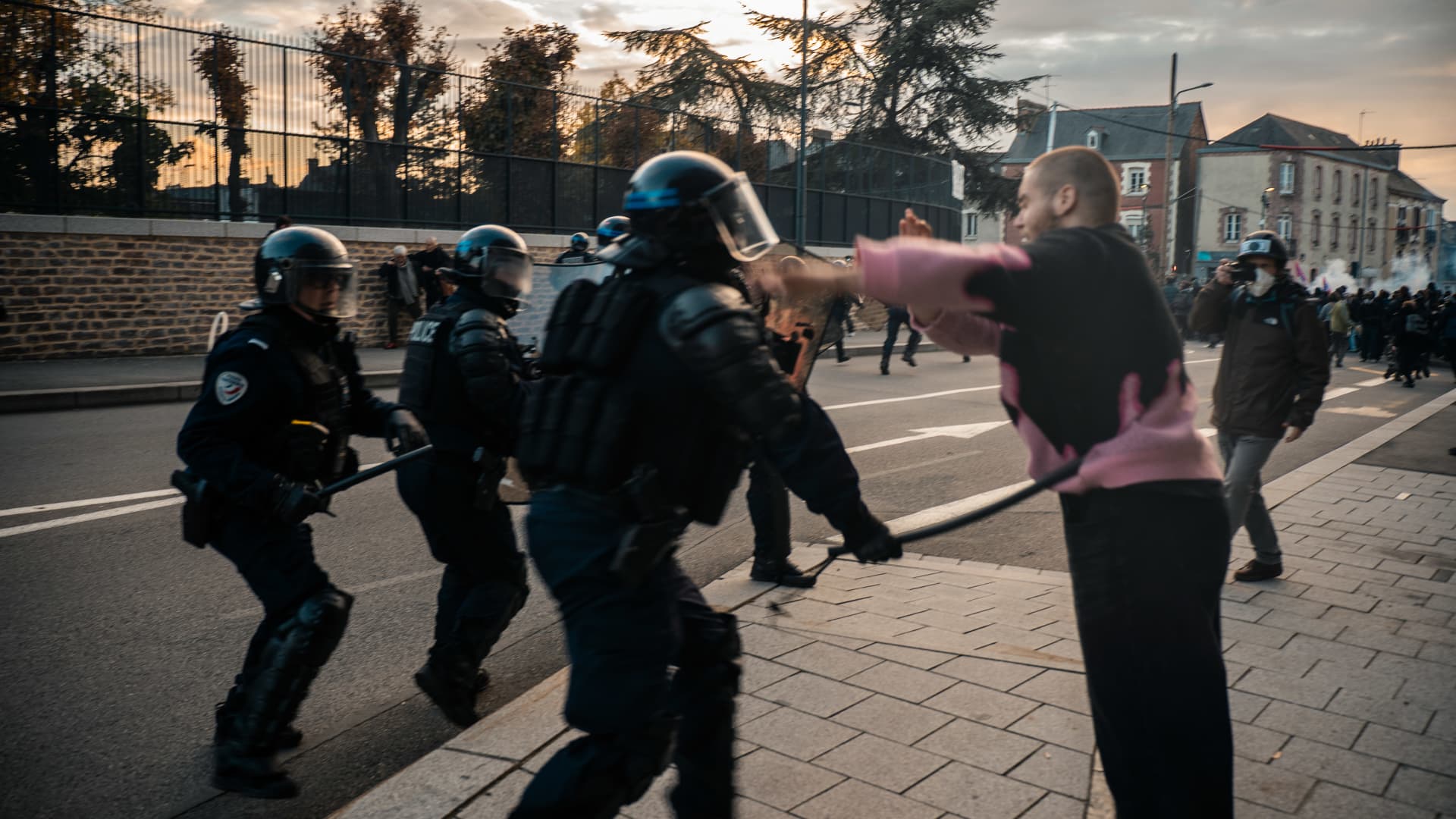

Protests in France have escalated into clashes with police as demonstrators opposed to rising living costs and deteriorating public services took to the streets for a fourth consecutive weekend. The gatherings have included a coalition of students, trade unions, and the revived “Yellow Vest” movement, drawing significant nationwide attention. While participation numbers varied, with government estimates suggesting around 146,000 participants, other organizations claimed that turnout could have reached up to 250,000. Despite the diminishing turnout from the previous weeks, tensions ran high as police employed tear gas and made several arrests across the country.
| Article Subheadings |
|---|
| 1) Overview of Protests and Participation |
| 2) Key Events and Police Response |
| 3) Origins of the Protests |
| 4) Government Reaction and Future Plans |
| 5) Implications for the Future |
Overview of Protests and Participation
The ongoing protests across France, which began primarily about high living costs, have attracted widespread attention from various sectors of society. On a single day, across major cities, a significant crowd filled the streets. According to the country’s Interior Ministry, approximately 146,000 demonstrators convened nationwide, with the capital city, Paris, seeing about 46,000 protesters. This turnout, while substantial, marked a decline from prior weeks, where participation peaked at over 575,000 following union-led demonstrations in early November. The youth alliance noted participation at around 250,000 nationally, highlighting the persistent concerns with economic conditions and public services that have driven this movement.
Key Events and Police Response
The protests this weekend saw significant tension between demonstrators and law enforcement, particularly as the protests reached their climax at Paris’s Place de la Nation. Reports indicate police responded with tear gas to counteract projectiles launched by some protesters, which indicates a volatile atmosphere. Arrest counts exceeded 360 nationwide, underscoring the law enforcement’s tactics to maintain order amidst escalating violence. In addition to the main march in Paris, police intervened to block an unauthorized gathering of “Yellow Vests” at Place de la Concorde, leading to the arrest of two leaders of the movement. Incidents of property damage and violent confrontations were reported in several cities, accentuating the growing frustrations amongst demonstrators toward government policy.
Origins of the Protests
The recent protests have deep roots, originating from the discontent surrounding fuel tax increases in 2018, which birthed the “Yellow Vest” movement. Over the years, this movement has transformed, expanding its focus to address broader issues such as the escalating cost of living and the overall dissatisfaction with President Emmanuel Macron’s administration. What originally began as grievances linked to financial policies has evolved into a multifaceted campaign encompassing demands for better public services and improvements in educational conditions. Most prominently, the recent protests were ignited by high school students advocating for reforms in the education system, which subsequently attracted university students and labor unions to amplify the call for action.
Government Reaction and Future Plans
The French government is currently grappling with public discontent, recently highlighted by the rejection of the revenue section of the 2027 budget by lawmakers. This move has placed additional pressure on Prime Minister Sébastien Lecornu as he prepares for discussions with labor and employer representatives regarding wages and purchasing power. The ramifications of the protests are significant; political analysts speculate that they may lead to increased scrutiny of government policies and heightened demands for substantial reforms as the public clamor for a responsive government grows louder. The Senate is scheduled to begin deliberations on the budget proposal on November 20, providing a critical juncture for addressing the ongoing financial issues plaguing citizens.
Implications for the Future
As the protests enter their fourth weekend, the implications for France’s political landscape could be profound. The manifestation of public anger towards rising costs and housing issues may solidify demands for systemic changes and bring about significant shifts as spring elections loom closer. Additionally, the situation has underscored the need for effective dialogue between the government and its citizens, to prevent further escalation and breakdown of trust between the two parties. Observers assert that the outcomes of forthcoming discussions will play a pivotal role in determining the pace and direction of reforms that the public seeks, as well as influencing future electoral prospects for current leaders.
| No. | Key Points |
|---|---|
| 1 | Protests involve diverse groups, including students and trade unions. |
| 2 | Police employed tear gas to maintain order during confrontations. |
| 3 | Initial protests were sparked by student demands for better education conditions. |
| 4 | The French government faces pressures following the budget proposal rejection. |
| 5 | Future discussions are critical for addressing public concerns and political stability. |
Summary
The sustained protests across France, fueled by economic grievances and calls for better public services, reflect deep-seated frustrations in society, especially among youth and labor groups. With the government facing significant challenges in addressing these protests amid pressing budgetary concerns, the current political climate remains tense. The outcomes of upcoming discussions and legislative actions will be pivotal in shaping both the government’s responsiveness and the trajectory of these public movements.
Frequently Asked Questions
Question: Why are protests occurring in France?
Protests in France are primarily driven by public dissatisfaction regarding high living costs and the deterioration of public services, stemming from broader economic policies over recent years.
Question: What sparked the recent wave of protests?
The recent protests were initially sparked by a youth campaign for better educational conditions, which then attracted wider participation from trade unions and various student groups.
Question: How has the government responded to the protests?
The French government has faced criticism for its financial policies and plans for budget implementation, with upcoming discussions set to address issues of wages and purchasing power in response to public demands.
