

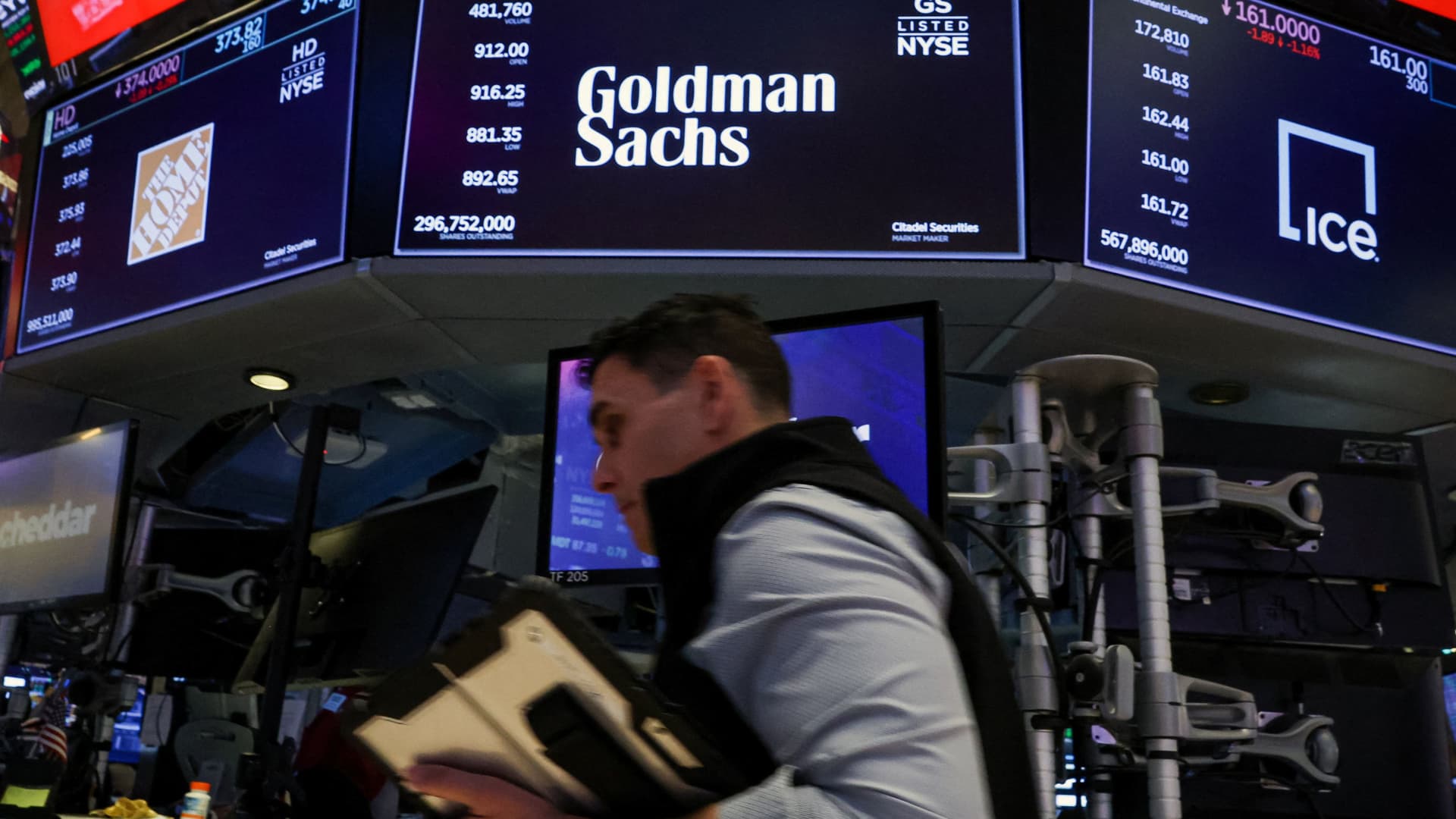

Goldman Sachs has recently updated its European “Conviction List – Directors’ Cut,” highlighting Deutsche Bank and Carlsberg as key stock picks for November. The updated list emphasizes companies with robust buy ratings and significant growth potential, with three stocks assessed to potentially provide over 100% upside in the coming 12 months. Notably, U.K. fuel cell developer Ceres Power is expected to deliver an impressive 250% upside, while German defense leader Rheinmetall continues to be favored with a strong price target and outlook on profitability. Conversely, the investment bank has removed several companies, including U.K. lender HSBC, from its esteemed list in this latest revision.
| Article Subheadings |
|---|
| 1) Overview of Goldman Sachs’ Conviction List |
| 2) Deutsche Bank’s New Era of Profitability |
| 3) Potential Growth Opportunities for Carlsberg |
| 4) Key Removals from the Conviction List |
| 5) Market Reactions and Analyst Insights |
Overview of Goldman Sachs’ Conviction List
Goldman Sachs compiles its European “Conviction List – Directors’ Cut” each month to identify stocks deemed to be most favorable for investment within its client base. The November list prominently features Deutsche Bank and Carlsberg, alongside an impressive projection for companies promising significant growth. The Conviction List is particularly noteworthy for targeting organizations that not only have strong buy ratings but also highlight potential upside that can be attractive to investors looking for strong performance in volatile markets. Analysts assign potential upside targets based on performance indicators, market conditions, and Company strategies, forming the backbone of these investment recommendations.
Deutsche Bank’s New Era of Profitability
Deutsche Bank has been recognized by Goldman Sachs as entering a “new era of profitability,” especially in its corporate and private banking sectors. The assessment stems from improved revenue momentum, attributed to substantial German government infrastructure spending. With these capital inflows, the bank is expected to capitalize on burgeoning opportunities particularly within the defense and technology sectors. Additionally, analysts point out that Deutsche Bank’s shares are currently undervalued, trading at 8.2 times expected earnings, which is lower than the general banking sector’s average of 9.6. This valuation implies that there may be considerable room for growth as the bank implements strategic reforms to unlock efficiencies.
Goldman Sachs’ official, Chris Hallam, remarked on the potential for the bank to generate an estimated €2 billion (approximately $2.24 billion) in cost savings through enhancements in technology and operations, including the integration of cloud computing and AI solutions into its framework. These advancements are projected to enable Deutsche Bank to increase its return on tangible equity above 13% by 2028, surpassing analysts’ expectations of 12.2%. Further, this profitability trajectory supports plans for shareholder buybacks over the next two years, indicating a commitment to returning value to investors.
Potential Growth Opportunities for Carlsberg
Carlsberg has also made its way into the limelight with a targeted price of 1,200 Danish kroner (approximately $180.10), suggesting a promising 24% upside over the next 12 months. Analyst, Olivier Nicolaï, has highlighted the brewery’s expansion into the soft drinks market as a strategic move to mitigate anticipated declines in beer sales, particularly in the rapidly evolving Chinese market. Carlsberg’s successful acquisitions, including that of U.K. soft drink company Britvic and its PepsiCo bottling agreements, are seen as crucial to enhancing profit margins in subsequent years.
The company’s growth forecast includes an organic sales increase of 3.8% by 2027, outpacing the market consensus which stands at 3.4%. Moreover, Carlsberg’s continued efforts to amplify its presence in areas such as the Nordics and Baltics through licensing agreements, as well as a potential initial public offering (IPO) in India, further illustrate the company’s forward-thinking growth strategy. Analysts are optimistic about Carlsberg’s financial health, particularly as they anticipate reductions in net debt levels from three times its annual earnings in 2025 to 2.5 times by 2027, a move that could pave the way for the resumption of shareholder buybacks.
Key Removals from the Conviction List
On a contrasting note, Goldman Sachs has removed three notable companies from its November Conviction List: U.K. lender HSBC, British consumer healthcare firm Haleon, and CTP, Europe’s largest listed industrial and logistics property operator. The decision to exclude HSBC appears driven by the bank’s significant exposure—40%—to high-risk U.S. commercial real estate, which has been a focal area of concern for investors amid fluctuating market conditions. With a decisive 20% reduction in this exposure over the past year, Goldman analysts are responding to underlying risks that may affect HSBC’s immediate outlook.
Meanwhile, the removal of Haleon and CTP signals a critical reassessment of their market positions in light of current economic challenges. The exclusion of these companies from the list suggests that Goldman Sachs may be prioritizing firms with stronger growth trajectories in relevant sectors such as technology, infrastructure, and defense—areas identified as priority investments moving forward. The selective nature of these changes reflects Goldman Sachs’ commitment to ensuring its clients are aligned with the best possible investment opportunities.
Market Reactions and Analyst Insights
The announcements regarding the additions and removals from Goldman Sachs’ Conviction List have elicited notable reactions within investment circles. Market analysts are observing that the inclusion of Deutsche Bank and Carlsberg comes at a time when investors are seeking stability amid broader economic uncertainty. The emphasis on sectors poised for growth, particularly those driven by technological advancements and innovative strategies, has garnered favorable responses from investors looking to pivot toward opportunities that promise sustainable returns.
Analysts will continue to monitor the performance of these companies carefully as economic conditions evolve. Observed trends in consumer behavior, shifts in demand for services and products, and geopolitical developments will undoubtedly influence the viability of these stock recommendations moving forward. Observers are likely to remain cautious, given the rapid shifts occurring in both the local and global markets, but positive indicators from Deutsche Bank and Carlsberg could set the stage for a rebound in investor confidence.
| No. | Key Points |
|---|---|
| 1 | Goldman Sachs’ November Conviction List features Deutsche Bank and Carlsberg as key stock picks. |
| 2 | Deutsche Bank is projected to achieve significant cost savings and profitability improvements through strategic reforms. |
| 3 | Carlsberg’s diversification into the soft drinks market is expected to mitigate potential declines in beer sales. |
| 4 | HSBC, Haleon, and CTP have been removed from the Conviction List amidst rising concerns of their market viability. |
| 5 | Market reactions indicate a shift towards companies with sustainable growth and technological advancements. |
Summary
In summary, Goldman Sachs’ updated European Conviction List shines a spotlight on Deutsche Bank and Carlsberg, underscoring their significant growth potential despite broader economic uncertainties. The inclusion of these companies speaks to their evolving strategies in reaction to market demands and opportunities. Conversely, the removal of HSBC, Haleon, and CTP adopts a conservative posture in light of risks associated with their market positions. As investment strategies continue to adapt to changing economic climates, the focus on reliable and growth-oriented companies proves vital for enhancing profitability and securing investor confidence.
Frequently Asked Questions
Question: What is the significance of Goldman Sachs’ Conviction List?
The Goldman Sachs Conviction List is a monthly compilation identifying key stock picks that are recommended for investment, based on their projected performance and growth potential in the market.
Question: How does Deutsche Bank plan to improve its profitability?
Deutsche Bank aims to improve profitability through a combination of strategic operational changes, technological advancements, and cost efficiencies, including the adoption of AI and cloud computing.
Question: Why was HSBC removed from the Conviction List?
HSBC was removed from the Conviction List due to its significant exposure to high-risk U.S. commercial real estate, which has raised concerns among investors about its financial stability in the current economic climate.
