

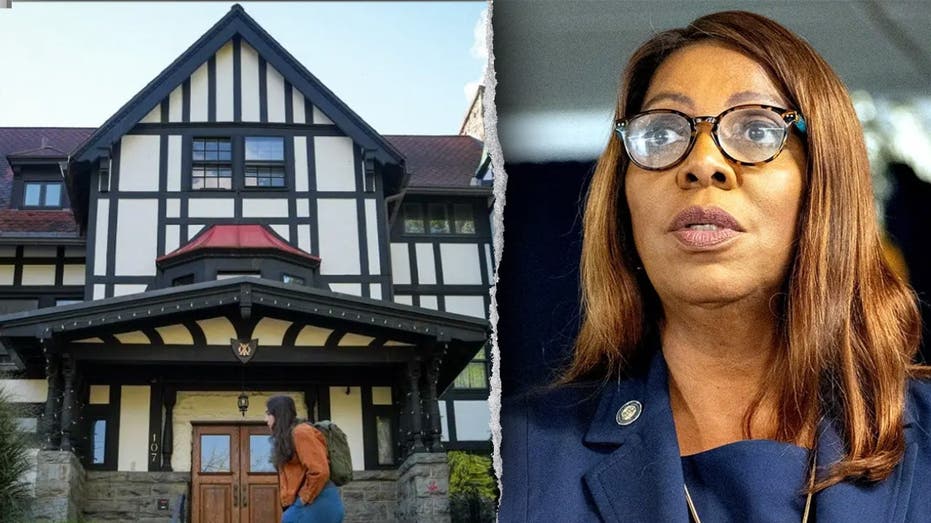

A Sullivan County judge heard arguments Thursday over whether New York Attorney General Letitia James should be removed as special prosecutor in the reopened investigation into an alleged gang rape at Cornell University. The defense argues that James’ prior social media comments show bias and a presumption of guilt. The state says public expressions of support do not establish the actual prejudice required to disqualify her. Judge James Farrell did not issue an immediate ruling.
The challenge was filed by attorney Andrew Miltenberg, who represents Gillio Lopes, one of seven former Chi Phi fraternity members accused in a lawsuit of drugging and raping a Cornell student at the fraternity house in October 2024. The allegations remain claims, and the case is the subject of an ongoing criminal investigation.
New York Gov. Kathy Hochul appointed James as special prosecutor on Oct. 1 after bypassing the local Tompkins County district attorney, who had previously declined to bring charges. A written ruling is expected in the coming days.
| 1) | Hearing tests challenge to James’ appointment |
| 2) | Defense argues social media posts show bias |
| 3) | State says removal requires actual prejudice |
| 4) | Judge raises appointment and jurisdiction concerns |
| 5) | Written ruling and broader investigative changes |
Hearing tests challenge to James’ appointment
The hearing took place Thursday in Sullivan County, New York, before Judge James Farrell. The issue is whether James can continue serving as special prosecutor in the reopened criminal investigation involving allegations tied to a Cornell fraternity house. Lopes’ attorney, Andrew Miltenberg, says James’ public comments compromised her neutrality before her appointment.
Lopes is among seven former Chi Phi fraternity brothers accused in a civil lawsuit involving a female Cornell student. The lawsuit alleges that the student was drugged and raped at the fraternity house in October 2024. The criminal investigation was reopened after Gov. Kathy Hochul selected the attorney general to lead the state’s review.
Defense argues social media posts show bias
The defense focused on a social media statement James made before her appointment. She expressed sympathy for the alleged survivor and said survivors were not alone. Miltenberg argued that the statement showed James had reached a conclusion before reviewing the evidence.
“What this young woman has been forced to endure is horrific and unacceptable. I’m holding her in my heart and in my prayers. To her, and to all survivors: you’re not alone. We stand with you.”
State says removal requires actual prejudice
Assistant Attorney General Kaitlin Vigars, representing the state, defended Hochul’s appointment and opposed disqualification. Vigars argued that statements supporting an alleged sexual assault survivor do not, by themselves, meet the legal standard for removing a prosecutor.
The state says the defense must demonstrate actual prejudice rather than speculation about how James might handle the investigation. A spokesperson for the attorney general’s office said the investigation would be guided by the facts, the evidence and the law.
Judge raises appointment and jurisdiction concerns
Farrell questioned Vigars about whether Hochul knew about James’ social media post, whether the officials were together when the governor called the alleged survivor brave, and whether the appointment was intended to avoid bias in the local investigation.
Farrell also raised concerns about separate courts issuing conflicting decisions in different jurisdictions. He warned that piecemeal rulings could create uncertainty over who has authority to oversee the investigation.
“If multiple judges come down with decisions that’s chaos, and the court should not fashion chaos.”
Written ruling and broader investigative changes
Farrell ended the hearing without ruling on whether James should remain special prosecutor. If she is disqualified, the investigation would have to be reassigned. If she remains, the attorney general’s office would continue reviewing the allegations.
Separately, Hochul said Thursday that sexual offense complaints at Cornell would now be referred to New York State Police rather than Cornell University Police, unless the reporting individual requests otherwise. She said students should be heard, treated with compassion and assured that allegations will be investigated by trained law enforcement.
| No. | Key Point |
|---|---|
| 1 | The defense seeks to remove Letitia James as special prosecutor over alleged bias. |
| 2 | The challenge centers on James’ social media comments about the alleged survivor. |
| 3 | The state argues that actual prejudice, not speculation, is required for disqualification. |
| 4 | Judge James Farrell raised concerns about conflicting rulings and the appointment process. |
| 5 | A written decision is expected, while new sexual offense referrals at Cornell go to state police. |
Summary
The court must decide whether comments James made before her appointment demonstrate disqualifying bias in the Cornell investigation. The defense says the remarks indicate a predetermined view, while the state maintains that sympathy for an alleged survivor does not establish actual prejudice.
Frequently Asked Questions
Why is Letitia James facing a removal request?
The defense argues that social media comments James made before her appointment showed bias and a presumption of guilt.
Who filed the challenge?
Attorney Andrew Miltenberg, who represents Gillio Lopes, filed the challenge seeking James’ disqualification.
When will the judge decide?
Judge James Farrell did not rule immediately and is expected to issue a written decision in the coming days.
What changed for future Cornell sexual offense reports?
Gov. Kathy Hochul said such complaints will be referred to New York State Police instead of Cornell University Police unless the reporting individual requests otherwise.
