

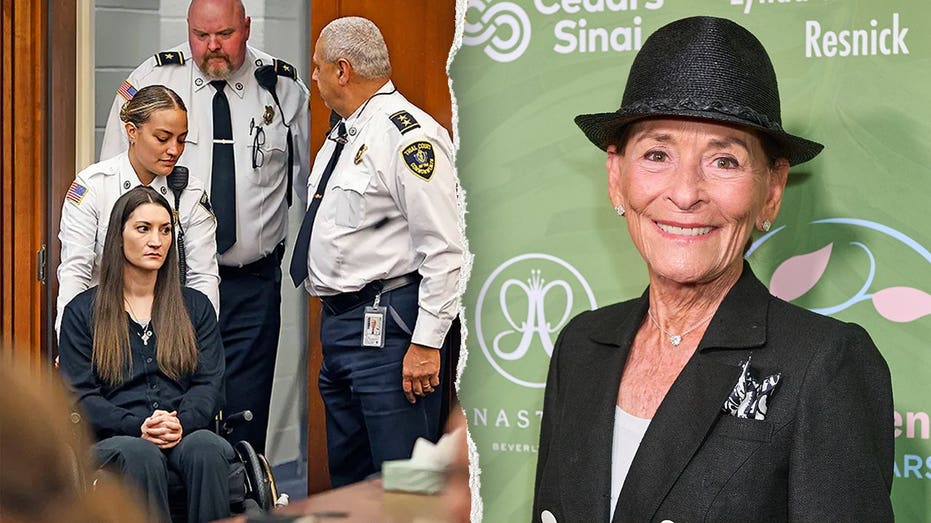

Judge Judy Sheindlin has warned of a potential “danger” if prosecutors decide not to retry Lindsay Clancy after her Massachusetts murder trial ended in a mistrial. Clancy is accused of killing her three young children in January 2023, and her defense does not dispute that she strangled them with exercise bands. The defense argues that she was not criminally responsible because of mental illness or a mental defect. A jury failed to reach a unanimous verdict after seven days of deliberations, with later reports indicating that 11 jurors favored a finding that Clancy was not criminally responsible and one favored conviction.
| 1) | Sheindlin urges consideration of a second trial |
| 2) | The case centers on criminal responsibility |
| 3) | The jury’s deadlock produced a mistrial |
| 4) | Defense lawyers signal challenges to another trial |
| 5) | Clancy remains hospitalized while the case continues |
Sheindlin urges consideration of a second trial
Sheindlin, an 83-year-old judge and television personality, discussed the case on Thursday after being questioned about whether Clancy should face another trial. Her comments came after the mistrial was declared in Massachusetts earlier in September. Sheindlin said prosecutors could face a “danger” if they chose not to pursue the case again.
“I think there’s a danger in that, in not retrying,” Sheindlin said.
When asked whether Clancy should have been found guilty, Sheindlin distinguished between the act itself and the legal question of responsibility.
“There’s no question, my dear, that she killed her children. The only question is, is there an excuse for it?” Sheindlin said.
The case centers on criminal responsibility
The prosecution and defense agree on the central physical allegation: Clancy, a 36-year-old former delivery room nurse, strangled her three children with exercise bands in January 2023. The disputed issue is whether a mental illness or defect made her legally not responsible for the killings.
That distinction shaped the trial and the jury’s deliberations. Sheindlin was also asked about Representative Nancy Mace calling for Clancy to be publicly executed. Sheindlin rejected that proposal as “ridiculous,” keeping her comments focused on the legal and factual questions surrounding the case.
The jury’s deadlock produced a mistrial
Judge William Sullivan declared a mistrial on September 4 after jurors deliberated for seven days without reaching the unanimous verdict required to resolve the charges. The jury’s inability to agree ended the trial without a final determination of Clancy’s criminal responsibility.
Several jurors later said the vote was reportedly 11 to 1 in favor of finding Clancy not guilty by reason of a lack of criminal responsibility. One juror favored conviction. The split has intensified public discussion of postpartum mental health and the legal standards used to evaluate criminal responsibility.
Defense lawyers signal challenges to another trial
Immediately after the mistrial, Clancy’s longtime defense attorney, Kevin Reddington, indicated that he would oppose another prosecution attempt. The defense plans to argue that circumstances surrounding the mistrial should prevent the state from putting Clancy on trial again.
Reddington later said that if prosecutors reduced the top charge to second-degree murder, he would choose a bench trial, in which a judge rather than a jury decides the case. He said the defense would pursue that option with the hope that Clancy could receive probation. The possibility of a plea agreement remains part of the broader discussion over how the case might proceed.
Clancy remains hospitalized while the case continues
Clancy remains in custody at Tewksbury Hospital and is scheduled to return to court on September 29. Prosecutors must decide whether to seek another trial, respond to the defense’s anticipated legal arguments, or pursue a negotiated resolution.
The next steps will depend on court rulings and the parties’ positions regarding the mistrial, the charges and the disputed mental-health defense. Until the case is resolved, Clancy has not received a final verdict on criminal responsibility for the deaths of her children.
| Number | Key Point |
|---|---|
| 1 | The murder trial ended in a mistrial on September 4. |
| 2 | Jurors reportedly split 11 to 1 over criminal responsibility. |
| 3 | The defense does not dispute that Clancy killed her children. |
| 4 | Clancy remains in custody at Tewksbury Hospital. |
Summary
The mistrial leaves prosecutors weighing a second trial against other possible resolutions, while Clancy’s defense prepares to challenge any renewed prosecution. The central issue remains whether mental illness or a mental defect made her legally not criminally responsible. Clancy’s next court appearance is scheduled for September 29.
Frequently Asked Questions
Why did Lindsay Clancy’s trial end in a mistrial?
The jury deliberated for seven days but could not reach the unanimous verdict required to decide the case.
What is the main legal issue in the case?
The defense acknowledges the killings but argues that mental illness or a mental defect made Clancy not criminally responsible.
What could happen next?
Prosecutors could seek another trial, while the defense may challenge that effort or consider a bench trial if the top charge is reduced.
