

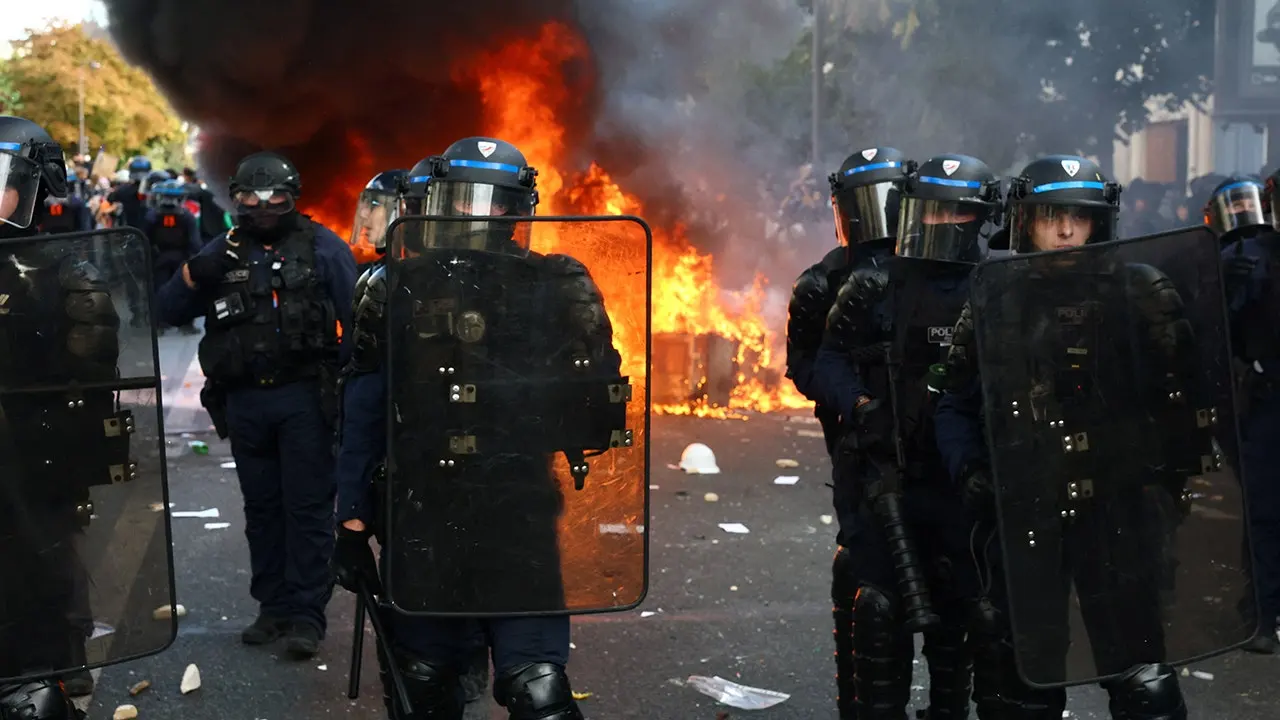

In France, a wave of student protests has erupted across the nation, drawing attention to issues of educational funding and safety amid troubling incidents involving police response. During these demonstrations, a 15-year-old suffered a severe injury resulting in the loss of a hand due to a police grenade, while another teenager was reported to have lost sight in one eye from a projectile. Prime Minister Sébastien Lecornu defended the police actions as necessary responses to urban violence, while opposition parties criticized the government’s handling of the situation amidst increasing political tensions.
| Article Subheadings |
|---|
| 1) Overview of Recent Student Protests |
| 2) Government’s Stance on Police Response |
| 3) Instances of Injury and Public Reactions |
| 4) Political Implications and Future Actions |
| 5) Summary of Events and Key Outcomes |
Overview of Recent Student Protests
Starting in mid-September, the student protests began in the Paris region, driven by demands for better funding and learning conditions in schools. These protests quickly escalated into larger demonstrations nationwide, marking a significant expression of discontent among French youth regarding the current state of education. On October 6, when the protests peaked, the Interior Ministry estimated that around 266,000 participants were involved, highlighting a growing concern over social issues.
The protestors, consisting mostly of high school and university students, raised issues ranging from inadequate resources in classrooms to safety concerns regarding policing methods during protests. As the demonstrations continued, clashes broke out in various locations, notably in major cities like Paris and Rennes, drawing significant media attention and public scrutiny.
Government’s Stance on Police Response
In response to criticisms of police brutality, Prime Minister Sébastien Lecornu defended law enforcement actions as necessary measures against urban violence, arson, and vandalism that accompanied the protests. In parliamentary debates, Lecornu asserted that the term “police brutality” inaccurately suggested that police were ordered to use excessive force, emphasizing that their actions were a reaction to escalating violence. The Prime Minister stated, “What triggers police action is the occurrence of urban violence,” which aims to justify the government’s position on maintaining order during civil unrest.
Interior Minister Laurent Nuñez echoed these sentiments, labeling the police response as largely proportionate under the circumstances. Both officials appeared to sidestep the accusation that their tactics could have contributed to the violence, maintaining that police were acting within the limits of their authority. This claim places the government in a precarious position, as it struggles to balance maintaining public order while addressing the grievances that sparked the protests in the first place.
Instances of Injury and Public Reactions
Tragic incidents during the protests have drawn significant public outrage and concern about police methods. The injuries of students have intensified the scrutiny of government actions, particularly after a 15-year-old boy lost his hand due to a police grenade and a 16-year-old was injured after being struck by a projectile during the demonstrations. The police’s use of sub-lethal riot-control weapons has been particularly contentious, with survivors and witnesses calling for accountability and change in policy regarding such tactics.
The public response has been overwhelmingly critical, with various civil society organizations and political figures calling for immediate reforms. Boris Vallaud, a leader within the center-left Socialist party, announced plans to introduce legislation restricting the use of sub-lethal weapons at demonstrations targeting students, noting that such weapons could lead to permanent injuries. The government’s task now is not only to navigate the present unrest but to ensure that similar tragedies do not occur in the future.
Political Implications and Future Actions
Facing mounting pressure from the protests, French President Emmanuel Macron convened an emergency meeting with senior ministers to evaluate the ongoing crisis surrounding student unrest. Officials within the government are wary of the potential political fallout, especially with upcoming presidential elections on the horizon. The opposition party, France Unbowed, has been accused of exploiting the situation for political gain, further complicating the governmental response.
Political analysts indicate that how the government reacts could shape public perception ahead of the elections, making it imperative for the ruling party to propose tangible solutions to the ongoing issues highlighted by the protests. This includes addressing the grievances surrounding educational funding and the broader implications of police violence. As protests continue, the government’s strategy remains a focal point of discussion among both the public and political commentators.
Summary of Events and Key Outcomes
As the situation evolves, the French government’s capacity to manage public dissent will be tested. The protests themselves have revealed deep-seated frustrations among students regarding their education and treatment by law enforcement. The urgent need for reform and policy changes around education funding has become increasingly clear, as demonstrated by the substantial participation in the demonstrations and rising tensions.
Ultimately, the fate of these protests and the government’s response may significantly affect not only educational policies but also the political landscape in France as it gears up for future elections. The protests have mobilized diverse segments of society, uniting students with various political and social organizations, marking a crucial moment in contemporary French politics.
| No. | Key Points |
|---|---|
| 1 | Student protests in France have expanded nationwide since mid-September, advocating for better education funding. |
| 2 | Prime Minister Sébastien Lecornu defended police actions during protests, attributing violence to urban unrest. |
| 3 | Significant injuries among protesters, including a boy losing a hand and another teen losing sight in one eye. |
| 4 | Calls for legislative changes on police use of sub-lethal weapons amidst concerns for student safety. |
| 5 | The political implications are significant as the government seeks to balance order and address public concerns ahead of elections. |
Summary
In summary, the recent student protests in France highlight critical issues surrounding the educational system and police conduct in public protests. As tensions between the government and protestors continue to rise, the need for effective dialogue and reform remains paramount. The ongoing events not only affect the immediate landscape of education but also pose broader questions about the engagement of youth in civic matters and the role of government in ensuring their safety and rights. The outcomes of this situation will likely have lasting impacts on France’s political climate as it prepares for an electoral cycle.
Frequently Asked Questions
Question: What are the main issues driving the student protests?
The main issues driving the student protests include demands for better funding for education and improved learning conditions in schools. Students are expressing their frustration over how these foundational needs have not been adequately addressed.
Question: How has the government responded to the protests?
The government has defended the police response as justified in the face of urban violence and has acknowledged the incidents of injuries among protesters. Officials have indicated that they are open to discussions about youth concerns and the educational system.
Question: What specific actions are being proposed regarding police conduct?
In response to incidents of injury during protests, lawmakers from the Socialist party plan to introduce legislation that would restrict the use of sub-lethal riot-control weapons at demonstrations, aiming to prevent further harm to participants.
