

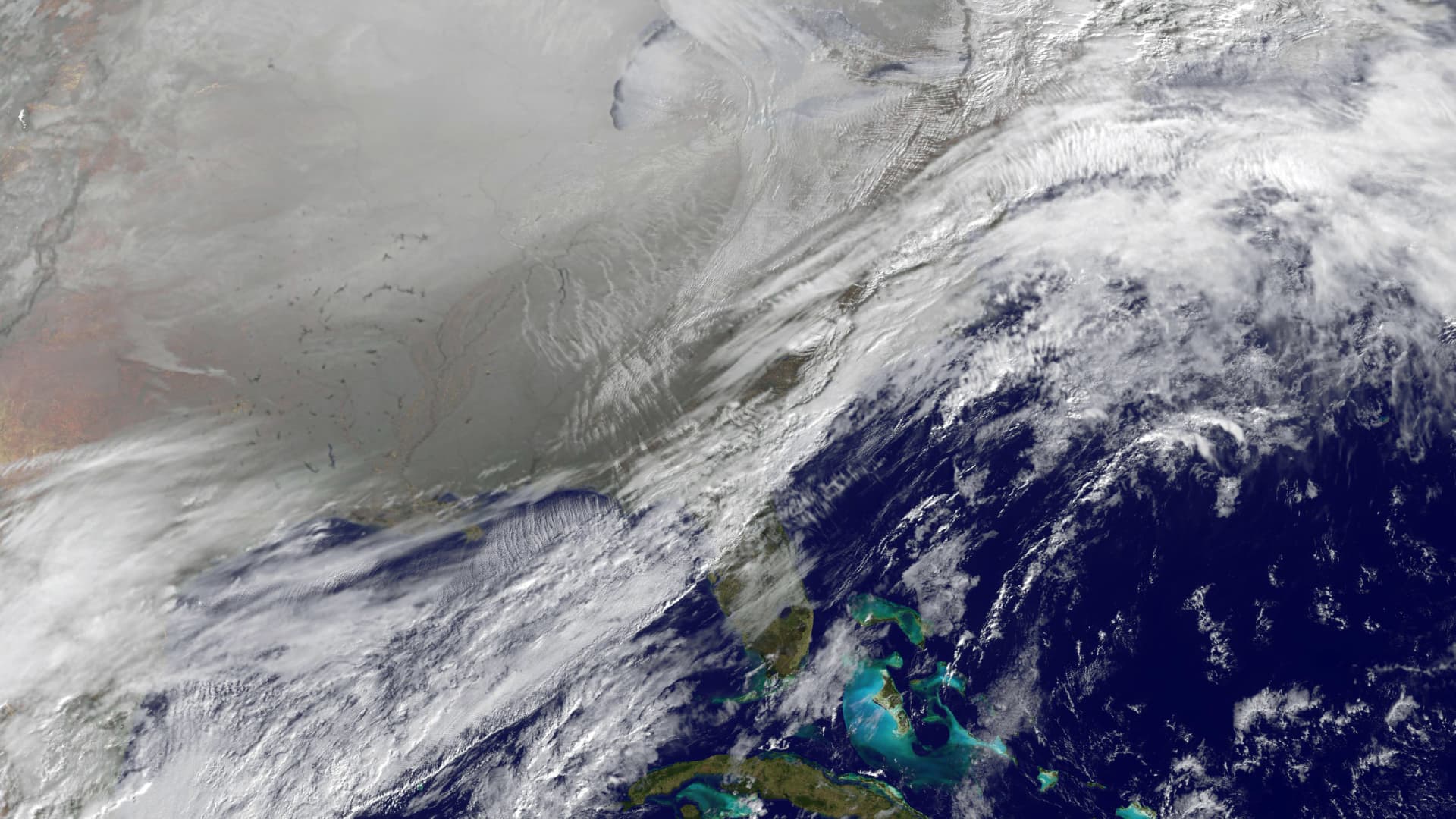

As the winter season approaches, the dynamics of global weather are becoming increasingly complex. An unprecedented early breakdown of the stratospheric polar vortex combined with an exceptionally strong El Niño event has raised alarms among energy traders regarding potential impacts on gas supply and prices. Analysts are warning that these climatic phenomena may lead to a surge in demand for heating in Europe, challenging an already vulnerable energy landscape as the continent enters the winter months with critically low natural gas reserves.
| Article Subheadings |
|---|
| 1) Understanding the Polar Vortex Breakdown |
| 2) The Role of El Niño in Winter Weather |
| 3) Implications for European Energy Supply |
| 4) Current Gas Prices and Future Predictions |
| 5) Navigating Winter Challenges in Europe |
Understanding the Polar Vortex Breakdown
The polar vortex is a large-scale circulation of strong winds that normally keeps frigid air contained over the Arctic region. When disruptions occur, such as in the current scenario where the stratospheric polar vortex (SPV) is breaking down unusually early, extreme cold can spill into lower latitudes, affecting weather patterns across the Northern Hemisphere. Experts note that this year’s early breakdown is highly unusual, occurring before the anticipated winter peak.
Meteorologists are observing that the SPV’s collapse could lead to significant changes in winter conditions for parts of Europe and North America. In previous winters, similar disturbances occurred later in the season, particularly around February, but this early breakdown presents a novel risk for the energy sector. The potential for harsher winter weather could also influence consumer behavior, increasing heating demands heavily.
According to climatologist Simon Lee from the University of St Andrews, while such warming events with a concurrent El Niño are not entirely unprecedented, the timing of this specific disruption is highly irregular. It could lead to a series of colder weather conditions across Northwest Europe while altering expected forecasts. Nonetheless, it is too early to understand fully the broader implications on winter weather patterns at this stage.
The Role of El Niño in Winter Weather
El Niño is a significant climate phenomenon characterized by the warming of ocean surface temperatures in the central and eastern Pacific Ocean. This year, its impact coincides with the early SPV breakdown, prompting fear of an unpredictable winter for both Europe and North America. El Niño typically brings milder winter conditions; however, when paired with a polar vortex disruption, it complicates forecasting models.
Official analysts argue that the dual occurrence influences a heightened probability of colder conditions, particularly throughout December and January. While El Niño has traditionally led to warmer temperatures, its interactions with atmospheric patterns can result in sudden shifts in weather that deviate from established norms, raising concerns for populations and industries reliant on steady climate conditions.
In essence, the collision of these weather phenomena could create a highly volatile winter scenario with unpredictable weather patterns affecting gas demand significantly. The specialized conditions will likely impact heating requirements nationwide, from households to large commercial entities.
Implications for European Energy Supply
Energy analysts have sounded the alarm over diminishing natural gas supplies as Europe braces for potentially severe winter weather. As noted, European gas inventory levels are at their lowest in over a decade, primarily due to insufficient withdrawals over the past year. The combination of the ongoing polar vortex issue and the heightened demand driven by the El Niño event could exacerbate an already precarious situation.
The International Energy Agency (IEA) warns that low storage levels coupled with rising energy demands from colder temperatures could lead to fierce competition for liquefied natural gas (LNG) imports. Countries reliant on LNG may find it challenging to navigate the winter unless storage levels are replenished, raising concerns regarding energy price volatility and availability.
As Florence Schmit, senior energy strategist at Rabobank noted, “Geopolitics and weather are the two key volatility drivers for energy and now they seem to be happening at the same time,” underscoring the precarious logic of the energy markets. Many European nations are already accustomed to erratic supply fluctuations, but the incoming winter poses a stand-out threat that could leave them scrambling for resources.
Current Gas Prices and Future Predictions
Recent weeks have seen European gas prices reaching alarming levels reminiscent of the 2022 energy crisis. The benchmark Dutch TTF futures for December saw prices escalate to around 87.28 euros per megawatt hour as of late October, marking a critical point in energy trading patterns. Prices have steadily risen due to supply concerns amid the fast-depleting reserves, exacerbated by competing market pressures associated with the polar vortex breakdown.
According to gas analyst David Lewis from Wood Mackenzie, the unique combination of climatic events presents a risk unlike any prior winter. He expressed uncertainty about how the dual impacts of an SPV breakdown and a mature El Niño would play out, as there are no historical precedents for them occurring simultaneously.
As demand surges amidst frigid conditions, energy analysts anticipate price increases that could lead to heightened consumer costs for heating across Europe. The intersection of geopolitical pressures and changing weather patterns will likely cause erratic pricing for gas, with consumers expected to feel the impact on their monthly bills this winter.
Navigating Winter Challenges in Europe
The prospect of facing an unpredictable and potentially costly winter has prompted both governments and energy firms to explore ways to mitigate the looming challenges. With rapid withdrawals from European storage levels reported recently, concerns grow about maintaining adequate supply to meet heating demands through the peak winter months.
Experts like Schmit warn that if current trends continue, the likelihood of energy price spikes is substantial, and these increases will not be solely driven by geopolitical factors but also by weather conditions. Consequently, governments may need to implement urgent plans to manage energy consumption and supply in the face of unpredictable demand shifts.
Moreover, the unique weather phenomenon could result in amplified volatility, pushing energy prices to unanticipated heights. Policymakers will need to remain vigilant, monitoring both climatic developments and market reactions to navigate the complex web of factors influencing energy stability.
| No. | Key Points |
|---|---|
| 1 | An early breakdown of the polar vortex could lead to colder winter conditions. |
| 2 | El Niño is expected to influence weather patterns, potentially raising demand for heating. |
| 3 | Europe’s natural gas reserves are at their lowest in a decade, raising supply concerns. |
| 4 | Gas prices have surged to levels unmatched since the previous energy crisis. |
| 5 | Energy volatility driven by weather changes poses challenges for European governments and consumers. |
Summary
In summary, the convergence of an early polar vortex breakdown with a powerful El Niño event signals a turbulent winter landscape for Europe and North America. The implications for heating demand, energy supply, and market behavior are profound, as nations grapple with dwindling gas reserves and unpredictable weather patterns. Energy prices are poised to escalate, making this winter one of particular concern for both policymakers and consumers alike.
Frequently Asked Questions
Question: What is a polar vortex?
A polar vortex is a large area of low pressure and cold air surrounding the Earth’s poles that can expand and move southward, bringing colder temperatures to lower latitudes.
Question: How does El Niño affect winter weather?
El Niño typically leads to warmer winter conditions; however, it can also cause erratic weather patterns, resulting in varying effects on precipitation and temperature.
Question: Why are gas prices rising in Europe?
Gas prices in Europe are rising due to low storage levels and increased heating demand resulting from colder winter forecasts and the convergence of climatic events.
