


Recent developments in the escalating conflict between Russia and Ukraine have seen a significant incident involving Polish airspace. Russian missiles reportedly landed in Poland as President Volodymyr Zelenskyy described the attack on Ukraine as one of the largest since the war commenced. As tensions escalated with the implications of the strikes, Poland’s Prime Minister condemned these actions, labeling them as a deliberate provocation. Such occurrences highlight the precarious nature of regional security and the involved parties’ responses during this ongoing conflict.
| Article Subheadings |
|---|
| 1) Incident Overview: Russian Strikes and Their Impact |
| 2) Polish Response and Military Readiness |
| 3) NATO’s Stance and Collective Defense |
| 4) The Broader Context: International Reactions |
| 5) Consequences for Ukraine: A Civilian Toll |
Incident Overview: Russian Strikes and Their Impact
On a recent night, Polish government officials reported that multiple Russian missiles had penetrated Polish airspace, a situation described by Ukraine’s President Volodymyr Zelenskyy as part of one of the largest aerial assaults since the onset of the war in Ukraine. This surprise attack came on a day when over 400 drones and more than 110 missiles were launched at various locations across Ukraine, resulting in civilian casualties and extensive infrastructure damage.
The strikes resulted in the deaths of at least eight individuals, according to Zelenskyy, who condemned the situation for its blatant disregard for civilian safety. The tragic events unfolded just after Russia used cluster munitions and other types of missiles against targets within Ukrainians’ most populated areas. Notably, some of these Russian projectiles even struck near foreign embassies in Kyiv, raising international alarm and concern.
Polish Response and Military Readiness
In response to the incursion into Polish airspace, Donald Tusk, the Prime Minister of Poland, characterized the missile strikes as a deliberate provocation against NATO. This assertion underscores the tension between Poland and Russia, particularly when countries affiliated with NATO are involved. Polish military officials stated that at least three Russian weapons—believed to be two missiles and a drone—were detected entering Poland’s southeastern airspace.
The immediate response from Poland included scrambling fighter jets and activating the Patriot missile defense systems stationed in the region. Fortunately, there were no reported injuries or further casualties within Poland itself. However, the near miss with Russian weaponry has sparked discussions regarding Poland’s defense readiness and its position within NATO amidst ongoing heightened tensions.
NATO’s Stance and Collective Defense
Poland’s incident drew immediate attention from NATO, with Secretary General Mark Rutte publicly voicing solidarity with Poland. In a message shared across social media platforms, he indicated that discussions regarding the violations of Polish airspace were underway, highlighting NATO’s commitment to ensuring peace and security within its member nations.
“This incident is clearly dangerous — a consequence of Russia’s ongoing war against Ukraine,”
he stated, emphasizing that collective defense is central to NATO’s mission.
The situation invokes Article 5 of NATO’s founding treaty, which stipulates that an attack on one member state is considered an attack on all members. This principle has ramifications for geopolitical alignments and military strategies in response to Russian aggressions.
The Broader Context: International Reactions
The gravity of recent events prompted reactions from various international figures. For instance, Jean-Noel Barrot, the French Foreign Minister, expressed sentiments that Russia “will have to answer for this,” further underscoring the likelihood of escalated diplomatic engagements in response to the attacks on both Poland and Ukraine.
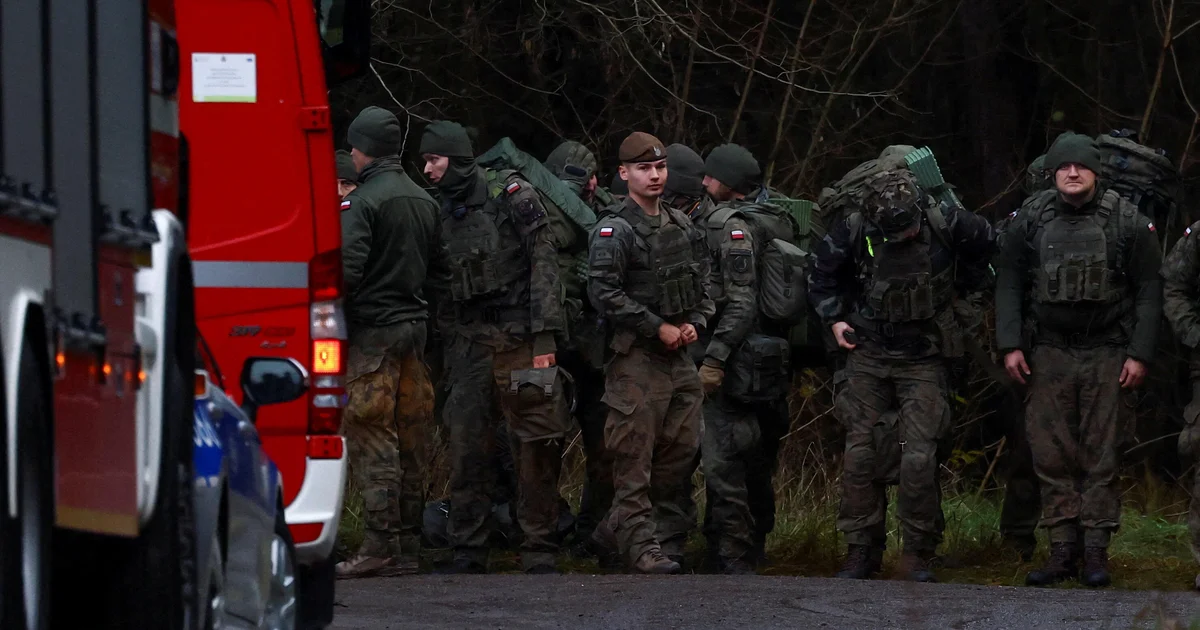
With NATO members actively monitoring the situation, the immediate aftermath of the strikes also encouraged a rise in military presence in Eastern Europe. Troops from multiple nations participated in exercises within Poland, reinforcing defenses in what can be described as a collective show of forces against potential Russian aggressions. This exercise was framed as a preparation for future peacekeeping missions, alluding to an ongoing military focus on the region.
Consequences for Ukraine: A Civilian Toll
The assaults on Ukraine were devastating, leaving at least eight confirmed fatalities and dozens more injured. The nature of these attacks deliberately targeted civilian areas, resulting in widespread damage to critical infrastructure, including water supply facilities and commercial buildings. Serhii Koretskyi, the Ukrainian Prime Minister, detailed the extent of the casualties and damage inflicted across multiple Ukrainian territories; attacks were reported in Kyiv and nine other regions.
The timing of the strikes raised significant concerns at several levels. Ukrainian forces reportedly managed to intercept a substantial number of missiles, yet the inability to intercept all of them underscores ongoing challenges regarding air defense capabilities. Furthermore, the strikes’ design included tactics aimed at complicating responses from emergency services, indicating a calculated decision to maximize civilian suffering and destruction.
Overall, the incident lays bare the critical need for greater international support to bolster Ukraine’s defensive capabilities. As civilian casualties continue to rise, calls for enhanced air defense from allies have intensified, with requests directed toward the United States for assistance in replenishing missile stocks.
| No. | Key Points |
|---|---|
| 1 | Polish airspace was violated by Russian missiles, leading to international condemnation. |
| 2 | NATO affirmed its stance by showing solidarity with Poland and mobilizing military resources. |
| 3 | The attacks in Ukraine resulted in significant civilian casualties and damage to vital infrastructure. |
| 4 | Incremental military preparations and exercises by NATO members signify readiness in the wake of Russian aggressions. |
| 5 | Demands for increased air defense support for Ukraine continue to mount amidst ongoing attacks. |
Summary
The recent missile strikes by Russia have escalated tensions in Central and Eastern Europe, highlighting the fragility of regional security and the intricate roles played by NATO member countries. As Poland reaffirms its defenses against external threats, Ukraine grapples with the ongoing humanitarian toll of warfare that affects civilians profoundly. The international community’s swift and decisive response to these provocations will likely shape future relations and defense strategies, marking a pivotal moment in the enduring conflict.
Frequently Asked Questions
Question: What incidents triggered NATO’s response in Poland?
The unauthorized entry of Russian missiles into Polish airspace triggered a swift response from NATO, with officials condemning the act as a provocation against collective security.
Question: How many casualties were reported from the Russian strikes on Ukraine?
Recent reports confirm at least eight deaths and dozens of injuries as a result of the missile and drone attacks on various Ukrainian cities.
Question: What steps are being taken to enhance Ukraine’s air defense capabilities?
Ukraine is actively seeking international support, particularly from the U.S., to replenish its missile interceptor stocks to better defend against future aerial assaults.
