

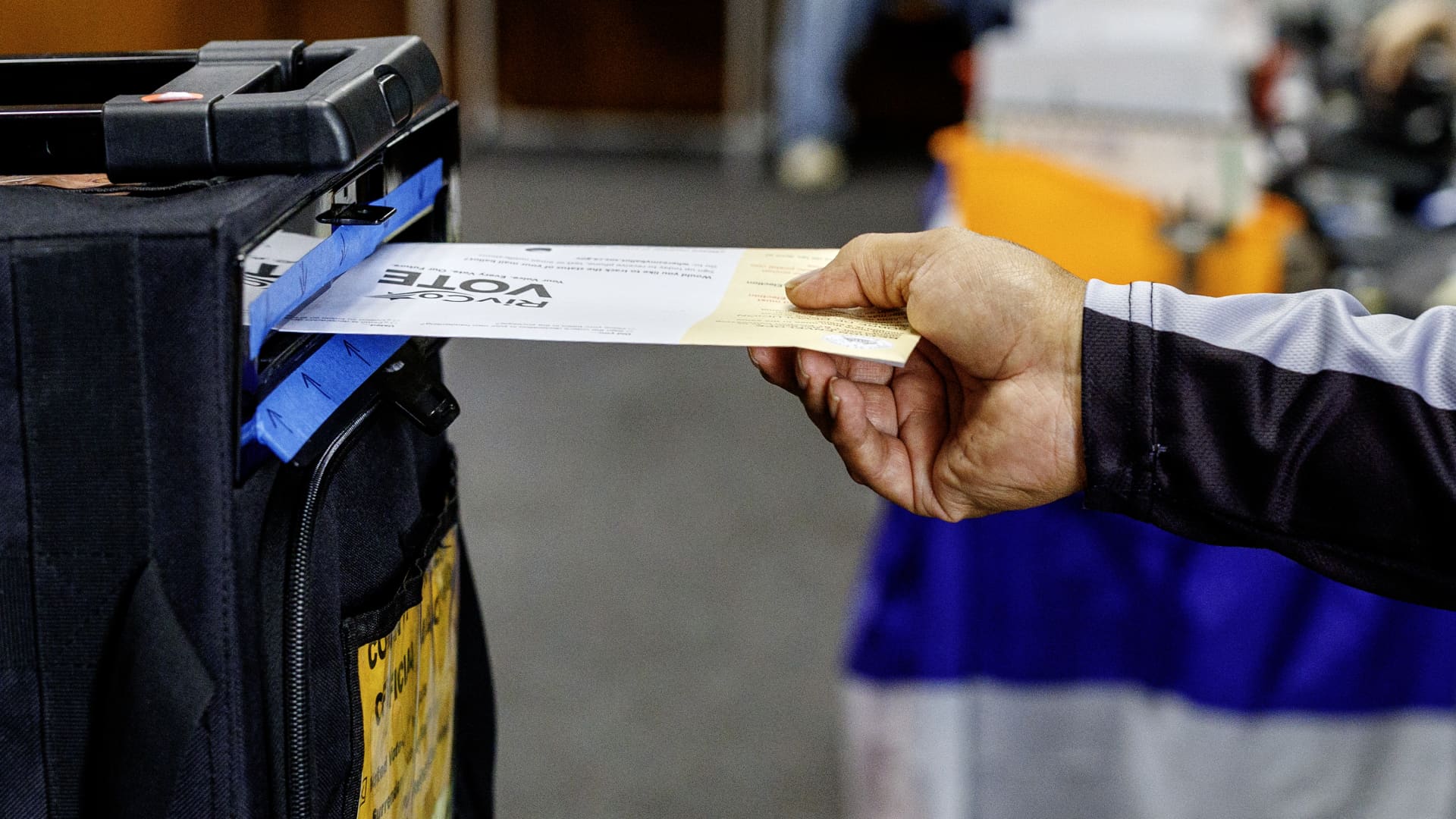

In a significant ruling, the Supreme Court declined to grant a last-minute request from the Department of Justice (DOJ) to block California from counting mail-in ballots from approximately 20,000 voters allegedly not registered as U.S. citizens. This order, which was issued the day before Election Day, highlights ongoing tensions between federal and state election processes amid the impending midterm elections. California’s Attorney General, Rob Bonta, welcomed the court’s decision, describing the DOJ’s request as unfounded and a “Hail Mary.”
| Article Subheadings |
|---|
| 1) Supreme Court’s Quick Ruling on DOJ Application |
| 2) Background on DOJ’s Lawsuit Against California |
| 3) Implications of Denied Request for California Elections |
| 4) Challenges Facing Federal and State Election Authority |
| 5) Future Developments in Election Lawsuits |
Supreme Court’s Quick Ruling on DOJ Application
The Supreme Court made a direct and rapid decision when it denied the DOJ’s request to prevent California from counting mail-in ballots from a group of voters whose citizenship status was under question. This decision, rendered just hours after the DOJ’s appeal was submitted and on the eve of the elections, underscores the urgency and tension surrounding electoral integrity. The Court did not provide any detailed rationale for its denial nor did it indicate dissent among its justices, suggesting a consensus or a desire to avoid further complicating the electoral process. The director of the request was Justice Elena Kagan, who presented it to the full court, which notably includes three justices appointed by former President Donald Trump.
Background on DOJ’s Lawsuit Against California
The DOJ’s involvement in California’s electoral processes escalated when it filed a lawsuit on October 15 in the U.S. District Court in Los Angeles, seeking to stop the counting of votes from individuals it considered likely noncitizens. The DOJ asserted that more than 20,000 registrants in California may not be U.S. citizens and thus ineligible to vote. This legal action was portrayed as a defense of voting rights and integrity; however, it was met with significant legal pushback from California Attorney General Rob Bonta. A federal judge ruled against the DOJ’s initial efforts, fostering questions around the validity and motivations behind federal oversight of state electoral operations.
Implications of Denied Request for California Elections
The denial of the DOJ’s request has far-reaching implications for the election process in California. With the Supreme Court’s robust response, they have reaffirmed the state’s authority to manage its own voting procedures without undue federal interference. Rob Bonta celebrated the judicial order, describing it as a validation of California’s electoral framework and emphasizing that the decision aligned with the state’s values of preserving voting rights for all citizens. The ruling indicates a potential challenge for the DOJ’s broader strategy in influencing election outcomes across states, particularly as it pertains to controversial audits and citizenship claims that might disenfranchise eligible voters.
Challenges Facing Federal and State Election Authority
The ongoing battle between the DOJ and California highlights the significant complexities surrounding federal and state election laws. Recently, a federal judge barred the DOJ from threatening election workers under criminal prosecution for their role in processing ballots amidst competing directives from federal authorities. This complex dynamic illustrates how the legal framework surrounding elections is multifaceted, where state laws can diverge from federal mandates, leading to courtroom clashes that could set precedents for future elections. The ruling reflects broader concerns that the federal government could overextend its authority, thereby undermining the foundation of state sovereignty in administering elections.
Future Developments in Election Lawsuits
As the midterm elections approach, several other cases are poised to unfold that could further shape the landscape of electoral law in the United States. The DOJ has appealed various rulings across different districts, including one challenging the legality of disqualifying mail-in ballots due to alleged voter confusion. These cases illustrate that the judiciary remains a battleground for electoral integrity concerns and the balance of power between federal and state governments. Legal experts suggest that upcoming rulings could have lasting implications on how future elections are conducted, particularly in battleground states where voting laws remain contentious.
| No. | Key Points |
|---|---|
| 1 | The Supreme Court swiftly denied a DOJ request to block California from counting mail-in ballots from about 20,000 voters. |
| 2 | The DOJ argued that the voters in question might not be U.S. citizens, affecting their eligibility to vote. |
| 3 | California officials and legal experts view the decision as a reaffirmation of state authority in electoral processes. |
| 4 | Multiple ongoing lawsuits and appeals indicate a turbulent political climate as midterms approach. |
| 5 | The ruling could set important precedents for future elections and the balance of power in election law. |
Summary
In conclusion, the Supreme Court’s refusal to block California from processing mail-in ballots is a landmark decision that exemplifies the ongoing tension between federal oversight and state electoral authority. With the Senate and House elections on the horizon, this ruling is poised to influence the dynamics of voter participation and election administration. California officials assert their framework’s integrity, suggesting that the state will continue to uphold the rights of all eligible voters regardless of federal interventions.
Frequently Asked Questions
Question: What was the impetus behind the DOJ’s lawsuit against California?
The DOJ sought to ensure that ballots from individuals it deemed likely to be noncitizens were not counted in California’s upcoming elections, asserting that doing so was required for maintaining electoral integrity.
Question: How did California respond to the DOJ’s intervention?
California officials, led by Attorney General Rob Bonta, characterized the DOJ’s legal action as baseless and a challenge to state sovereignty in managing its own elections.
Question: What broader implications does this ruling have for future elections?
The Supreme Court’s decision sets a precedent for how federal and state authorities may interact regarding election laws, potentially influencing voting rights and procedures in future elections across the nation.
