

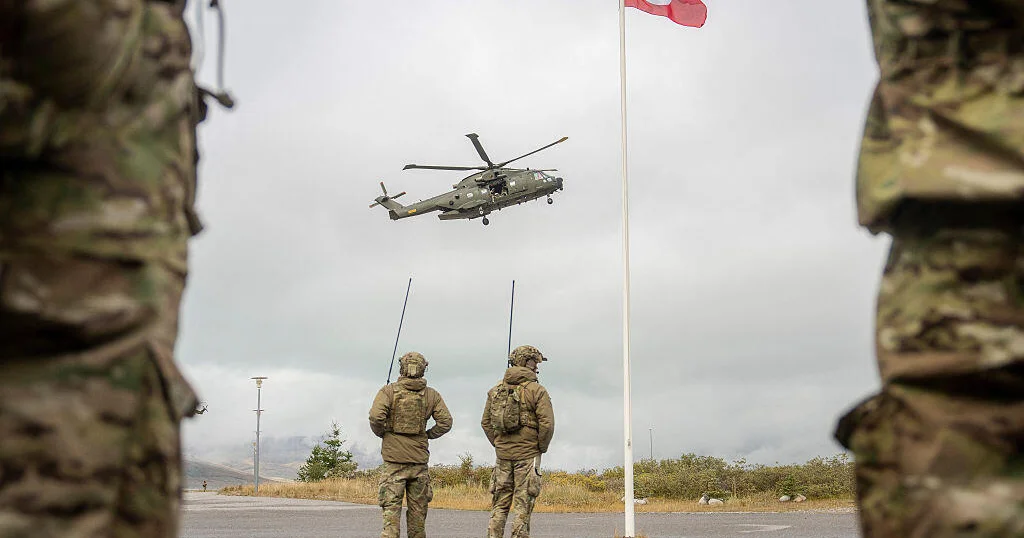

In a significant diplomatic move, the United States has brokered a deal aimed at securing permanent control over security and military operations on the strategic Arctic island of Greenland. The agreement was confirmed by officials from both Greenland and Denmark, which governs the semi-autonomous territory. Set to be signed in New York City during the United Nations General Assembly, the deal is envisioned to enhance U.S. influence in the Arctic, without an outright annexation that has been previously suggested.
The deal is described as granting the U.S. permanent access to Greenland and the rights necessary for military expansions. It also places restrictions on military bases for non-NATO countries and aims to protect sensitive investments from American adversaries, ensuring that U.S. control is maintained even if Greenland pursues full independence. This agreement marks a new chapter in Arctic geopolitics amid increased global interest in the region.
| Article Subheadings |
|---|
| 1) Background of U.S. Interest in Greenland |
| 2) Details of the Agreement |
| 3) Reactions from Key Stakeholders |
| 4) Implications for NATO and International Relations |
| 5) Future Prospects for Greenland |
Background of U.S. Interest in Greenland
The ongoing interest of the United States in Greenland dates back several decades, but it has gained momentum particularly under the administration of former President Donald Trump. Strategically located between North America and Europe and adjacent to the rapidly changing Arctic due to climate change, Greenland represents a valuable asset for military and strategic purposes. The American military has maintained a presence in Greenland since the 1950s, notably at the Thule Air Base, which serves as a critical location for missile warning systems and satellite communications.
During his presidency, Trump openly discussed the possibility of purchasing Greenland from Denmark, a proposal that was met with significant backlash from Danish officials, including the Danish Prime Minister Mette Frederiksen, who stated that “Greenland is not for sale.” Following this rejection, Trump infamously canceled a scheduled state visit to Denmark, further underscoring the tension surrounding U.S. intentions in the region. This backdrop highlights the long-standing geopolitical frictions and the importance of Greenland in securing U.S. national interests.
Details of the Agreement
The newly announced agreement aims to solidify the U.S.’s strategic foothold in Greenland without pursuing direct control over the island’s sovereignty. Reports indicate that the deal guarantees the U.S. permanent access to military facilities, including potential overflight rights, which may facilitate the establishment of additional military bases tailored for Arctic operations. Furthermore, the agreement seeks to restrict non-NATO members from setting up military installations in Greenland, tightly regulating foreign military presence in the region.
A key feature of the agreement is its longevity; according to a State Department official, the terms would apply even if Greenland were to become fully independent from Denmark, thus insulating U.S. interests from potential geopolitical shifts. Such stipulations are likely aimed at deterring adversaries from making critical investments in Greenland’s economy, thereby enhancing American security concerns across the Arctic and beyond.
Reactions from Key Stakeholders
Responses to the agreement have been largely positive among U.S. officials. Marco Rubio, the Secretary of State, hailed the arrangement as a “huge win,” emphasizing its potential to solidify Greenland’s role within the broader defense strategy of North America. In a statement, Rubio noted, “Greenland will forever be part of the strategic defense area of North America and exclude any adversary from it and the surrounding area,” reflecting the heightened security concerns that have increasingly come to define U.S.-Nordic relations.
Danish Prime Minister Mette Frederiksen confirmed the impending signing during a press conference, expressing optimism about the ramifications of the agreement for Greenland, Denmark, and the United States. She articulated that the deal would strengthen mutual security interests in the Arctic while acknowledging Greenland’s sovereignty and self-determination, a critical diplomatic nuance meant to appease Greenland’s leaders. Jens-Frederik Nielsen, the Prime Minister of Greenland, expressed satisfaction with the agreement, recognizing it as beneficial for Greenland’s international role.
Implications for NATO and International Relations
This agreement could significantly alter the strategic landscape of the Arctic and the dynamics within NATO. As Arctic temperatures rise and new shipping lanes open, the region has become increasingly militarized, with several nations asserting their interests. This U.S.-Greenland agreement is poised to reinforce NATO’s collective security framework and push back against non-NATO actors, especially in light of rising tensions with Russia.
The deal may also signify an important shift in U.S. foreign policy that prioritizes a strong military presence in strategic locations worldwide, aligning closely with defense strategies aimed at countering China and Russia’s influence in the Arctic. As nations vie for resources and control in this melting region, the implications of this arrangement extend beyond the U.S.-Greenland relationship, reflecting a broader geopolitical maneuvering that aligns with the interests of NATO member states and their partnerships in security.
Future Prospects for Greenland
From Greenland’s perspective, the agreement presents both opportunities and challenges. The acknowledgment of Greenland’s self-determination and economic interests reflects an evolving diplomatic relationship with the U.S. that is built on mutual benefits rather than outright control. However, the potential for increased militarization of the island raises concerns among some local leaders about the implications for environmental sustainability and cultural preservation.
As Greenland grapples with its identity and future, the engagement with the U.S. through this agreement could catalyze new economic opportunities and developmental projects. The commitment to work with local populations for infrastructure development proposed by Trump may open pathways for growth, yet it also necessitates a careful balancing act between development and maintaining the island’s ecological integrity.
| No. | Key Points |
|---|---|
| 1 | The U.S. has secured a deal for permanent military access to Greenland, enhancing strategic interests in the Arctic. |
| 2 | Details of the agreement include restrictions on non-NATO military presence and provisions for U.S. control even if Greenland becomes independent. |
| 3 | Key stakeholders view the agreement positively, with U.S. officials framing it as a win for national security. |
| 4 | Implications for NATO could solidify alliances and counter adversarial interests in the Arctic region. |
| 5 | Greenland’s future may hinge on balancing development and ecological preservation amid increased U.S. military presence. |
Summary
The newly concluded agreement between the United States and Greenland marks a pivotal moment in Arctic geopolitics, affirming U.S. military presence and influence in a vital region. With assurances of permanence and recognition of Greenland’s sovereignty, the deal not only addresses immediate security needs but also sets the stage for future developmental collaborations. As global interest in the Arctic continues to intensify, the implications of this arrangement will ripple through diplomatic, military, and environmental domains for years to come.
Frequently Asked Questions
Question: What are the primary objectives of the U.S. agreement with Greenland?
The U.S. agreement aims to secure permanent military access to Greenland, restrict non-NATO military presence, and enhance U.S. strategic interests in the Arctic without directly acquiring Greenland’s sovereignty.
Question: How does the agreement affect Greenland’s independence?
The deal ensures that U.S. military rights remain intact even if Greenland pursues full independence from Denmark, acknowledging both U.S. interests and Greenland’s self-determination.
Question: What are the potential challenges Greenland might face due to increased U.S. military presence?
The increased military presence may raise concerns about ecological sustainability and cultural preservation within Greenland, necessitating careful management of developmental projects and military activities.
